February 13, 2025 | Fresh Mahi and Swedish Candy
I sleep in the warm belly of Adrienne. Water gurgles as it rushes over the hull inches away from my pillow. A soft, familiar rocking motion. All ingredients for a good sleep, but I am restless. It’s been days since we saw a ship. We are definitely out of helicopter range. The vastness of the ocean is hard to fathom. This is one of the most remote places on and off the planet. It’s just the ten of us here. This is not a trip, it’s an expedition in an alien waterworld. It’s overwhelming. I am breathing quickly and turn the light on to stop thinking and catch my breath. I see myself in the reflection of the meticulously layered varnish gloss that coats most of Adrienne’s interior—at least as many layers of varnish as she is old.
The ship is coming alive briefly, just before 2 a.m. The dogwatch, the most tiring of them all, is starting, and I am in it. We swing from handrail to handrail like orangutans, more gracefully every day. Wishing each other good nights of rest and good mornings in passing. Every new watch is someone’s morning and someone else’s night.
We step into the moonlit cockpit. The light is a harsh white, casting well-defined shadows, as if we are in space. Above the stern, Sirius the dog star twinkles; above the dog, Orion stands tall. Some of us puked at his feet a few days ago. Now it’s a calm and beautiful night with a silver path running from the moon to the freeboard.
Helming is finicky with a light wind that does not make up its mind. Being undercanvassed does not help either. Tim does not like the sluggish sail, so we switch from jib to genoa and the wind picks up. The wind is veering, which is favorable for us. The boat wakes up and needs a firm hand and a sharp mind to keep her in the groove. Meanwhile, we’re telling stories and stuffing our faces full of Swedish candy like we are eight, in summer camp, way past our bedtime.
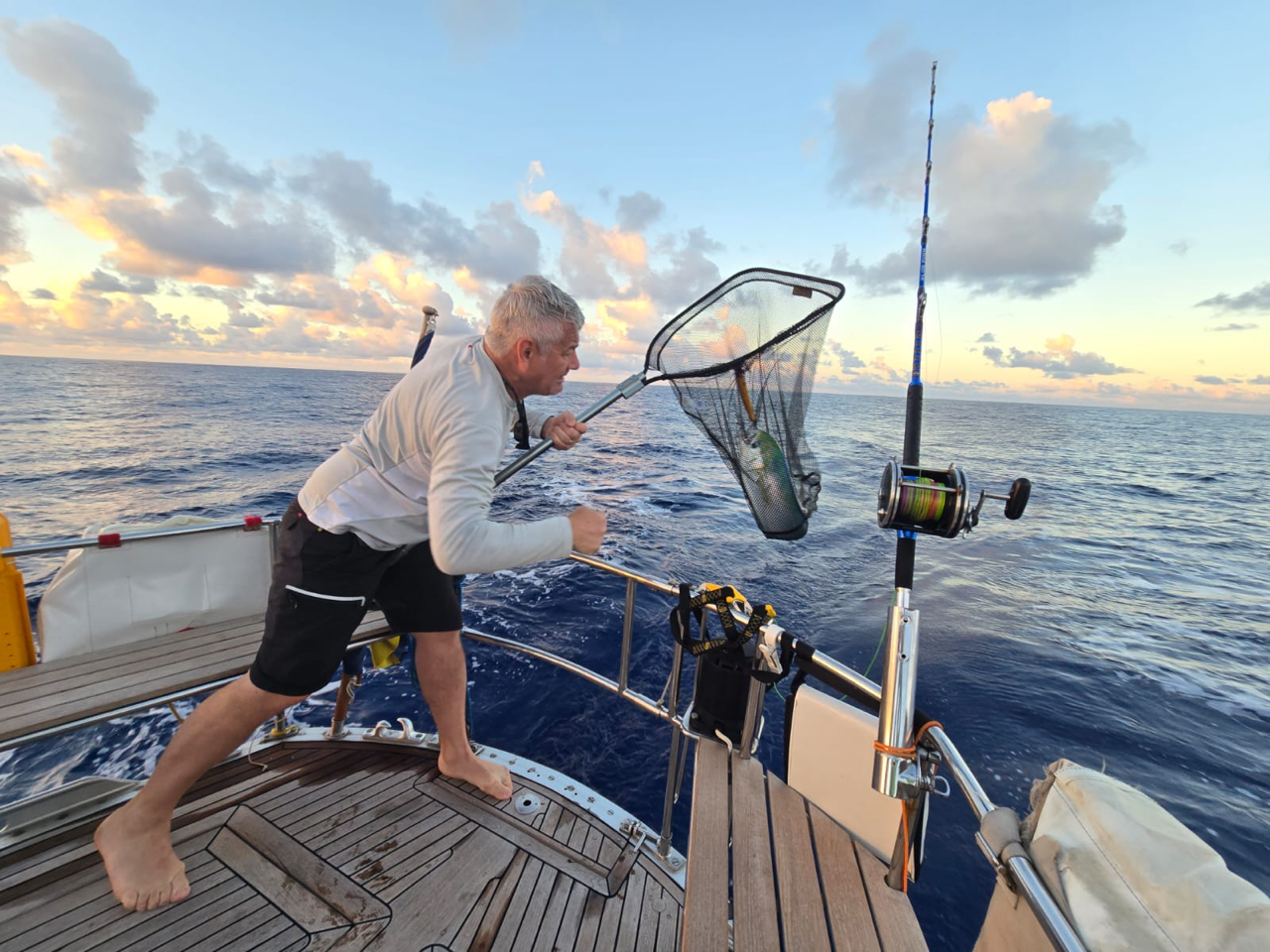
At sunrise, we hand over to the B watch and hit the sack. We sleep almost till noon and wake up in a completely different world. People are up and there is freshly caught Mahi Mahi in the frying pan, being prepared by the Swedish cooks we are so lucky to have. They are often as incomprehensible as the Swedish cook in the Muppet Show, their choice of ingredients as eclectic, but unlike the puppet, their cooking is phenomenal.
We have entered the Azores High, also called the horse latitudes—a high-pressure area that separates the tradewinds in the south from the large winter depressions in the north. It’s sunny here and there is little wind. The waves are small. We are motoring through it to position ourselves at a place where we can catch some of the winds from the north that will carry us to the Canaries.
The ocean is a beautiful lighter blue today. There are many words to describe the blue hues of the ocean—azure, Bermuda, cobalt—but never enough to describe them all. It’s something you have to see for yourself.
After four days of upwind sailing and pounding in the waves, the Azores Highs are a welcome reprieve. We walk around deck barefooted, leisurely coiling lines, making whippings at bitter ends. We see dolphins. A pod of them crosses in front of our bow. Not much later we see a whale too! We have started a new chapter.
It’s evening as I am writing this. The waves are coming back. These must have traveled a long way from the storms in the north, hinting at what might be in store for us. Time to take a nap before the last watch of today.
- Allard Schipper, Adrienne Crew
crew@59-north.com
View more passage logs
The Penultimate Blog from Adrienne II
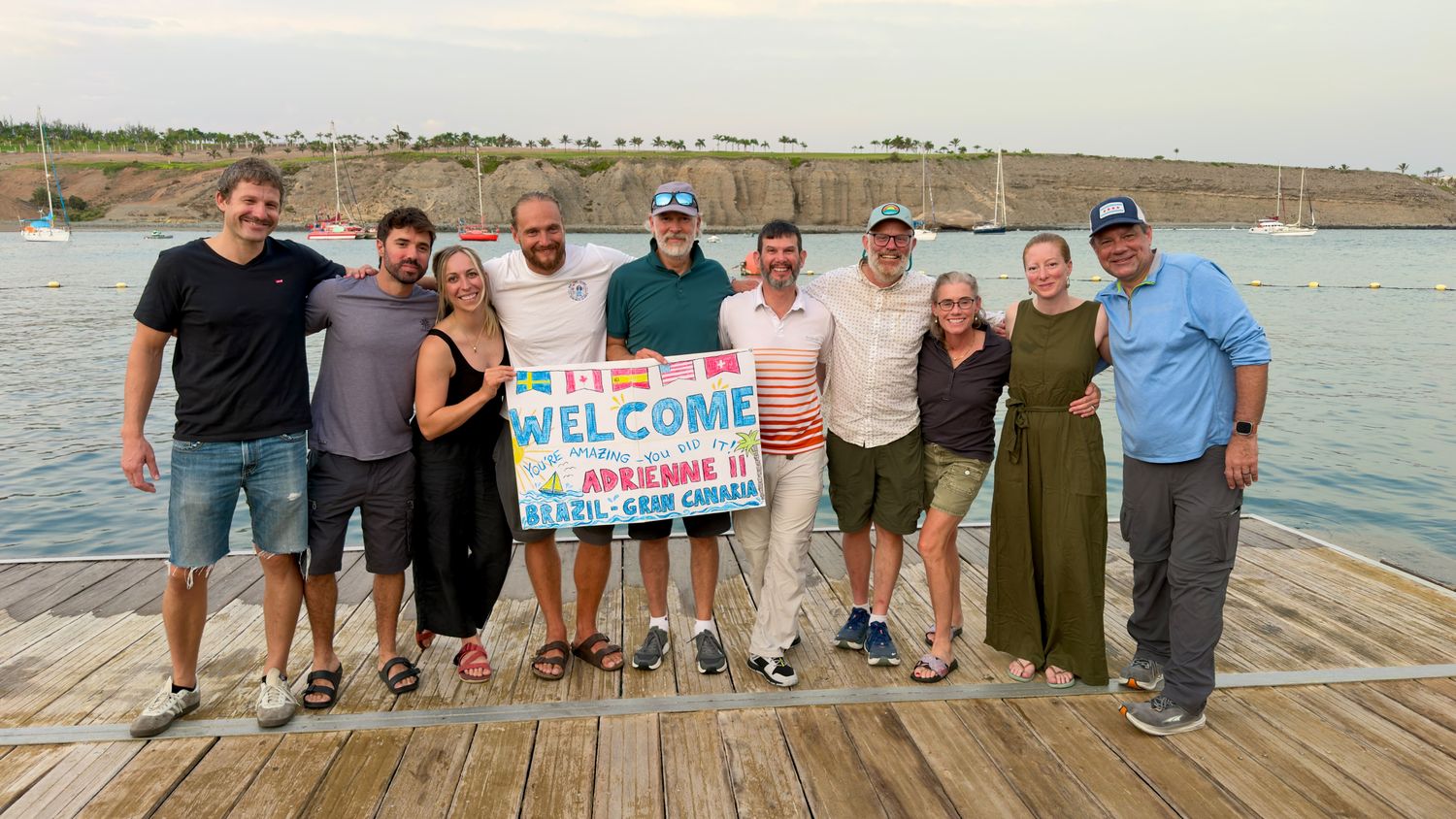
After 20 days, and 3000+ nautical miles, we're back on land. The motley crew of Adrienne II, consisting of 7 happy amateurs supported by 3 professionals, have completed an epic journey many dream of but few realize. So much of this trip has been about being present - with nature, with each other, with this boat. My biggest takeaway from this trip is the amazing crossing of the ITCZ (Inter Tropical Convergence Zone). We all hope you've enjoyed the blog as much as we've enjoyed creating it.

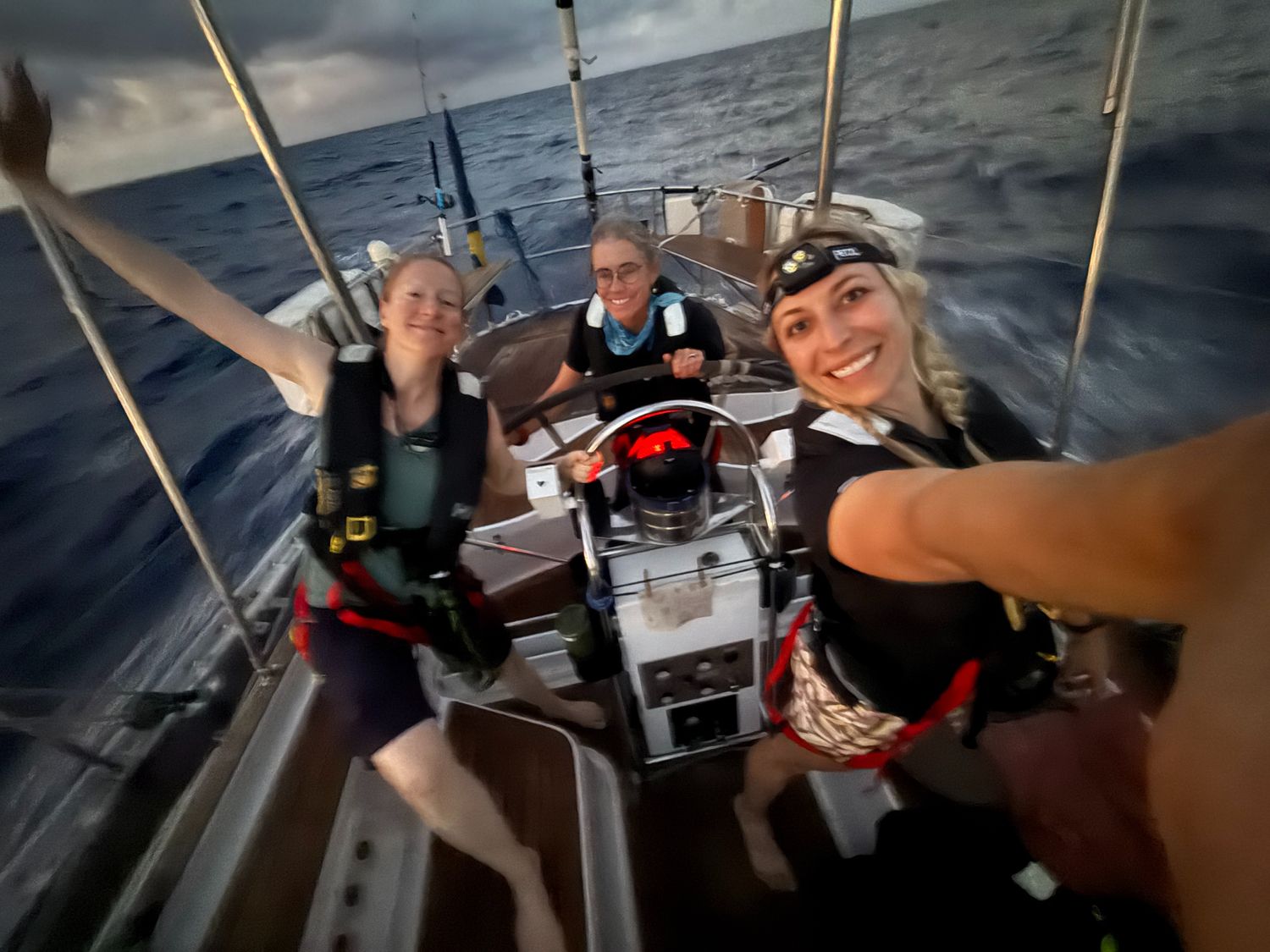
Mother Nature, you’ve outdone yourself!
It’s been a great experience to have a non-traditional trans-Atlantic, as it’s been packed with genuinely cool features. The Doldrums!! A place sailors have been talking about for centuries. The unpredictability is what made it such an exhilarating experience. While some might be frightened or alarmed by this kind of weather, I was embodied with a sense of calm and awe. There’s something wildly beautiful about being reminded how small you are, while feeling so incredibly alive.
A Heavenly High
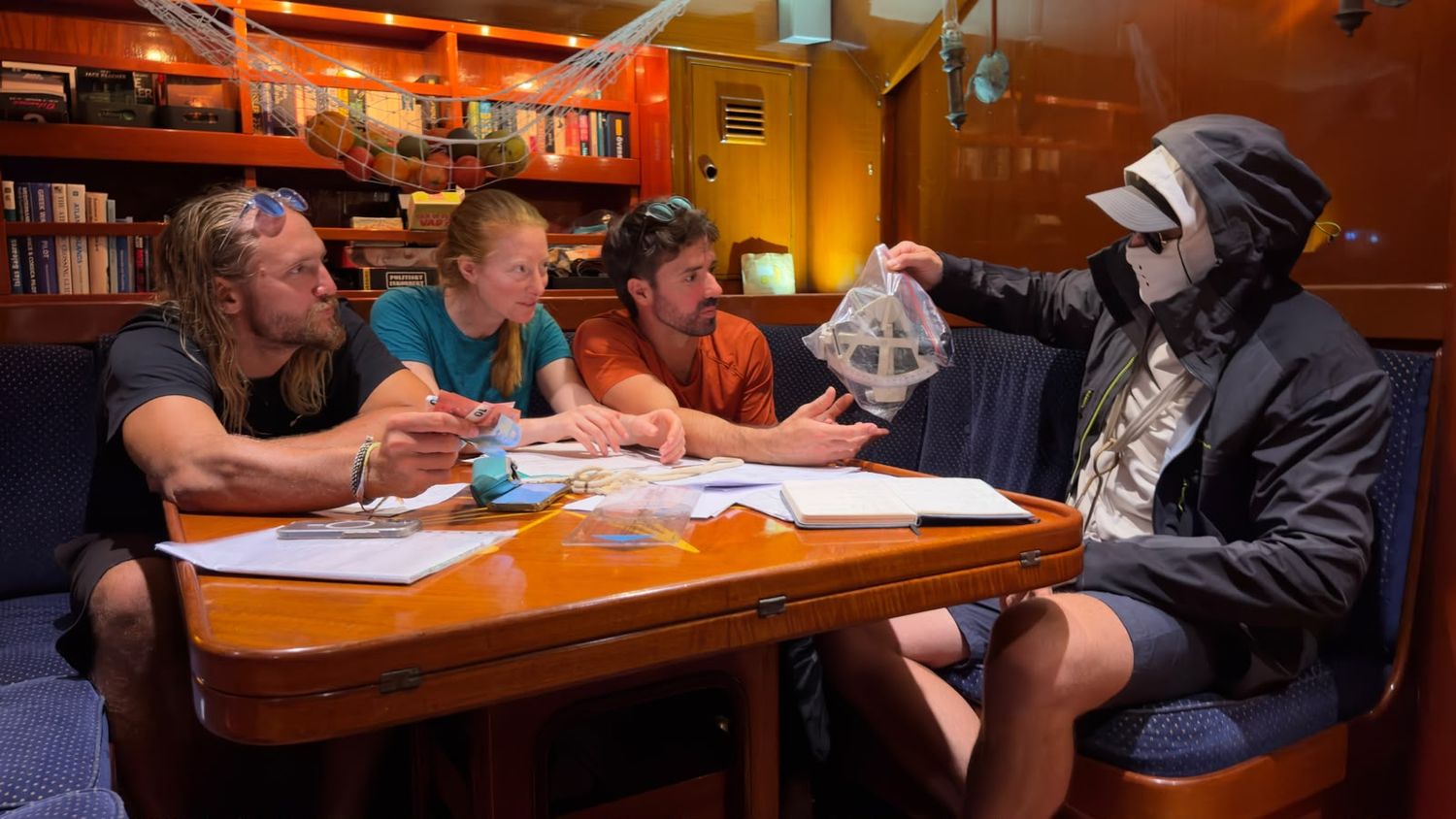
As you have probably figured out at this point, the drug of choice on board is, of course, celestial navigation- an art which has hooked offshore sailors for centuries. Once addicted, navigators will emerge from down below only to get their fixes two times per day, and spend the rest of their days and nights down below doing complex spherical mathematics. On Adrienne II, our skipper is our dealer. I must confess that I myself gave in to the strange urge which I’ve felt witnessing my crewmates practice this fine art, and yesterday felt an amazing sensation as I was able to wield the sextant for the first time and with it, bring down the tip of our starboard spreader to the top of our front sprayhood, presicely measuring the angle between the two (35deg, 38,8’ min). This afternoon, Naxo then showed me how to get my fix from the very sun itself - and I now fear there is no turning back.