05 32.812 N 087 03.790 W
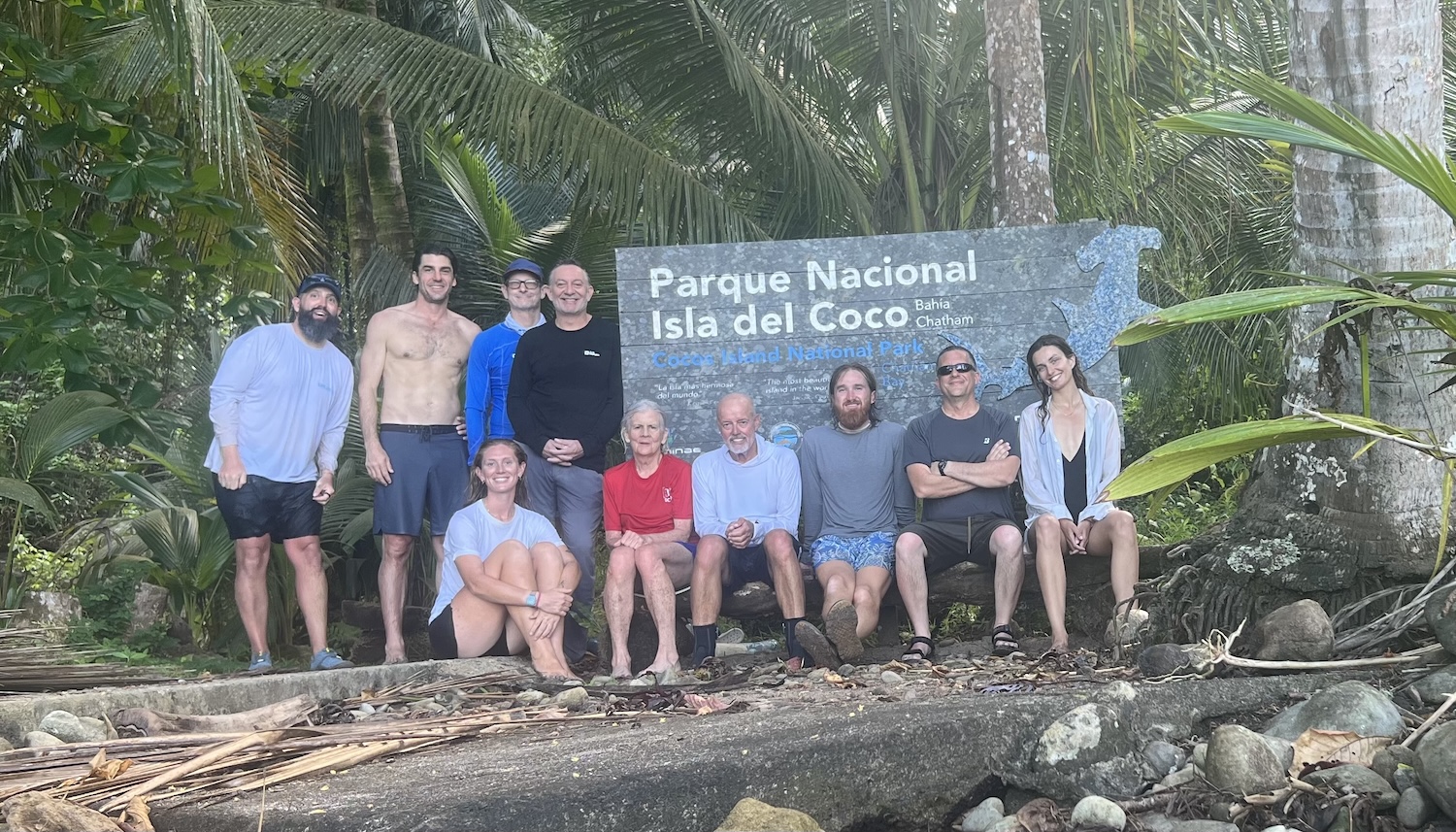
After a good night’s rest on a mooring in Chatham Bay, we had a visit from one of the park rangers to give us an overview of the island’s rules and regulations. His visit turned into more of a tour than an official visit, which we appreciated. All our passports were stamped with the coolest stamp ever, a graphic of a hammerhead shark.
We split into two groups: one went to do a hike up to the ranger station, and one went snorkeling around the bay, switching the groups after lunch.
Hiking up to the ranger station on the zig-zag trail gave us stunning views of the clear waters of Chatham Bay. The pristine forest was something to experience; it seems like it has not been touched for hundreds of years. The trail starts and ends at the mouth of the Lievre River, which has a small waterfall and a pool to cool down in, which was welcomed by all after the long hike. Rock carvings along the river left by ship captains and explorers dating back to the 18th century were very interesting and started many conversations about treasures being left on the island.
The park ranger referred us to two different spots for snorkeling: one at Manuelita Rock, famous for hammerhead and tiger sharks. The second spot was a reef close to Chatham Bay Beach. No hammerhead or tiger sharks were spotted, but many other species were enjoyed during the snorkeling sessions. Lots of sea life around the reefs with great visibility. Everyone enjoyed the snorkeling sessions, even being a bit nervous about the predators this island is known for.
We moved FALKEN to a mooring in Wafer Bay late in the afternoon. Once moored, we enjoyed another evening of good food and conversation.
This was truly a remarkable day in a remarkable place. Cocos Island touched all of our souls today, and will stay with us forever.
// Jakes (Johann Koekemoer)
View more passage logs
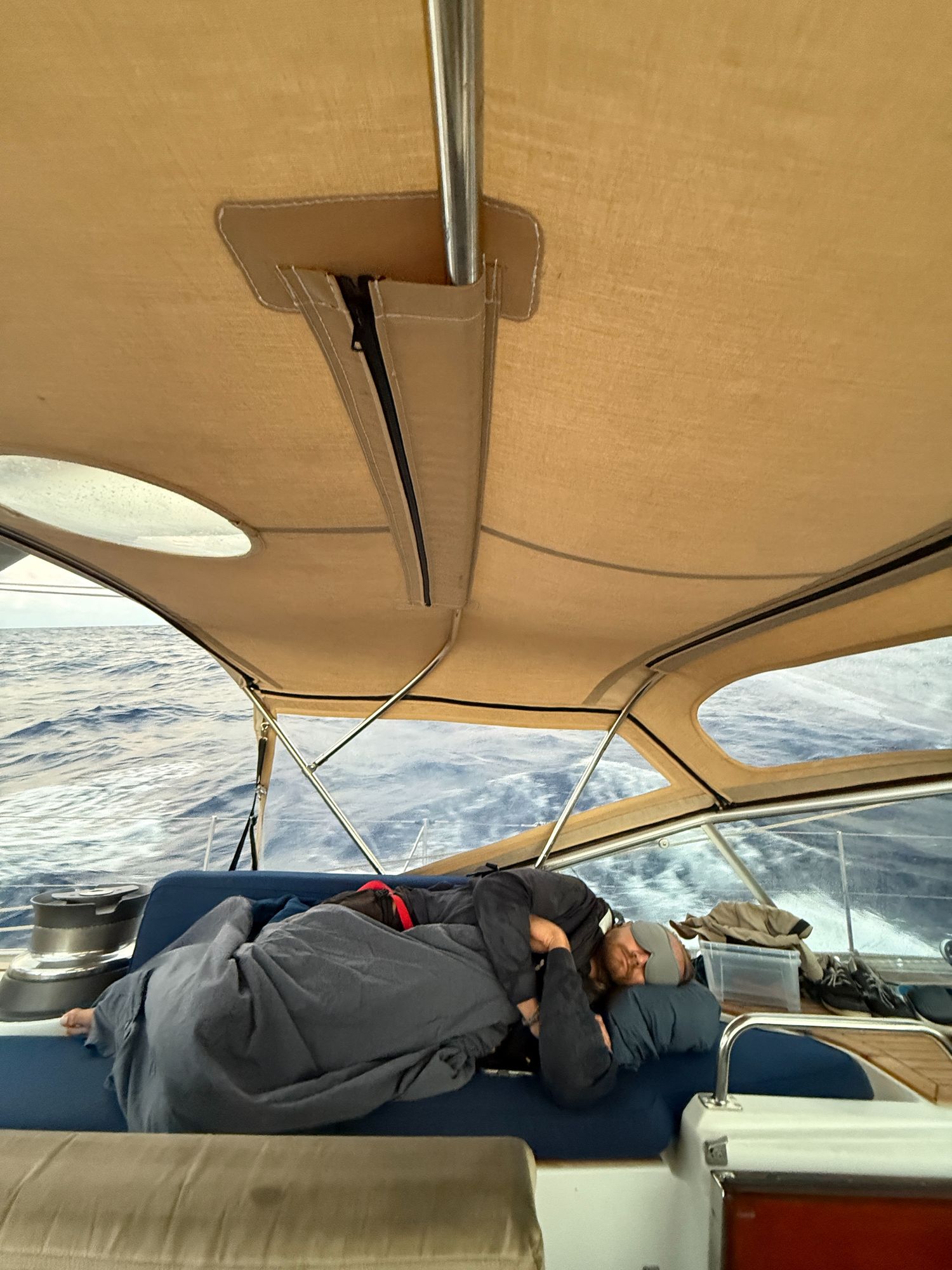
Snag it or sweat it! Rolls Royce bunks, watches and fans
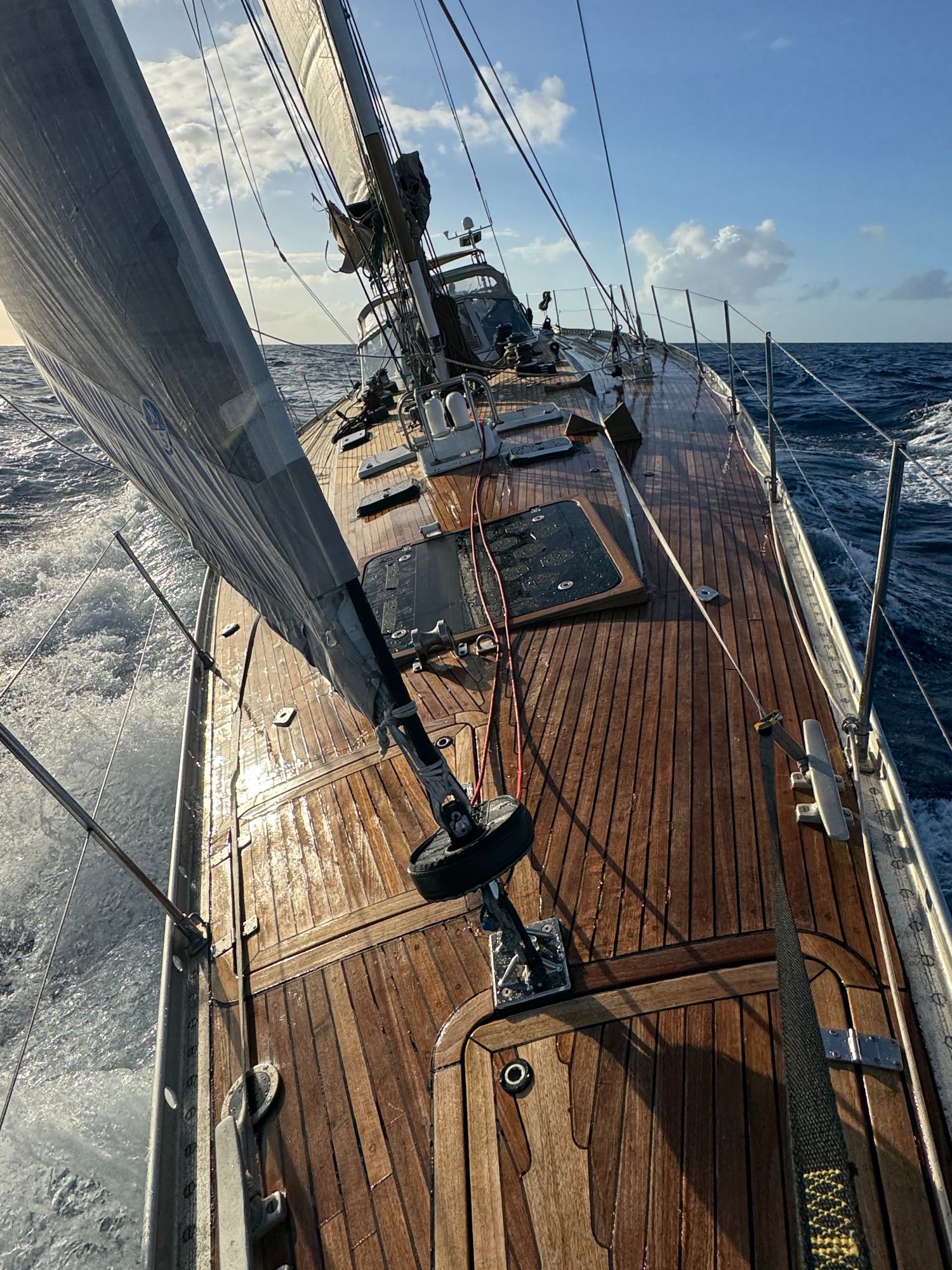
Today marks day 6 of one of the most epic passages I've decided to take on. There is something wildly exciting and equally calming about being surrounded by nothing but ocean. I get to watch the entire rhythm of the world shrink down to wind, weather, watches, and 10 humans trying to get a sailboat to another continent. I'm not sure if former bloggers have noted, but this passage is HOT as balls. We continue to laugh, learn, and sweat.


She’s a big ship on a much bigger ocean2335
We also have faced the fact that although Adrienne is a very big ship, she sails over a much, much bigger sea. We all recommitted to being more attentive - treating our watch as a verb not a noun. We might feel comfortable handling Adrienne, but we're not on cruise control and this is no highway. I had not realized to what degree sailing the open ocean requires a daily commitment to awareness, intention, and vigilance. I'm glad for all of us my tutorial was clear but relatively mild.
Day Four: The boat has figured us out
By day 4, things start to get into a rhythm that starts to look like a small community onboard. It’s when personalities start to flourish, when people start losing themselves and start to realize that they don’t really care about a lot of things! I’m pretty sure the disconnection from the internet starts aligning our inner selves. Clearly everyone has gotten their sea legs by now, and even the boat seems to have understood the type of crew she has now. I love to see how people start fitting into different roles with their peers and the boat itself.