
2026 UTC | 30° 46.86’ N 034° 10.18’ W
Sailing
The last 24 hours have shown Adrienne II the many colors and moods of the Atlantic. We had spent Tuesday into Wednesday in a calm, with no wind and an autopilot at the helm.
The watches were permitted to slightly alter their schedules: two folks on deck instead of the four; swapping duties so that those of us who needed more rest got some. Knitting came out; books were read.
As Wednesday progressed the cold front Erik had mentioned made itself known: first by a wall of clouds to the north; wind shifting around to the northeast. By suppertime it was clear some of the clouds had rain in them; all of them were on their way to us. And a few even brought rainbows.
Erik had explained at the dinner briefing that the cold front would reach its peak during the 2200 to 0200 watch, with gusts to 25 or 26, and sustained winds of 16 or 17. The after dinner watch hoisted the main to reef one, then down to reef two. The cutter jib, the smaller of the two was deployed, and for the first time in the almost two weeks we've been sailing we were on port tack.
I went to bed, missing those festivities, knowing full well when I was awoken for the 2200 to 0200 watch I'd find out how things looked.
The night that greeted me was wild. The steady breeze roaring through the rigging; Erik up overseeing the watch change, there to help us as we put hands on an active helm.
And it was a blast. Pitch dark but for the moon and the clouds chasing it; Adrienne II powered up in a building sea state. The helm was light but powerful, the slightest move on the wheel met with instant response.
The Atlantic, a 3-D dynamic landscape, with a three to six foot seas, provided new lessons as we learned how to power up the helm coming up a wave, then bearing off slightly at the top of the wave to carry her power into the trough.
Adrienne II charged along in the night, each of us meeting ourselves as we took the helm. For some it was a chance to feel our fully powered vessel cut a path through a driving sea; for others helming brought up doubts and fears that they wrestled as they steered; for others it was confirmation that driving close-hauled in the dark mid Atlantic on a breezy March night was the finest kind of adventure.
Molly Mulhern
View more passage logs
The Wheel Keeps on Turning
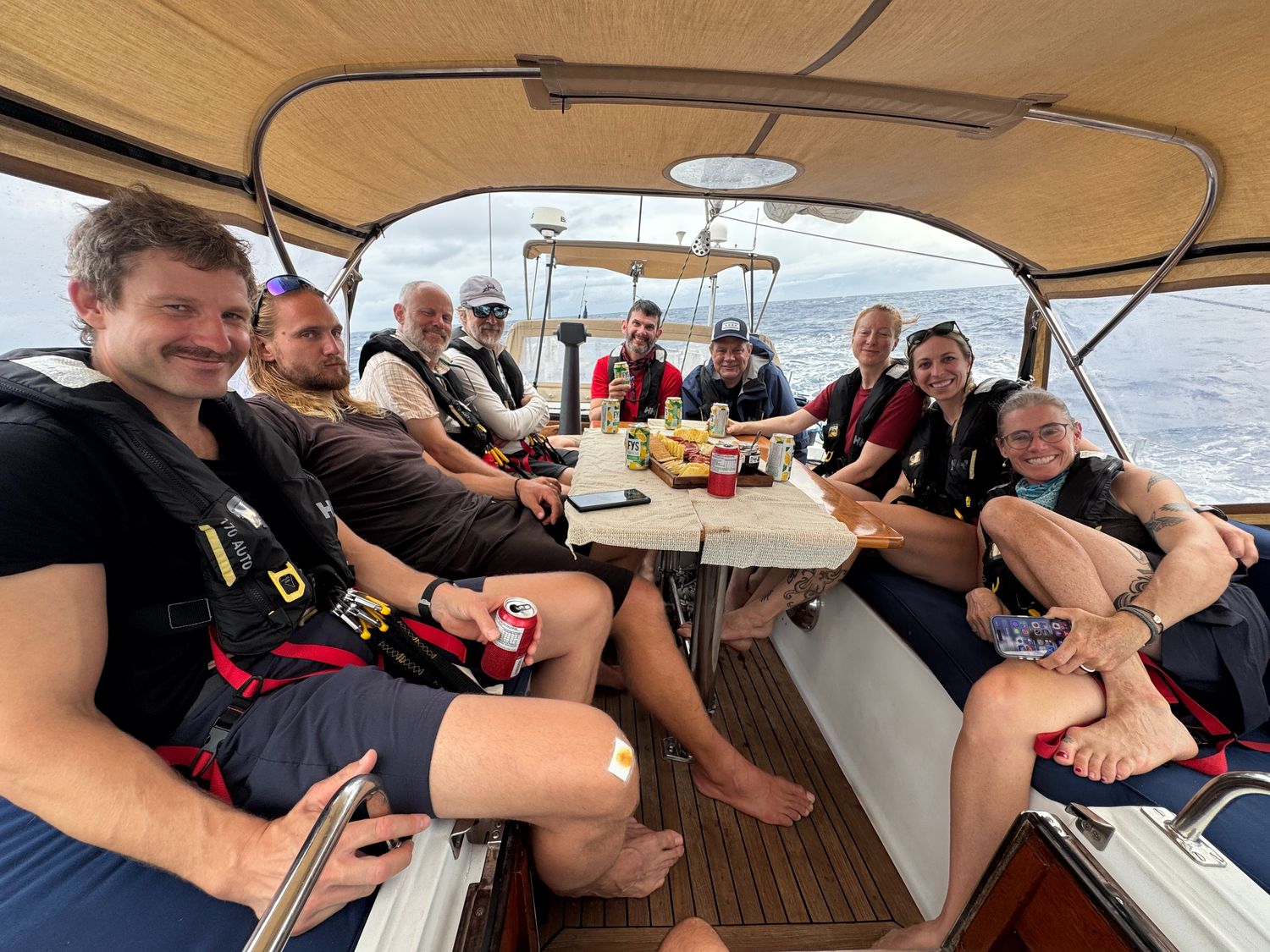
Helming is basically steering the boat by hand. Helming is so completely unlike driving anything else. How each of us put all this information and sensation together to guide our hands and keep Adrienne going where we want to go - to stay the course as the saying goes - is as different as the individuals on this boat. Well there you have it helming as described by six people who approach the same basic task with highly varied perceptions, feelings, and even emotions.

Navigating with the stars
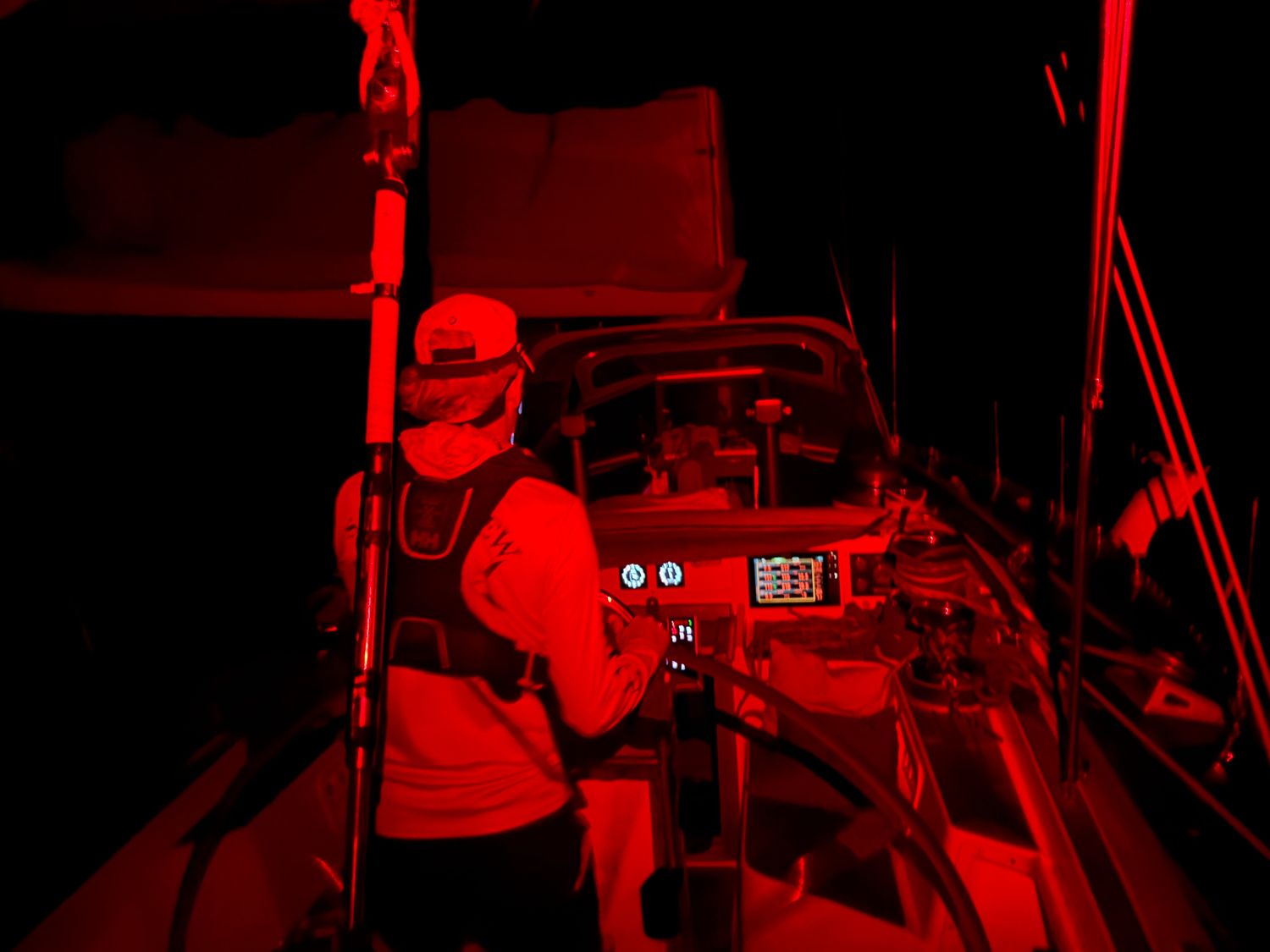
Once the bimini was folded up the view across the starlit dome above our heads had us in awe and got our full attention. I am writing this during the same watch as I aim to share the beauty of the ocean and special moments we are witnessing during our voyage. Tonight, that light (coming from within and outside our galaxy) is guiding us across this vast open space towards our destination. Witnessing and sharing constellations builds a link to ancient cultures and seafarers, and this view into a world of lightyears and galaxies challenges the day to day notions of space and time you so recently left behind. Thank you for joining us as we sail under the stars.
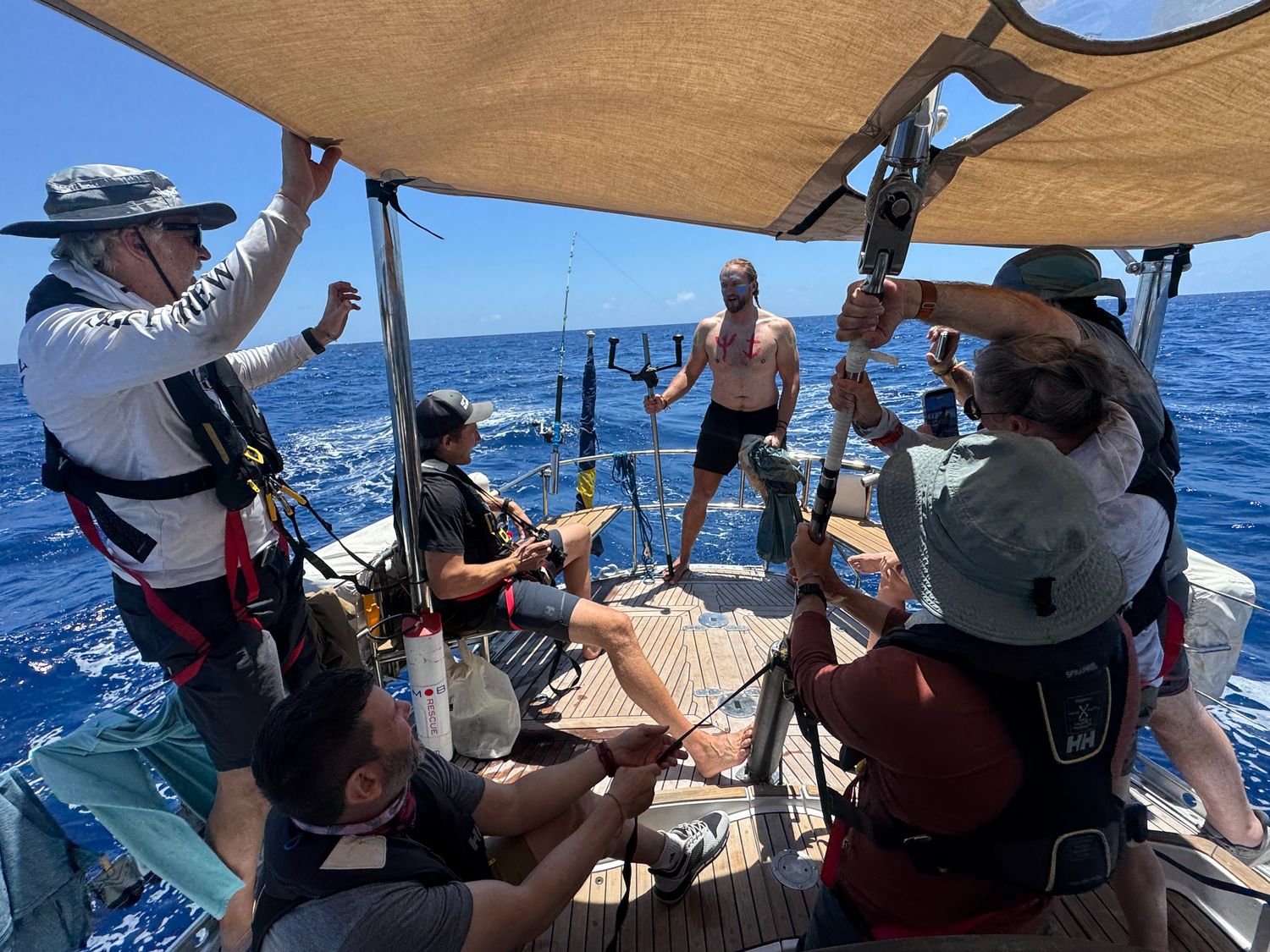
Equator Day!
Excitement was in the air as the day dawned, the Equator grew ever closer. Those who go to sea often hear of King Neptune arriving at such a time in order to promote those worthy souls from Pollywog to Shellback, in the watery realm. We were still surprised when he arrived and called upon us to honour tradition and answer for crossing the equator without permission. For me this was one of the features of the trip and it did not disappoint. This is definitely a passage to remember.