2216 UTC | 08° 10.72’ S 107° 23.94’ W
Sailing
I woke up this morning to a delightful smell and stumbled out of bed to find Mia making her famed hurricane eggs— obviously, a debate regarding the real name of this genius breakfast creation ensued. To make matters more exciting, a small tear spotted in the leech of the main shortly after breakfast had Alex up the mast Spider-Man style. A special shoutout to Vince—I have never seen someone cut sail tape with such precision and mathematical accuracy.
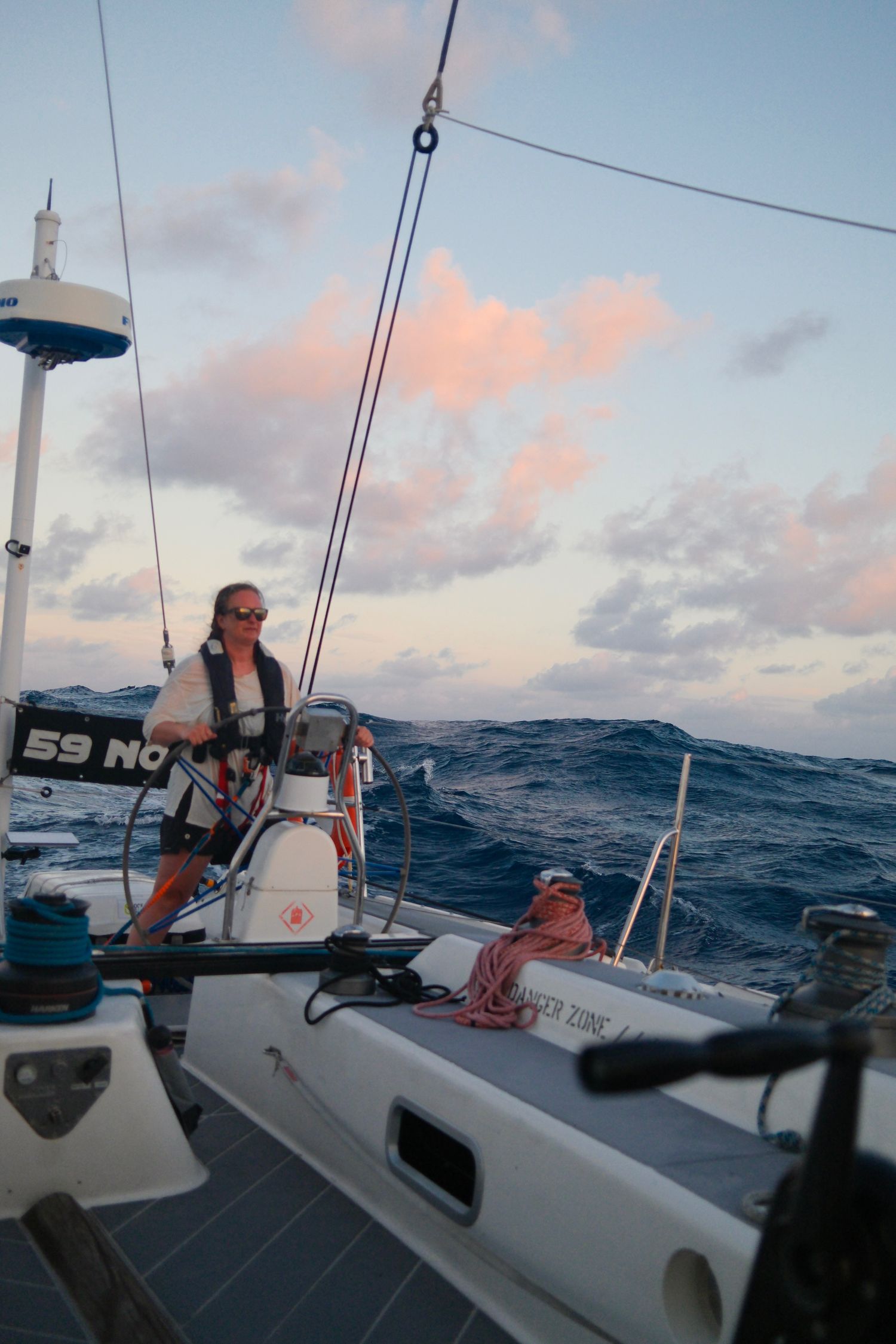
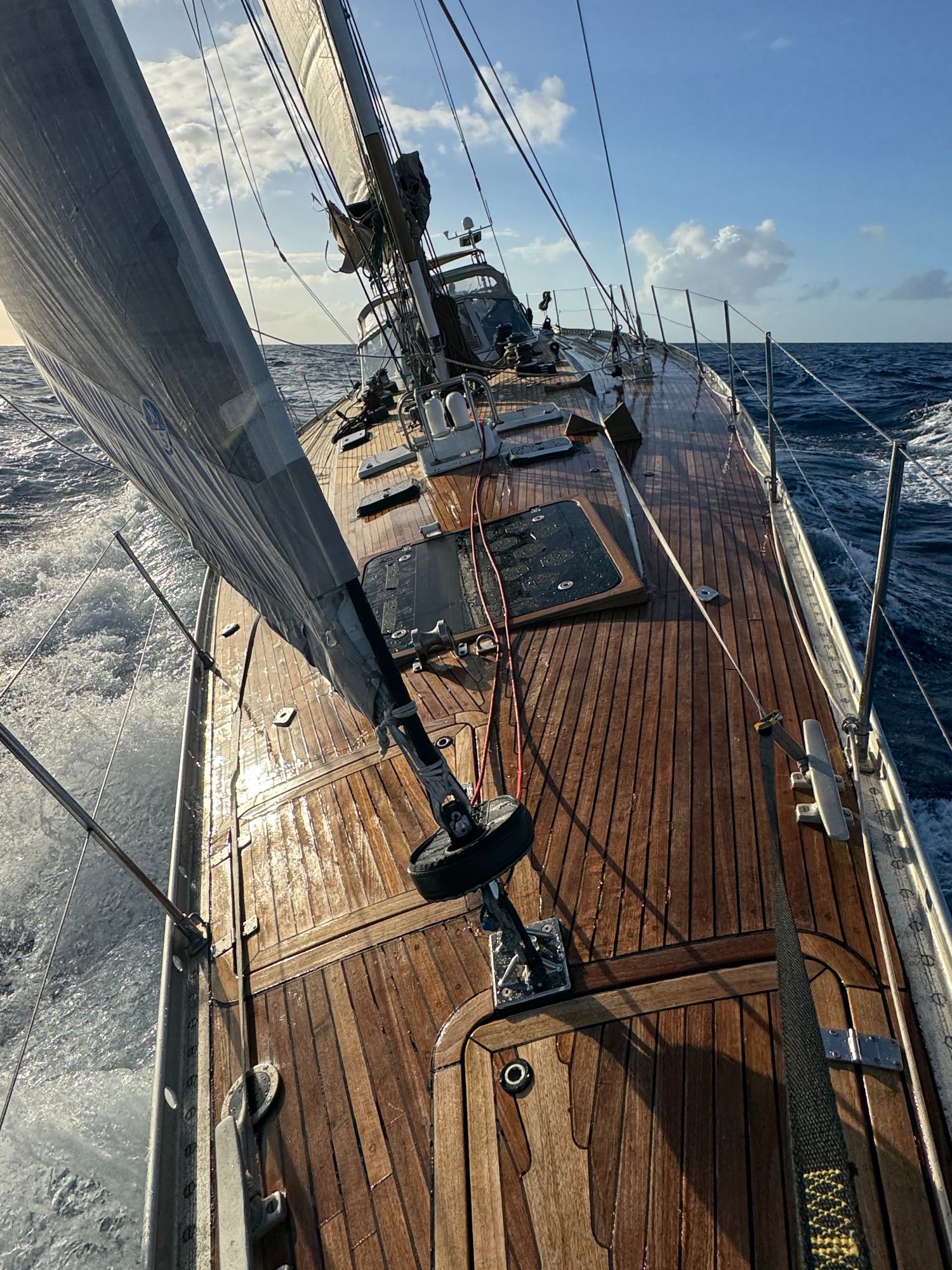
FALKEN is officially on the highway to the Marquesas, as Alex calls it, also known as the southeasterly trades. She is cruising along with the swell (finally) on her stern and the sails wing on wing. I wasn’t sure the term ‘highway’ could accurately apply to sailing until about five minutes ago, when Kate surfed down an above average wave and reached 17.6 kts of boatspeed. I can confirm that down here at the nav desk, I certainly believed that I was on a highway to something.
The yankee is rigged to the pole, which means I’ll finally stop tripping over it every time I go to the foredeck. It’s been an eventful past 24 hours to reach this point, and I’ve lost track of how many reefs I’ve put in and shaken out. I’m almost convinced that a few of them were just for Alex’s entertainment. The breeze is ever present but constantly in flux, and in a way, I find it strangely comforting that it will never fully make up its mind.
All is well with the crew—we’re enjoying conversations ranging from European bears (they exist, right?!) to electrolytes to sea stories. Some of us even laugh at Ken’s extraordinarily niche jokes. Flying fish constantly zip just above the surface, raising questions of what could possibly be chasing them down below. We’ve stopped keeping tally, but many have found their unfortunate end after flinging themselves onto FALKEN (or worse, straight into Beven).
As for me? I’ve found myself most in awe at night, when bioluminescence sends glimmers of wave crests across an otherwise dark expanse. I’ve seen more shooting stars than I thought physically possible, and I love how Venus is always the first bright spot to appear in the sky as the sun sets. I’ve been thinking much about how space must not be all that different from the open seas, empty and incomprehensible from afar but alive and intricate once you zoom in. I find myself smiling as I realize it’s no surprise those who explore space were named after sailors.
Love to all,
Zoe Peach-Riley (Apprentice)
View more passage logs
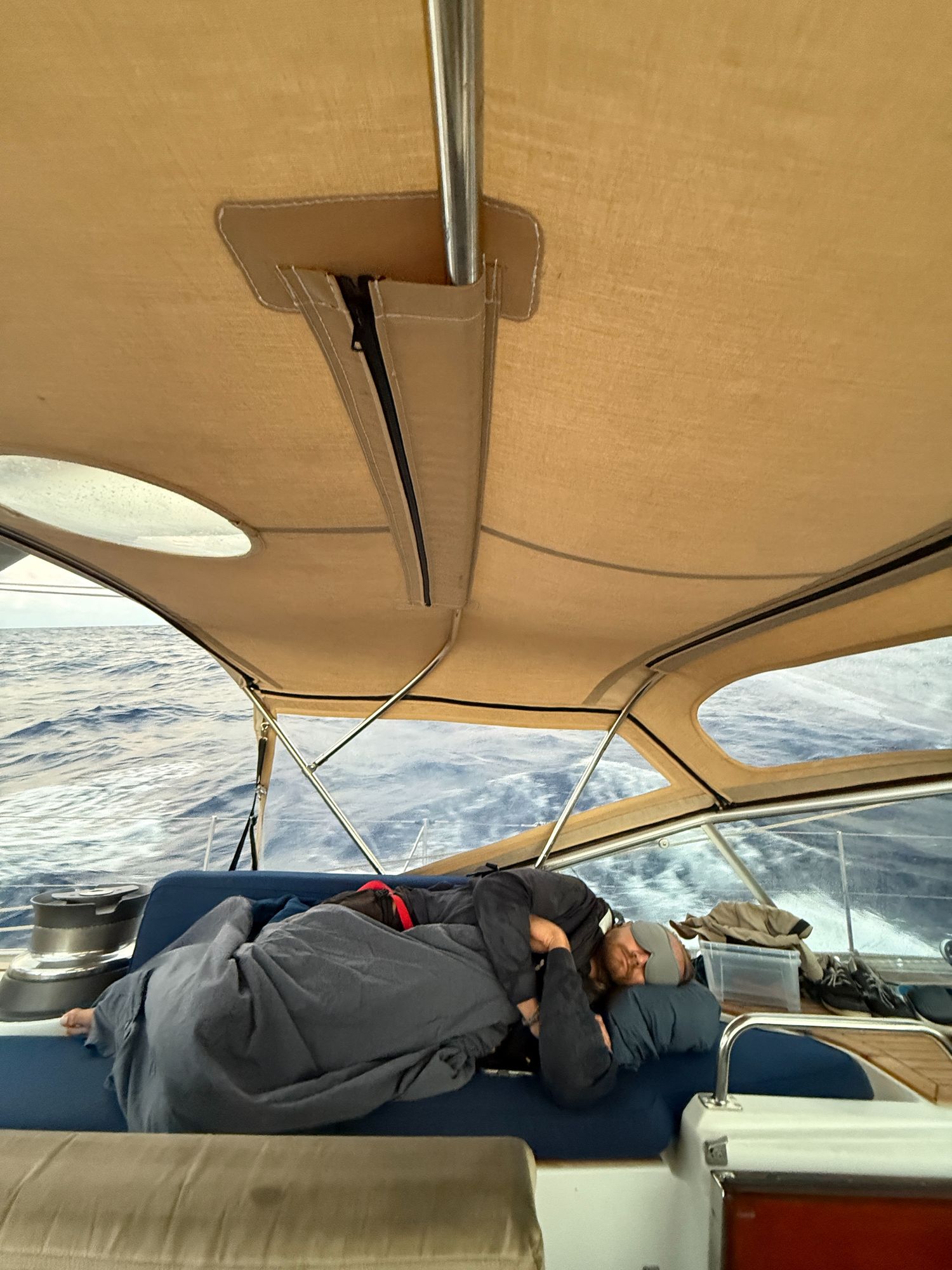
Snag it or sweat it! Rolls Royce bunks, watches and fans
Today marks day 6 of one of the most epic passages I've decided to take on. There is something wildly exciting and equally calming about being surrounded by nothing but ocean. I get to watch the entire rhythm of the world shrink down to wind, weather, watches, and 10 humans trying to get a sailboat to another continent. I'm not sure if former bloggers have noted, but this passage is HOT as balls. We continue to laugh, learn, and sweat.


She’s a big ship on a much bigger ocean2335
We also have faced the fact that although Adrienne is a very big ship, she sails over a much, much bigger sea. We all recommitted to being more attentive - treating our watch as a verb not a noun. We might feel comfortable handling Adrienne, but we're not on cruise control and this is no highway. I had not realized to what degree sailing the open ocean requires a daily commitment to awareness, intention, and vigilance. I'm glad for all of us my tutorial was clear but relatively mild.
Day Four: The boat has figured us out
By day 4, things start to get into a rhythm that starts to look like a small community onboard. It’s when personalities start to flourish, when people start losing themselves and start to realize that they don’t really care about a lot of things! I’m pretty sure the disconnection from the internet starts aligning our inner selves. Clearly everyone has gotten their sea legs by now, and even the boat seems to have understood the type of crew she has now. I love to see how people start fitting into different roles with their peers and the boat itself.