Day 1 at-sea
15º 09’ N, 026º 22’ W
February 7, 2024
0536 Ship’s Time
15º 09’ N, 026º 22’ W
Steering 215º at about 8 knots
The tiniest sliver of moon is rising in the southeast, creating a surprisingly bright light in the hazy air. The Southern Cross constellation is aligned perfectly with the end of the poled-out jib, making it easy for the helmspeople to steer a straight course. The wind is up a touch, and it’s smooth sailing to the SSW.
We left Mindelo in a dusty haze around 1000 after a leisurely breakfast and after checking off the last of the pre-departure items. I had been feeling less anxious than ever in the few days prior, but those moments leaving the dock always get my heart beating with that special combination of nerves and excitement. A few hundred yards from the dock, after stowing lines and fenders, we hoisted the mainsail and bore away onto a broad reach and out into the channel between Sao Vincente and Santo Antao, and with that we were off.
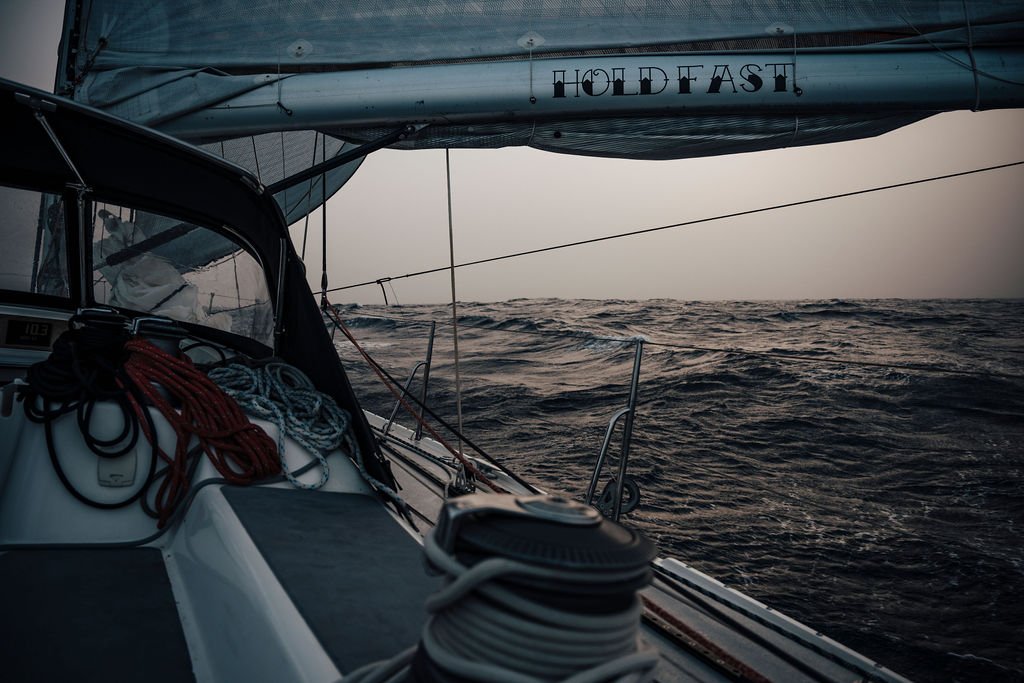
As expected, the winds built in the channel and by noon FALKEN was surfing down waves and touching 14 knots, with just the mainsail set. Windspeeds topped 30+ in the sharp acceleration zone where the gentle trades are squeezed between the high peaks of the neighboring islands and shot out like a cannon. Whitecaps were all around us, flying fish scurrying out of the way of our bow wave. The steering was challenging, especially right off the bat, but everyone got a turn on the helm and did well. A few hours later we left the strongest winds behind, set the jib tops’l on the pole, and moseyed off to the WSW on port tack. Manot served up the traditional first-night-at-sea lasagne and the watches began.
As I type, we’re getting ready to jibe onto starboard tack and start making some westing on what will be our preferred tack. The weather forecast shows the steadiest tradewinds remain around 13-14º N latitude, so we put some southing in right off the bat. So while it appears that we’re headed well off course on the chart, it’s actually part of our routing strategy. We expect to be able to stay on starboard tack now for several days in a gentle band of NE’ly breeze.
Jibing the downwind rig is a whole process, with poles, preventers, and guylines strewn about the foredeck and the cockpit. We’ll save that description for a later blog. For now, we’ll wait for the first glow of daylight and the watch change to jibe this ship around.
— Andy
andy@59-north.com
View more passage logs
The Penultimate Blog from Adrienne II
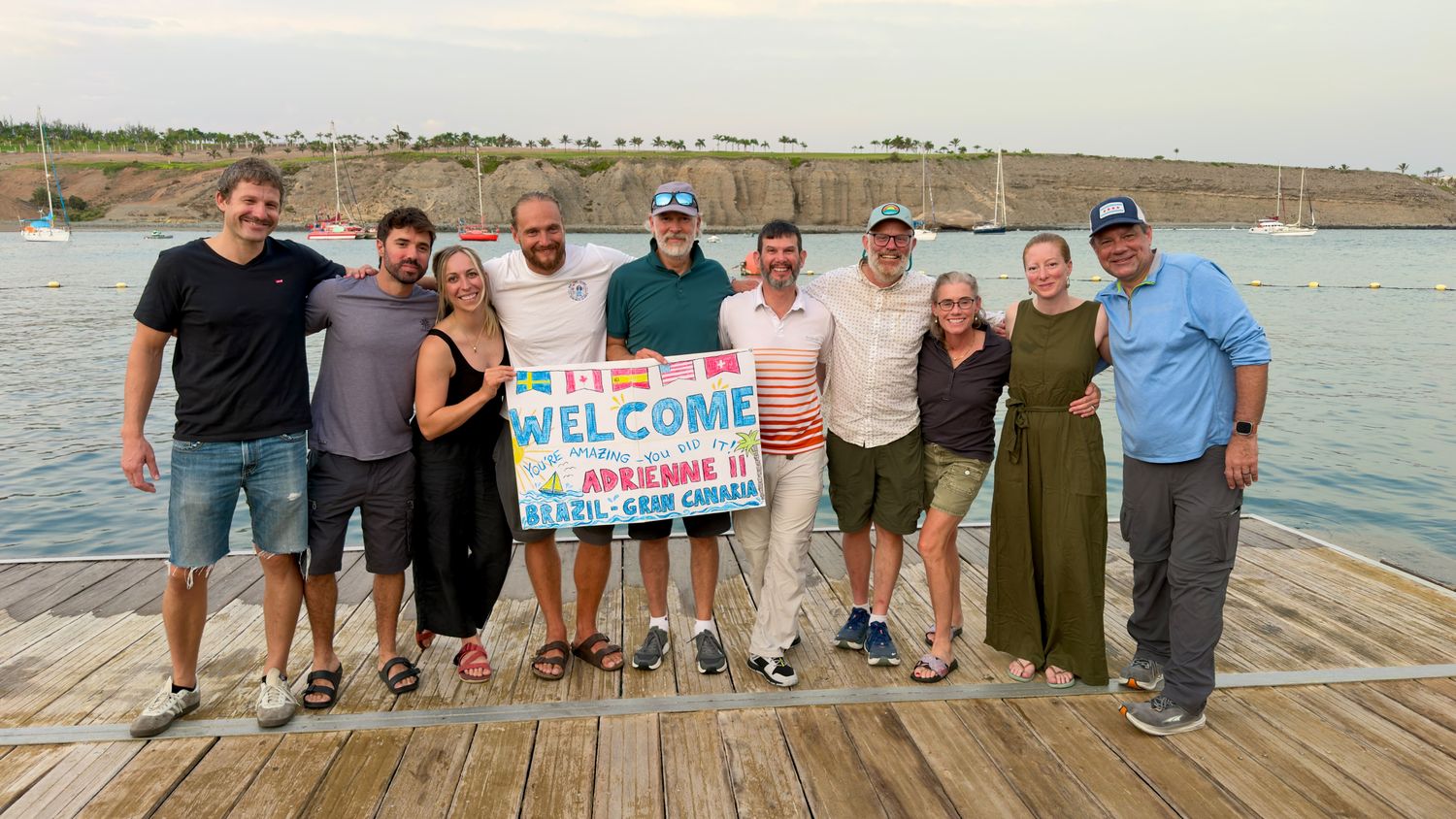
After 20 days, and 3000+ nautical miles, we're back on land. The motley crew of Adrienne II, consisting of 7 happy amateurs supported by 3 professionals, have completed an epic journey many dream of but few realize. So much of this trip has been about being present - with nature, with each other, with this boat. My biggest takeaway from this trip is the amazing crossing of the ITCZ (Inter Tropical Convergence Zone). We all hope you've enjoyed the blog as much as we've enjoyed creating it.

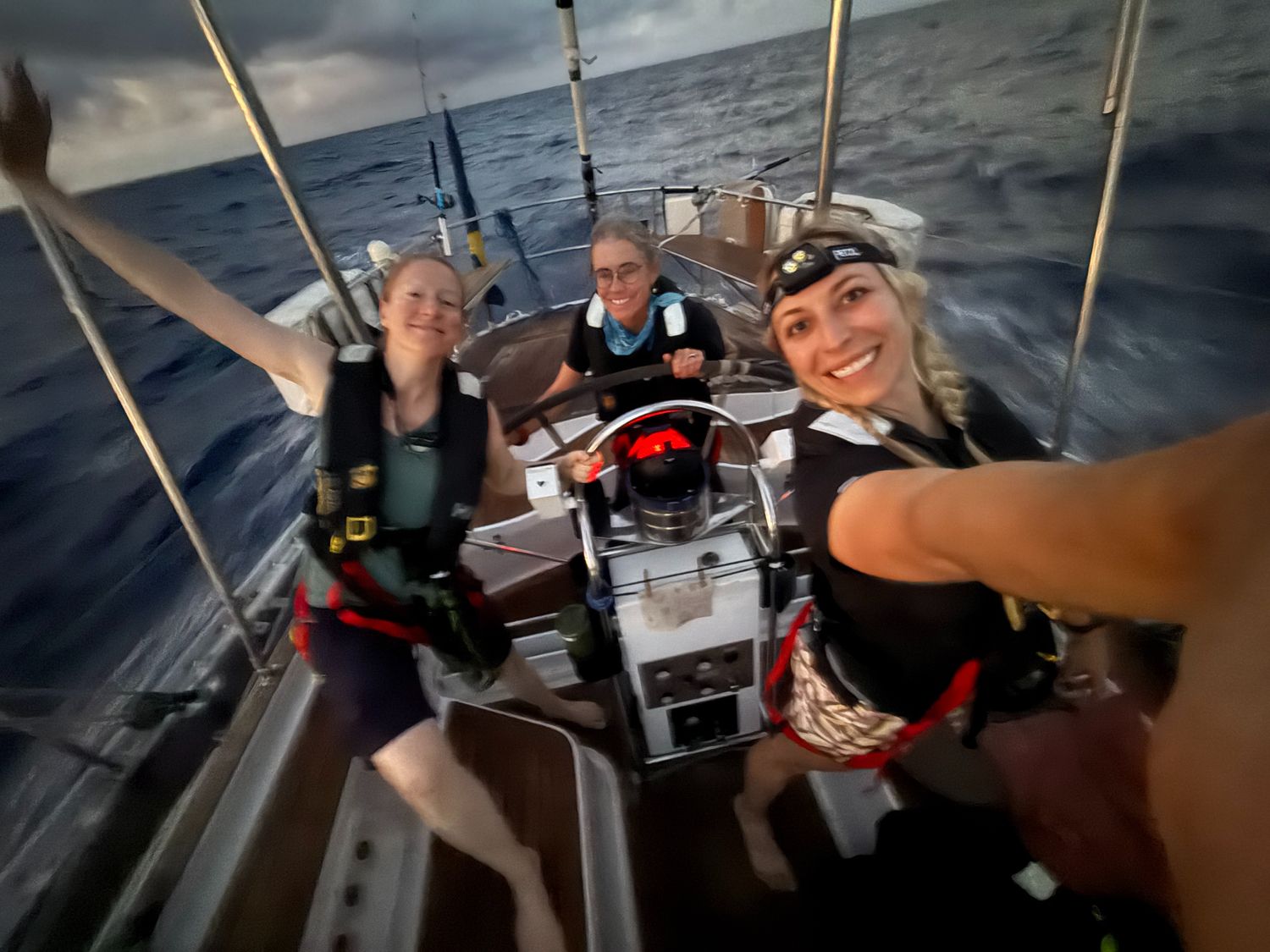
Mother Nature, you’ve outdone yourself!
It’s been a great experience to have a non-traditional trans-Atlantic, as it’s been packed with genuinely cool features. The Doldrums!! A place sailors have been talking about for centuries. The unpredictability is what made it such an exhilarating experience. While some might be frightened or alarmed by this kind of weather, I was embodied with a sense of calm and awe. There’s something wildly beautiful about being reminded how small you are, while feeling so incredibly alive.
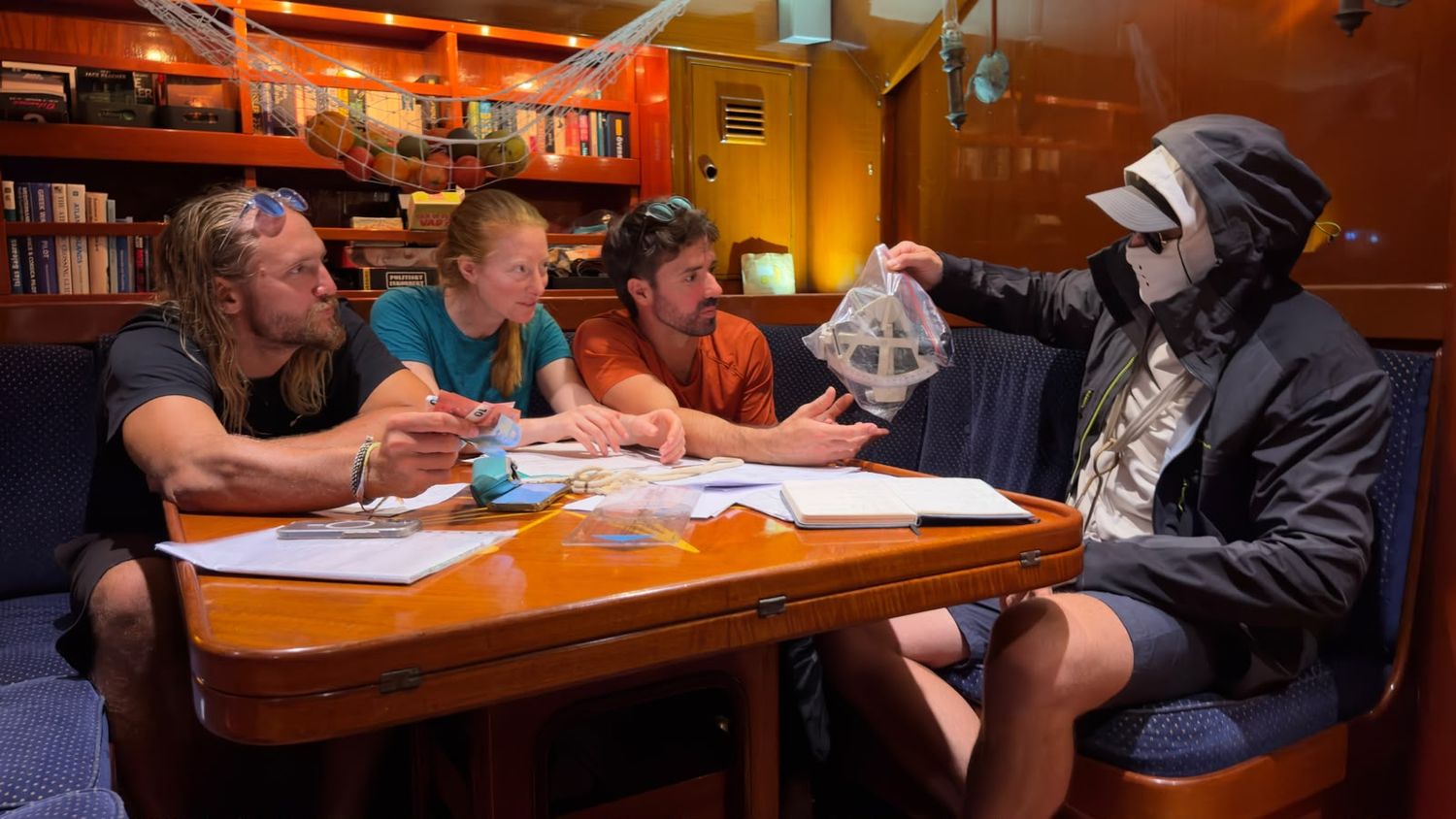
A Heavenly High
As you have probably figured out at this point, the drug of choice on board is, of course, celestial navigation- an art which has hooked offshore sailors for centuries. Once addicted, navigators will emerge from down below only to get their fixes two times per day, and spend the rest of their days and nights down below doing complex spherical mathematics. On Adrienne II, our skipper is our dealer. I must confess that I myself gave in to the strange urge which I’ve felt witnessing my crewmates practice this fine art, and yesterday felt an amazing sensation as I was able to wield the sextant for the first time and with it, bring down the tip of our starboard spreader to the top of our front sprayhood, presicely measuring the angle between the two (35deg, 38,8’ min). This afternoon, Naxo then showed me how to get my fix from the very sun itself - and I now fear there is no turning back.