Day 1
15º 31’ N, 060º 43’ W
28 February 2024
0941 Ship’s Time
15º 31’ N, 060º 43’ W
Steering 350º at 9-10 Kts.
I’ve forgotten what it feels like to heel over. And to reef. For over 2,000 miles across the Atlantic, FALKEN was flat, sailing downwind under full sail for nearly 11 days. No rain, no squalls, no reefing, wind never above about 18 knots. That all changed last night!
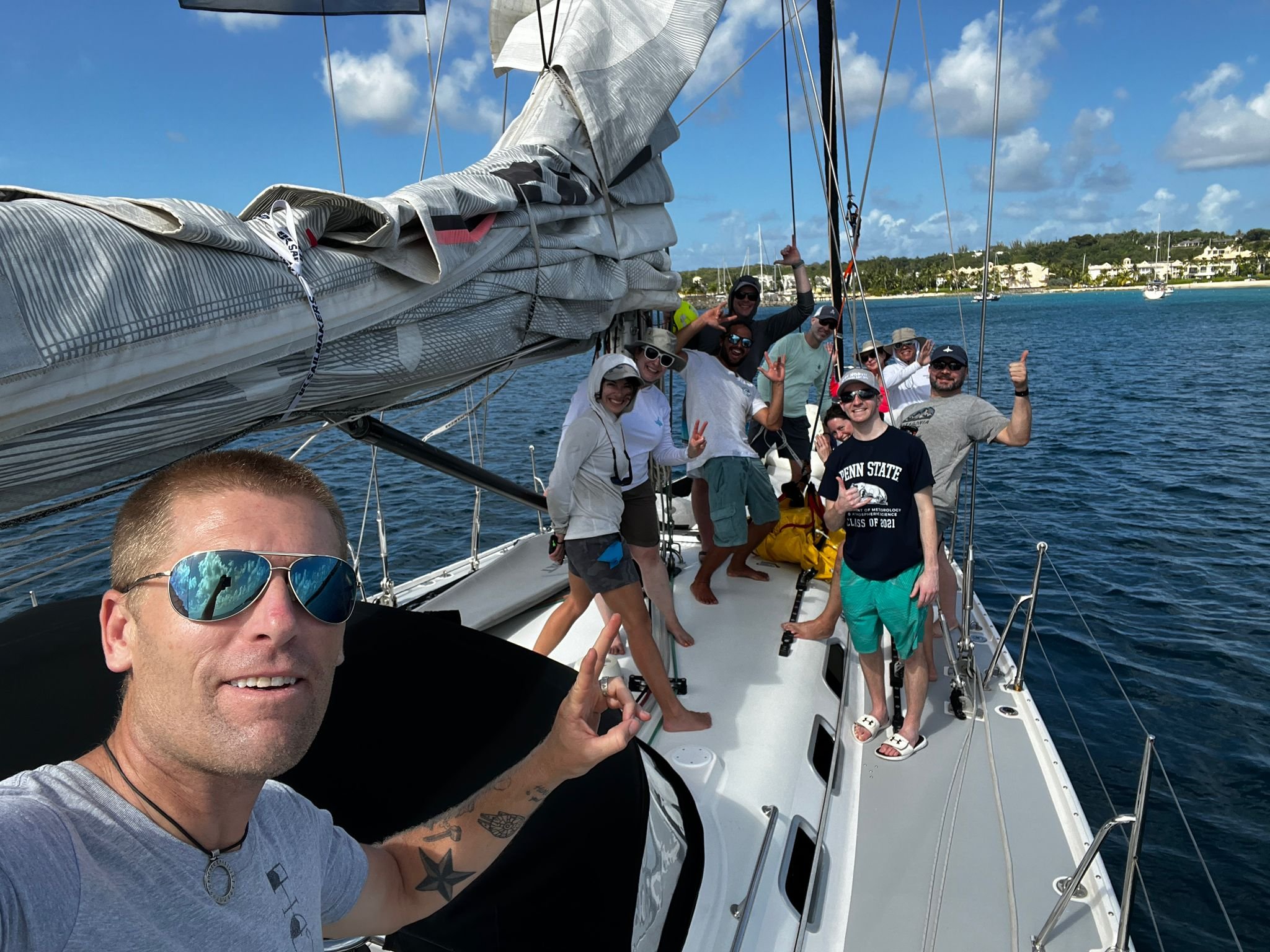
We departed Barbados at about 1620, sailing off the mooring ball without ever starting the engine. The weather was nice, the haze had cleared, and we set full sail as we pointed the bow to the NNW, bound towards St. Barth’s about 340 miles distant. Some puffy clouds gave way to bigger, blacker, rainier clouds, and as the sun set, the odd shower made rainbows in the distance but missed us on FALKEN.
I was extra tired, always am when we depart at the end of a long day of briefings. Most of the time on these passages, the day crew arrive and the first full day onboard is dedicated to getting to know the boat and her systems and going through all the safety, navigating, and weather briefings we do on each trip. But being that this is a shorter, island-hopping trip, we were eager to get underway and maximize our time cruising in the Caribbean, so a Day 2 departure was in the cards.
As night fell and the moon rose, the ‘normal’ tradewind conditions I’m used to in the Caribbean settled in. Gustier winds, dark clouds that either stole our breeze or redirected it, heading us off course, and some bigger waves headed our way. By 2230 the wind was up into the 20s and I jumped out of bed to help Alex and the on-deck crew tuck in a few reefs in the mainsail and roll up part of the yankee. Before midnight we had FALKEN settled in and settled down, still making 9-10 knots with reduced sail through a beautiful moonlit night.
And that’s where we stand this morning, still cruising along on a beam-reach, reefed down and chomping up the miles, averaging well over 8 knots. In another 40 miles or so we’ll pass between the big island of Guadaloupe and the smaller outcrop known as Desirade, then be able to bear away some 20º or so and point the bow towards St. Barth’s. While the goal of this passage is to wind up in Antigua, we’ll actually sail right past the island and continue NNW. The trades are forecast to bend to the NE later in the week, so we’re hoping that the 90 miles back to Antigua can be laid on one tack, but we shall see. After crossing an ocean dead-downwind, it feels good to have the wind forward of the beam for once and FALKEN with a bone in her teeth.
// Andy
andy@59-north.com
View more passage logs
The Penultimate Blog from Adrienne II
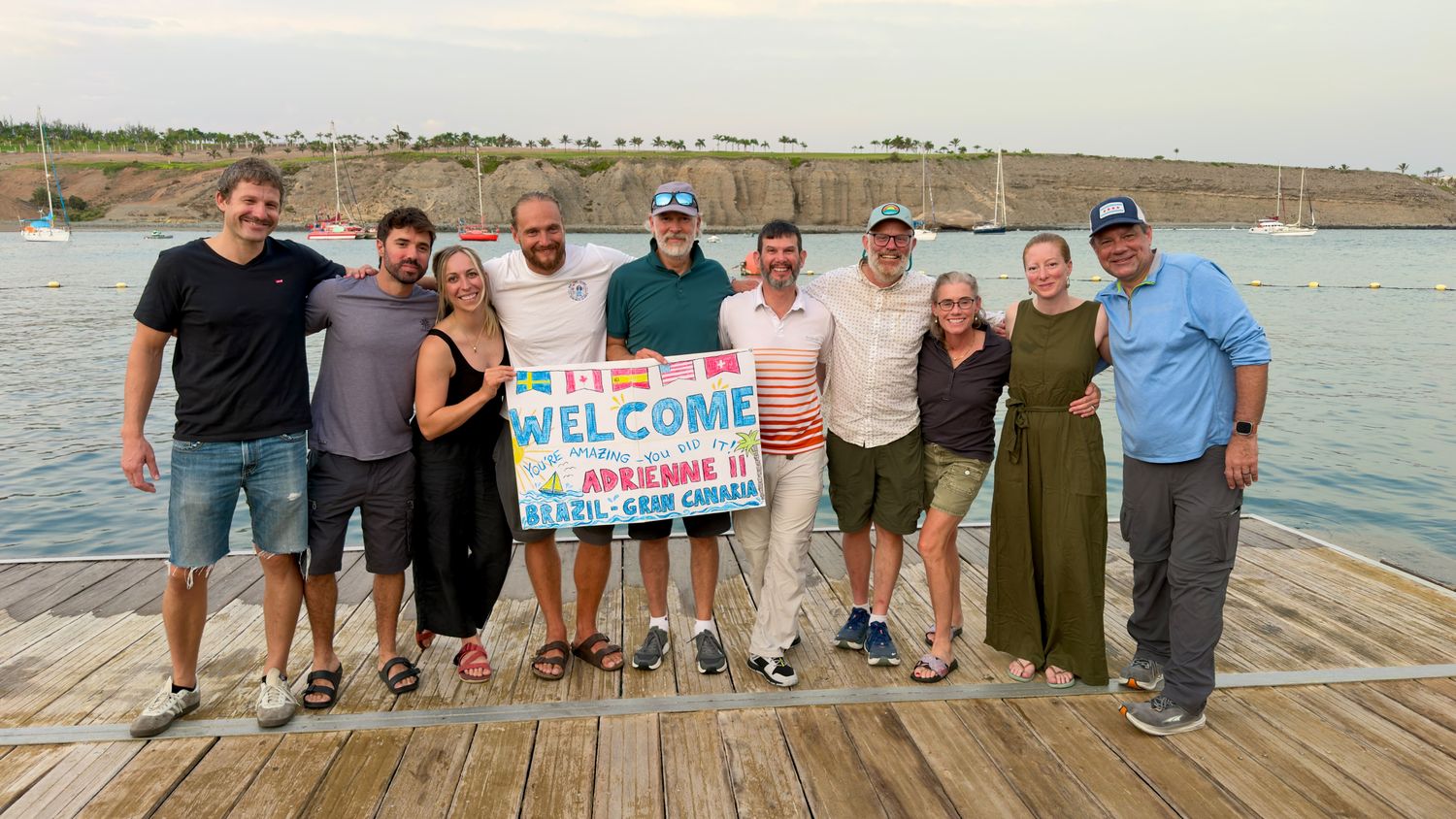
After 20 days, and 3000+ nautical miles, we're back on land. The motley crew of Adrienne II, consisting of 7 happy amateurs supported by 3 professionals, have completed an epic journey many dream of but few realize. So much of this trip has been about being present - with nature, with each other, with this boat. My biggest takeaway from this trip is the amazing crossing of the ITCZ (Inter Tropical Convergence Zone). We all hope you've enjoyed the blog as much as we've enjoyed creating it.

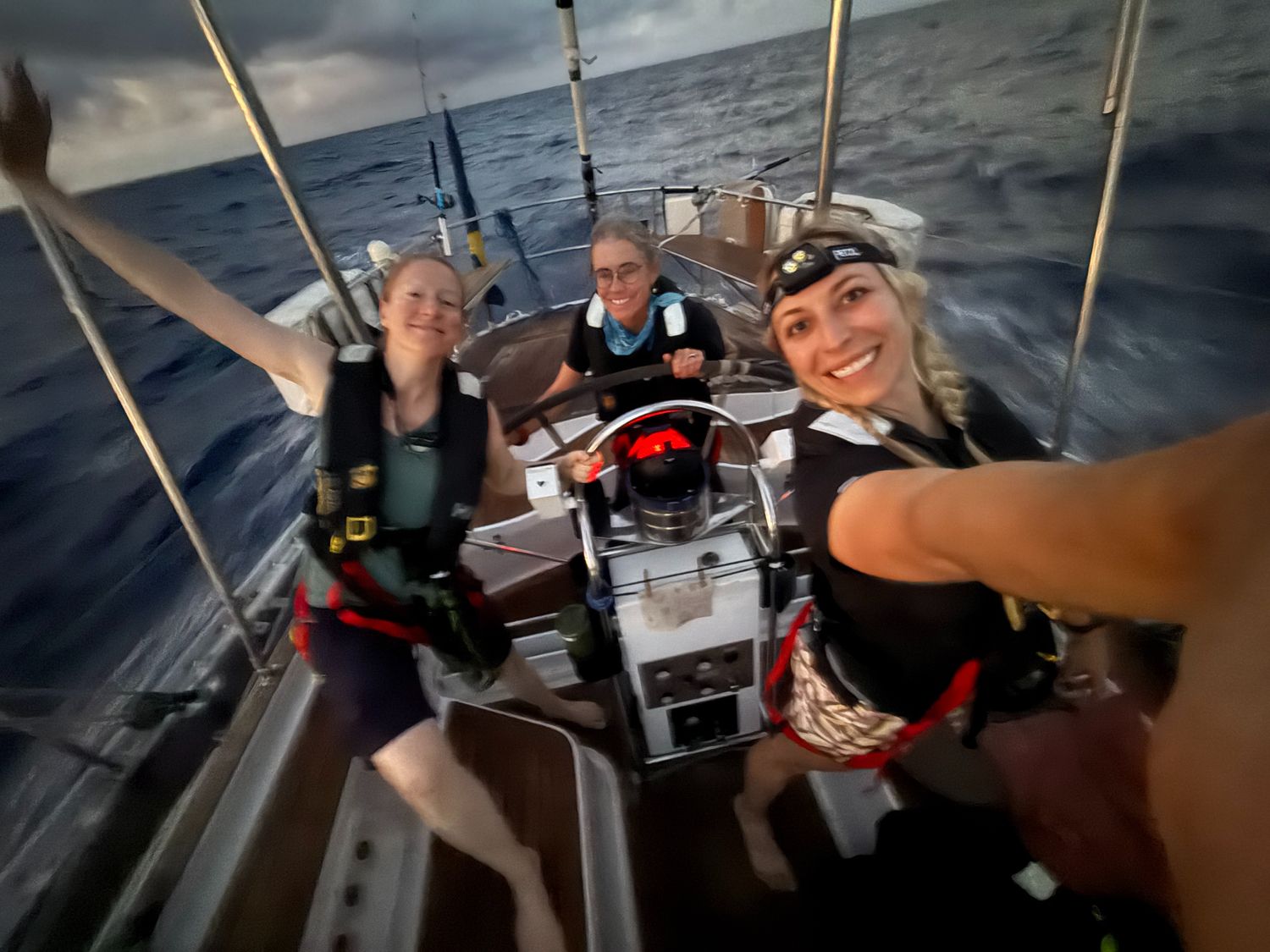
Mother Nature, you’ve outdone yourself!
It’s been a great experience to have a non-traditional trans-Atlantic, as it’s been packed with genuinely cool features. The Doldrums!! A place sailors have been talking about for centuries. The unpredictability is what made it such an exhilarating experience. While some might be frightened or alarmed by this kind of weather, I was embodied with a sense of calm and awe. There’s something wildly beautiful about being reminded how small you are, while feeling so incredibly alive.
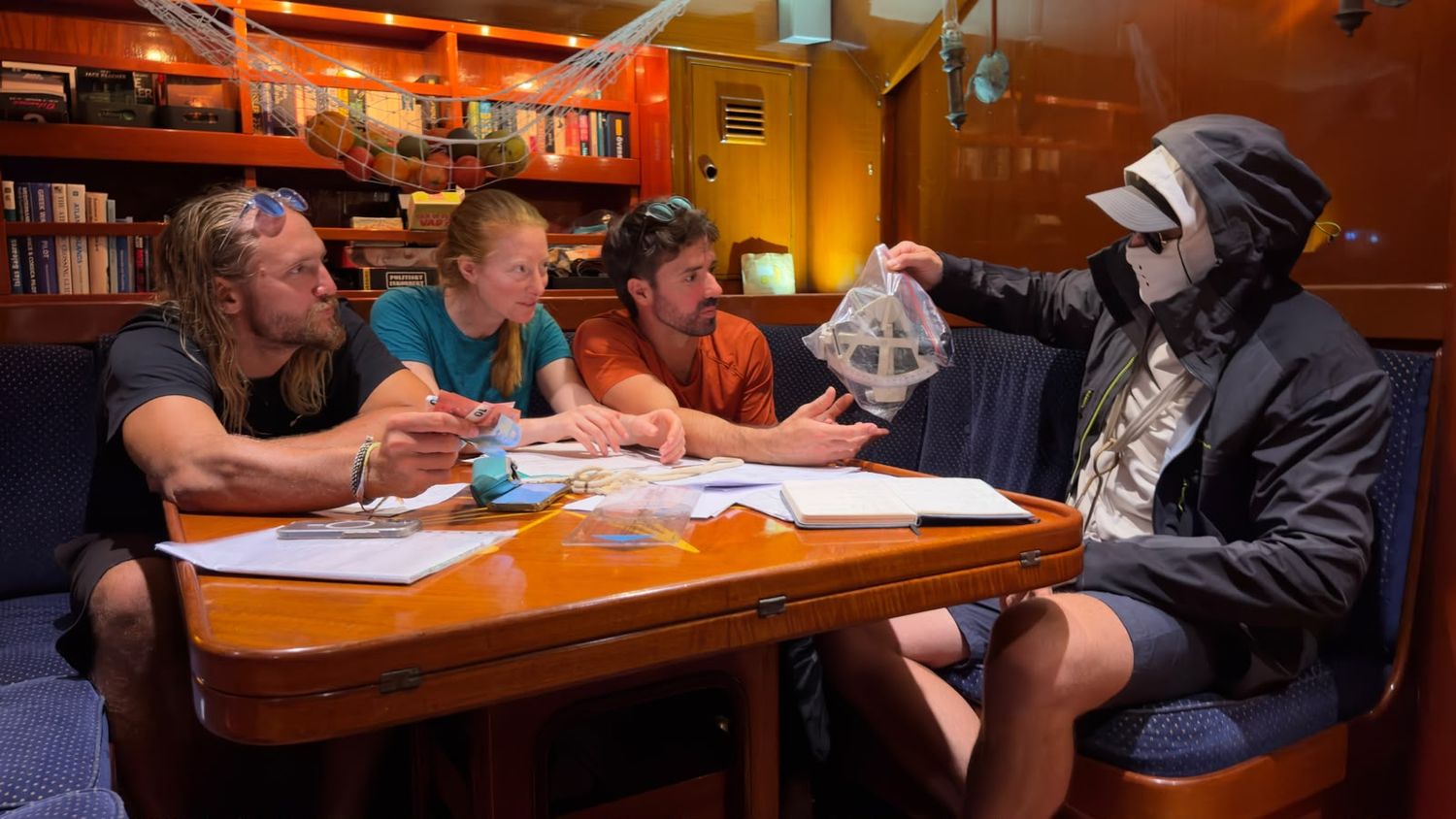
A Heavenly High
As you have probably figured out at this point, the drug of choice on board is, of course, celestial navigation- an art which has hooked offshore sailors for centuries. Once addicted, navigators will emerge from down below only to get their fixes two times per day, and spend the rest of their days and nights down below doing complex spherical mathematics. On Adrienne II, our skipper is our dealer. I must confess that I myself gave in to the strange urge which I’ve felt witnessing my crewmates practice this fine art, and yesterday felt an amazing sensation as I was able to wield the sextant for the first time and with it, bring down the tip of our starboard spreader to the top of our front sprayhood, presicely measuring the angle between the two (35deg, 38,8’ min). This afternoon, Naxo then showed me how to get my fix from the very sun itself - and I now fear there is no turning back.