30° 26'N, 031° 38'W
February 20, Day 12 | 30° 26'N, 031° 38'W
It took me a while to figure out what day it is and how long we've been at sea. That usually means one of two things: 1. The journey has now exceeded ten days, and after that, days and time start blending together. 2. Sleep deprivation is starting to take its toll. In my case, it's probably a mix of both.
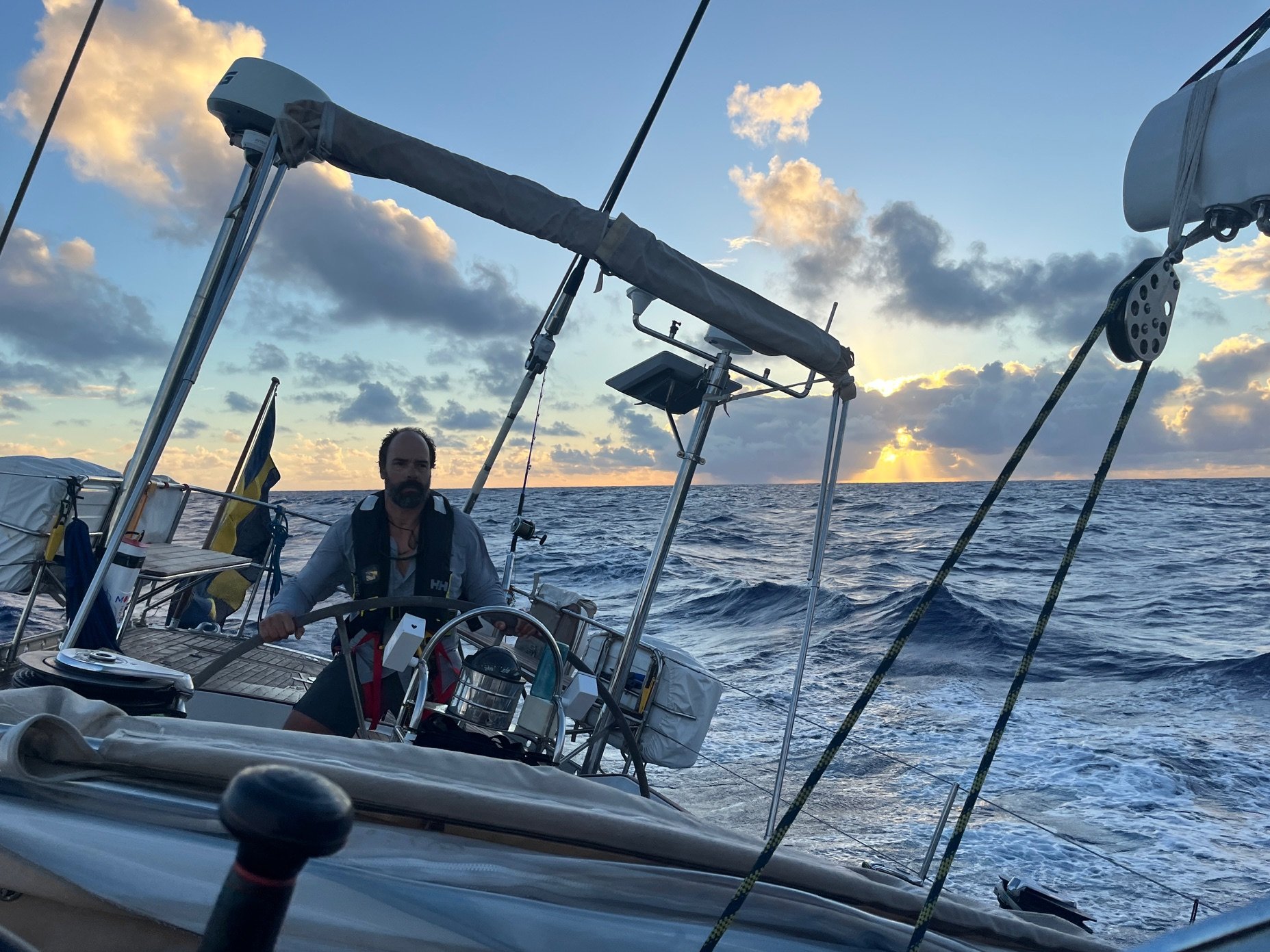
The day began (as usual!) with a stunning sunrise—a pink glow painted the tops of the otherwise white clouds. It was still dark, but as daylight gradually returned, the glow of our navigation lights faded into the surroundings. During the night, our plotter screens shine red, set to "night mode" to protect our eyes and preserve our night vision. But as the morning light grows stronger, it's time to switch back to white light. The navigation lights are turned off, and just as quickly as darkness falls after sunset, daylight now takes over, marking the start of a new day.
The question remains—which day is it? Was it Wednesday or Thursday? Out here, it hardly matters. What counts is whether it’s light or dark—one of many reasons why life at sea feels simpler.
We’re sailing with full mainsail and genoa, with 17-20 knots of wind coming from just behind the beam. Adrienne surfs down every other wave, reaching speeds between 10 to 12 knots. Someone even managed to push her up to 15.3 knots. The sun is blazing, and our noses, ears, and forearms are covered in sunscreen. My own reflection stares back at me from Vegard’s dark sunglasses—he’s grinning as he stands at the helm. “This is awesome,” he let me know.
Suddenly, a new weather front rolls in—2 to 3 hours earlier than meteorologist Erik had predicted. The sunshine quickly fades into a gray haze, the humidity spikes, and tiny water droplets cling to our bare arms and faces, reminiscent of a hairdresser misting your hair with a spray bottle. The wind shifts abruptly, picks up to 25 knots, and forces us onto a new course. The waves, which had been propelling us forward in smooth surfs, now hit us at a different angle, turning our gentle ride into a heavy side-to-side roll. Just like that, life on board becomes a lot less comfortable.
We assess the situation, wait for the wind to settle, and then decide to gybe, adjusting our course to better align with our destination.
I’ll end here—my watch ended a while ago, and I need to make the most of the sleep I can get. Out on the Atlantic, sleep is a privilege, not a right.
Wishing you who read this a great day, hope you also have the opportunity to experience today's sunrise.
- Tim, Mate on ADRIENNE
crew@59-north.com
View more passage logs
The Penultimate Blog from Adrienne II
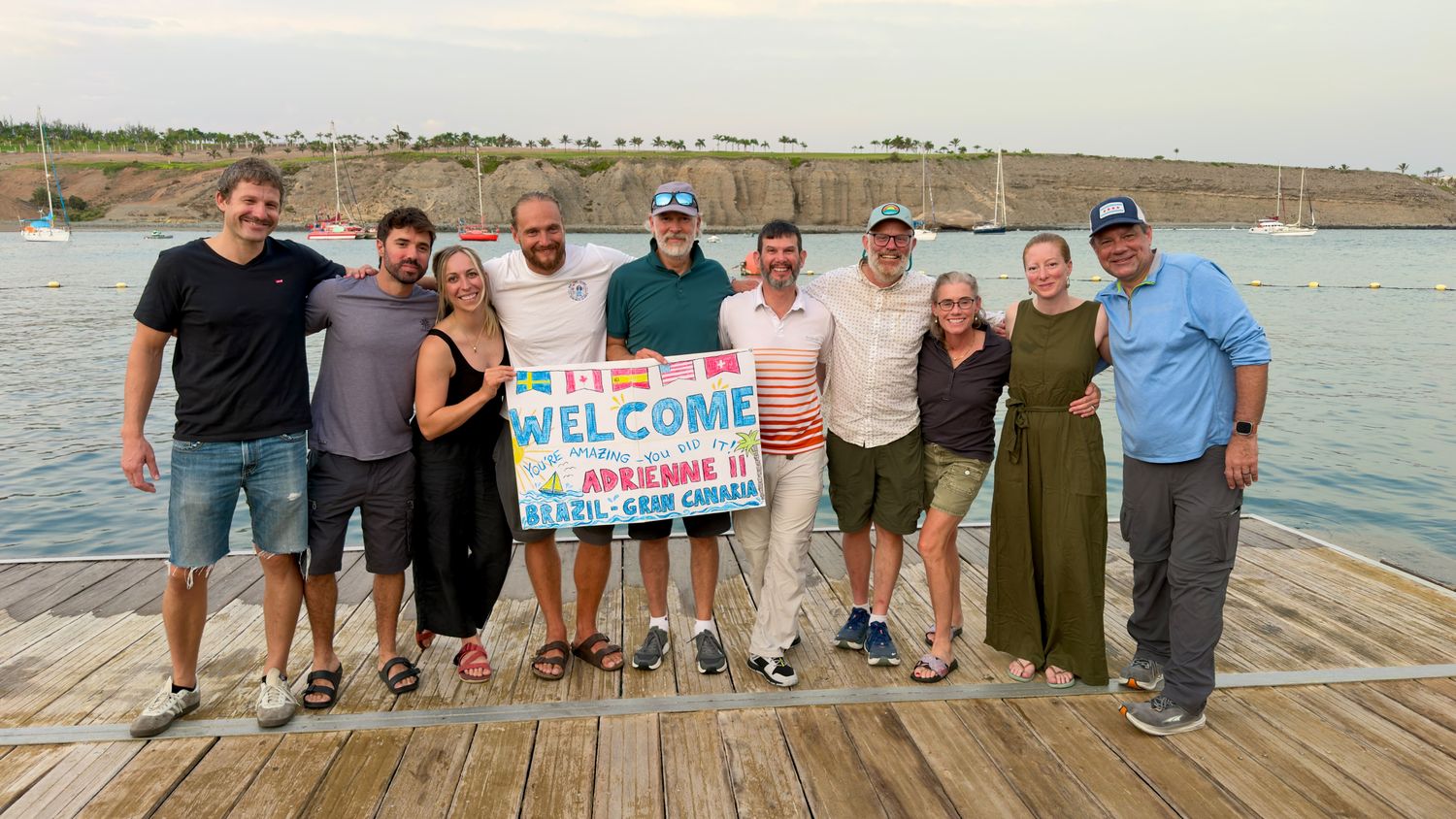
After 20 days, and 3000+ nautical miles, we're back on land. The motley crew of Adrienne II, consisting of 7 happy amateurs supported by 3 professionals, have completed an epic journey many dream of but few realize. So much of this trip has been about being present - with nature, with each other, with this boat. My biggest takeaway from this trip is the amazing crossing of the ITCZ (Inter Tropical Convergence Zone). We all hope you've enjoyed the blog as much as we've enjoyed creating it.

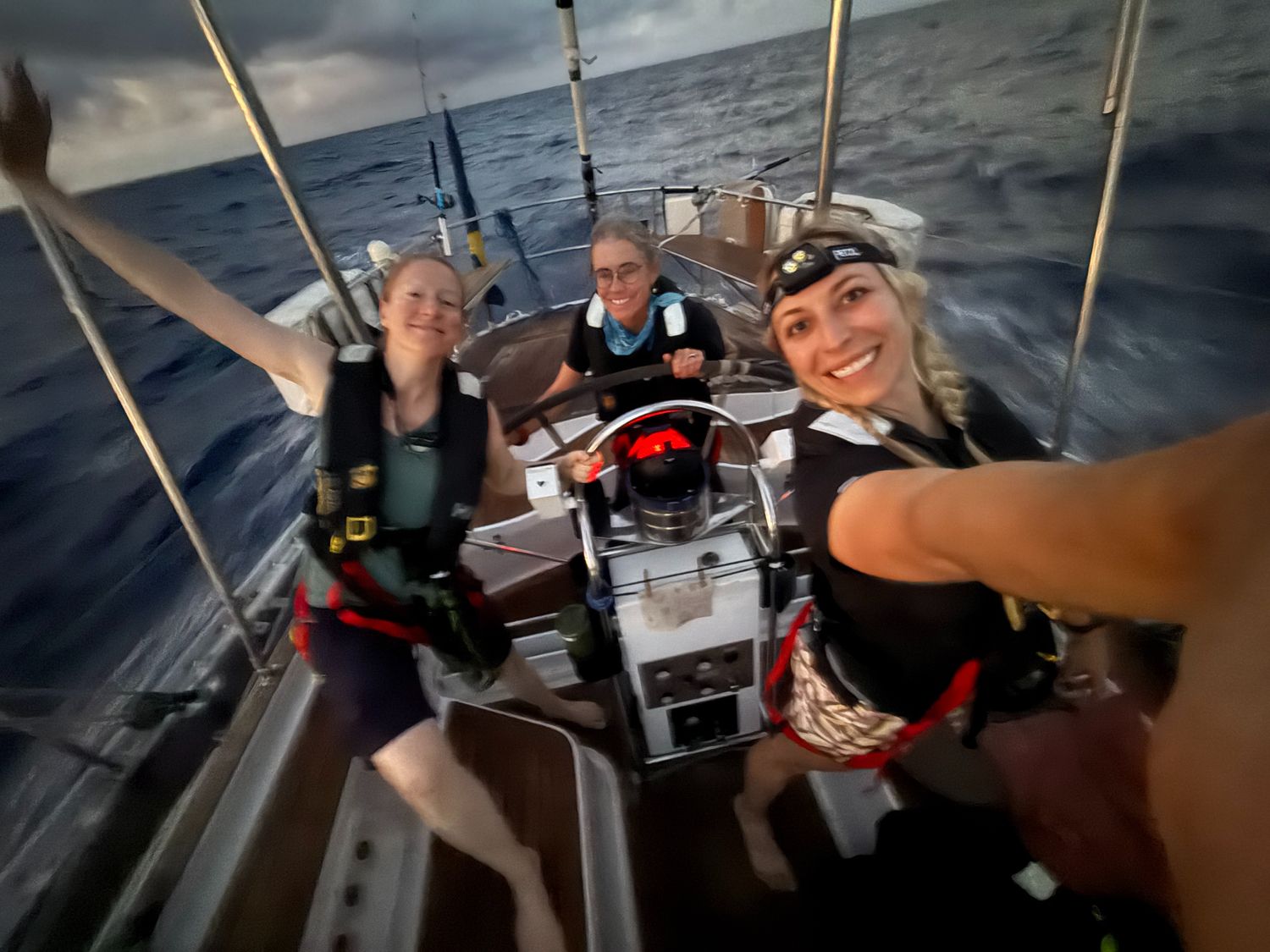
Mother Nature, you’ve outdone yourself!
It’s been a great experience to have a non-traditional trans-Atlantic, as it’s been packed with genuinely cool features. The Doldrums!! A place sailors have been talking about for centuries. The unpredictability is what made it such an exhilarating experience. While some might be frightened or alarmed by this kind of weather, I was embodied with a sense of calm and awe. There’s something wildly beautiful about being reminded how small you are, while feeling so incredibly alive.
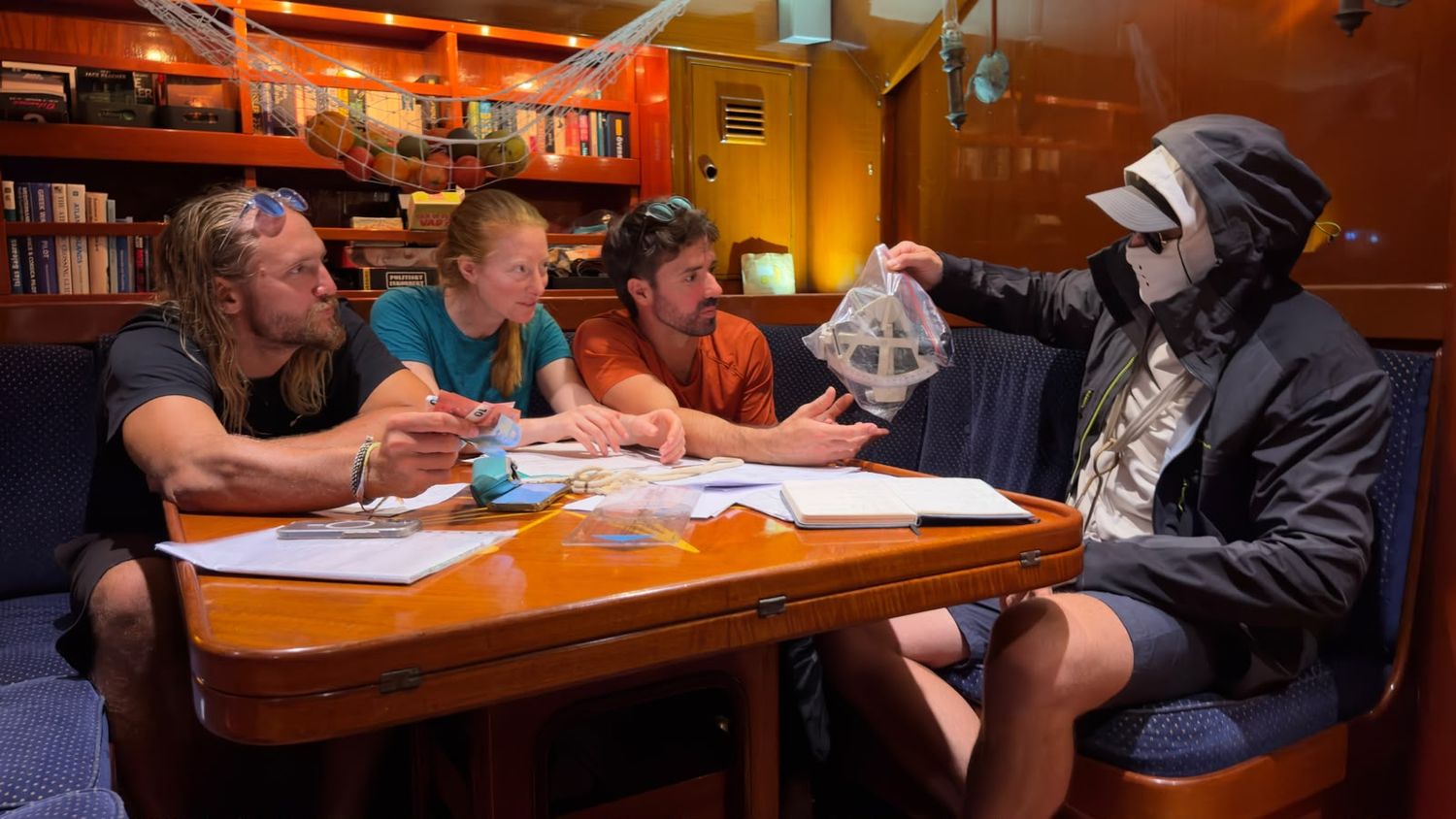
A Heavenly High
As you have probably figured out at this point, the drug of choice on board is, of course, celestial navigation- an art which has hooked offshore sailors for centuries. Once addicted, navigators will emerge from down below only to get their fixes two times per day, and spend the rest of their days and nights down below doing complex spherical mathematics. On Adrienne II, our skipper is our dealer. I must confess that I myself gave in to the strange urge which I’ve felt witnessing my crewmates practice this fine art, and yesterday felt an amazing sensation as I was able to wield the sextant for the first time and with it, bring down the tip of our starboard spreader to the top of our front sprayhood, presicely measuring the angle between the two (35deg, 38,8’ min). This afternoon, Naxo then showed me how to get my fix from the very sun itself - and I now fear there is no turning back.