February 21, Day 13 | Atlantic Crossing Update
At the dude ocean ranch, we gather around the salt-encrusted, red-glowing compass in the aft cockpit for the night watches. We tell stories, many utterly unfit to print. As the distance traveled on the display is now in the 1900s and 2000s, we tell stories from each year we lived. Our spirits are high. If you could hear us, you would hear giggling and roaring laughter all the time.
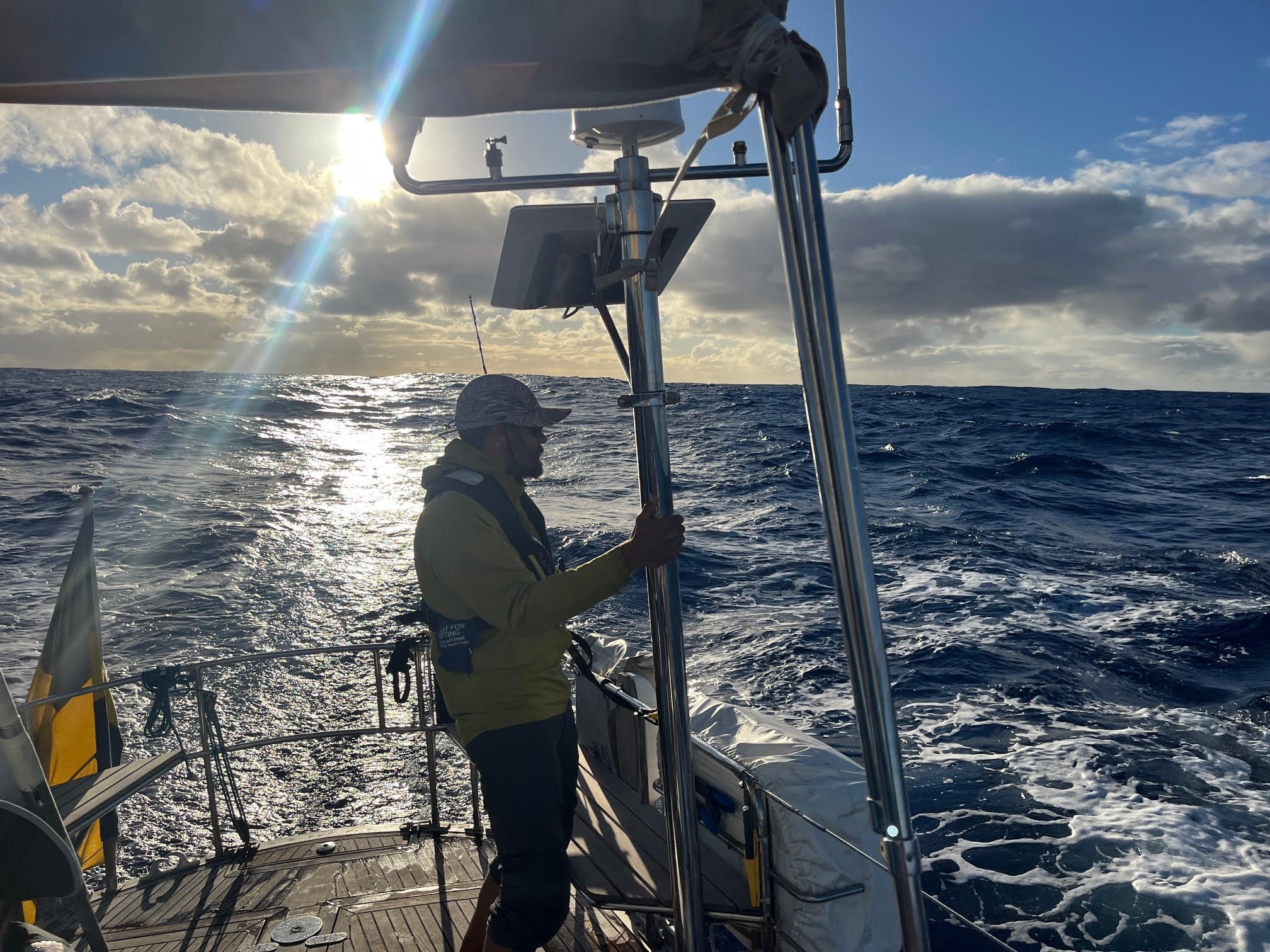
Yesterday, we were still sailing. It was ocean sailing at its best. Waves roll in as walls of water behind the helm. They lift the boat meters above the landscape, giving us a good view of the water hills and valleys around us—a landscape that is unique and to be replaced with another unique landscape within a few counts. The horizon is wavy. Caravans of jagged wave shapes careen to faraway beaches.
As a wave travels under us, the boat pitches down and then up as we surf down the wave. Our speed picks up, sometimes up to 14 or 15 knots. We land softly at the bottom of the wave in a pool of white water. Steering is a dream and feels like dancing, swinging between gently providing direction and feeling where the boat wants to go. Too little direction and the boat would round up; too much and we are clumsily slaloming.
Today we are motoring through the Azore highs back to the trade winds that blow around the Canaries. We are on autopilot. It takes fewer people to stand watch, so some of us are catching up on sleep. Normally, the watch system won’t give you more than 5.5 hours of consecutive sleep. Now, with some planning, you can get close to a full night’s rest. I snoozed and lost. This morning, two playful minke whales joined us when some of us were still asleep. Around noon, two Bermuda longtail birds took a look or two at us. These oceanic birds only come to land to nest. They are an endangered species with 3,000–4,000 left.
Other than you might expect from 10 guys on a ship, we keep the ship shipshape. This afternoon we had another spontaneous deep clean. There is a bowl of rising dough on the galley counter for hamburger buns. In the evening we celebrate fredagsmys (Swedish expression for a cozy Friday night) with hamburgers and fries. This is getting repetitive but needs to be said: the dinner is amazing again.
Most of us have booked accommodation on land now that we know better when we will arrive at Gran Canaria. We expect to make landfall coming Wednesday or Thursday. Skipper and old salt Erik reminds us that the trip will be over sooner than we think and tells us to try and take as much in as possible. Just five more days on the bouncy castle we call the Atlantic.
Allard Schipper, Adrienne Crew
crew@59-north.com
View more passage logs
The Penultimate Blog from Adrienne II
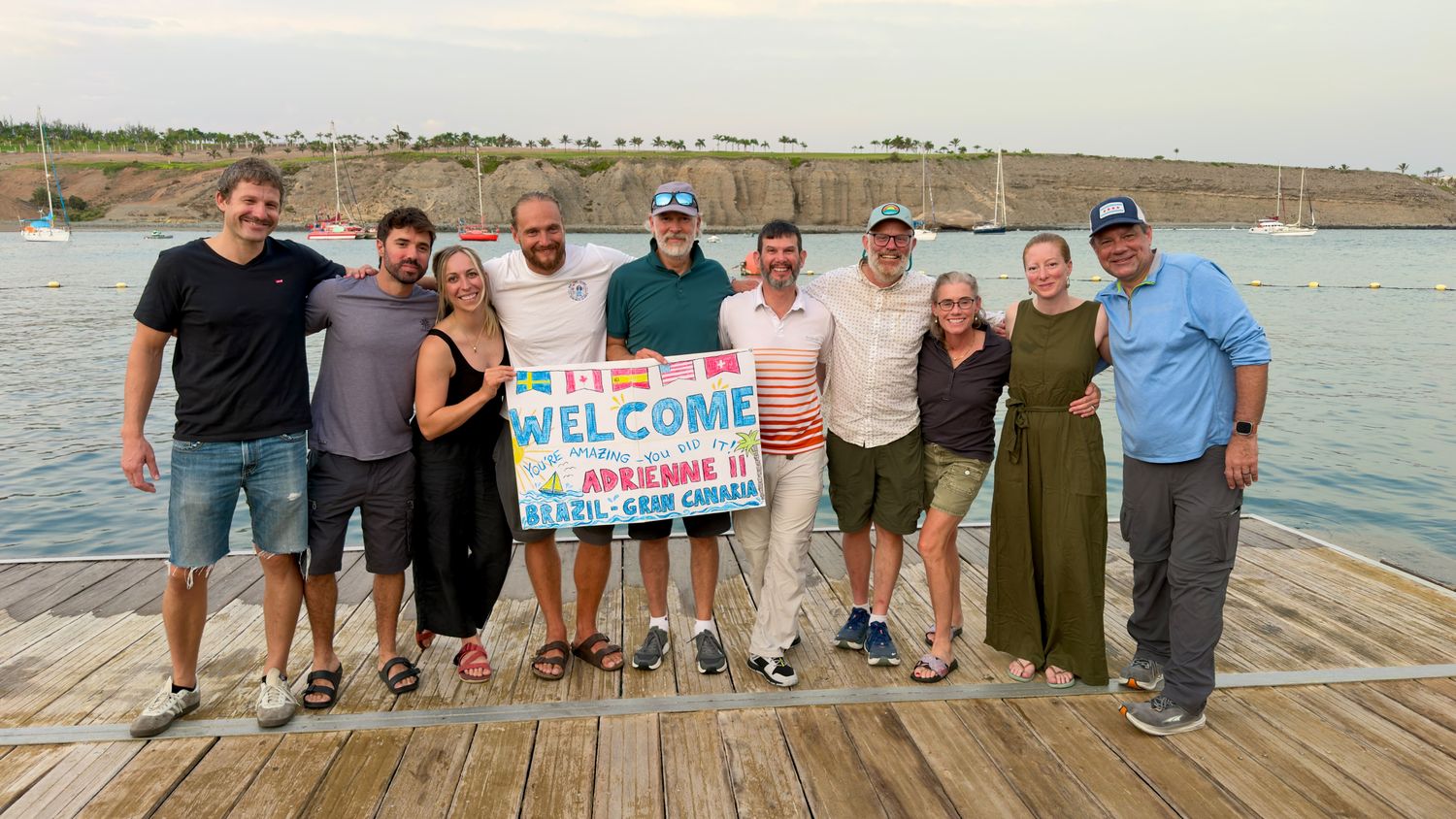
After 20 days, and 3000+ nautical miles, we're back on land. The motley crew of Adrienne II, consisting of 7 happy amateurs supported by 3 professionals, have completed an epic journey many dream of but few realize. So much of this trip has been about being present - with nature, with each other, with this boat. My biggest takeaway from this trip is the amazing crossing of the ITCZ (Inter Tropical Convergence Zone). We all hope you've enjoyed the blog as much as we've enjoyed creating it.

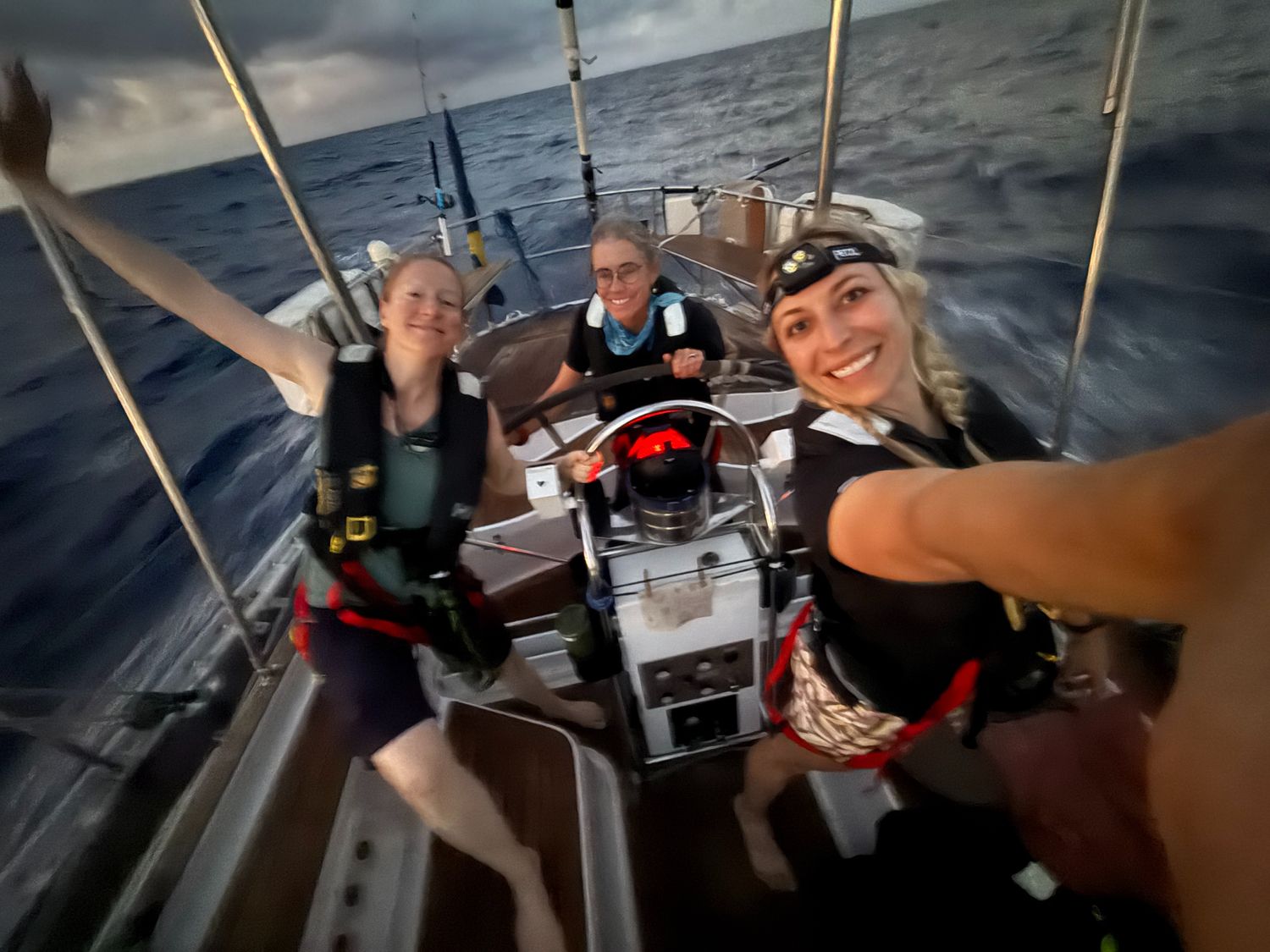
Mother Nature, you’ve outdone yourself!
It’s been a great experience to have a non-traditional trans-Atlantic, as it’s been packed with genuinely cool features. The Doldrums!! A place sailors have been talking about for centuries. The unpredictability is what made it such an exhilarating experience. While some might be frightened or alarmed by this kind of weather, I was embodied with a sense of calm and awe. There’s something wildly beautiful about being reminded how small you are, while feeling so incredibly alive.
A Heavenly High
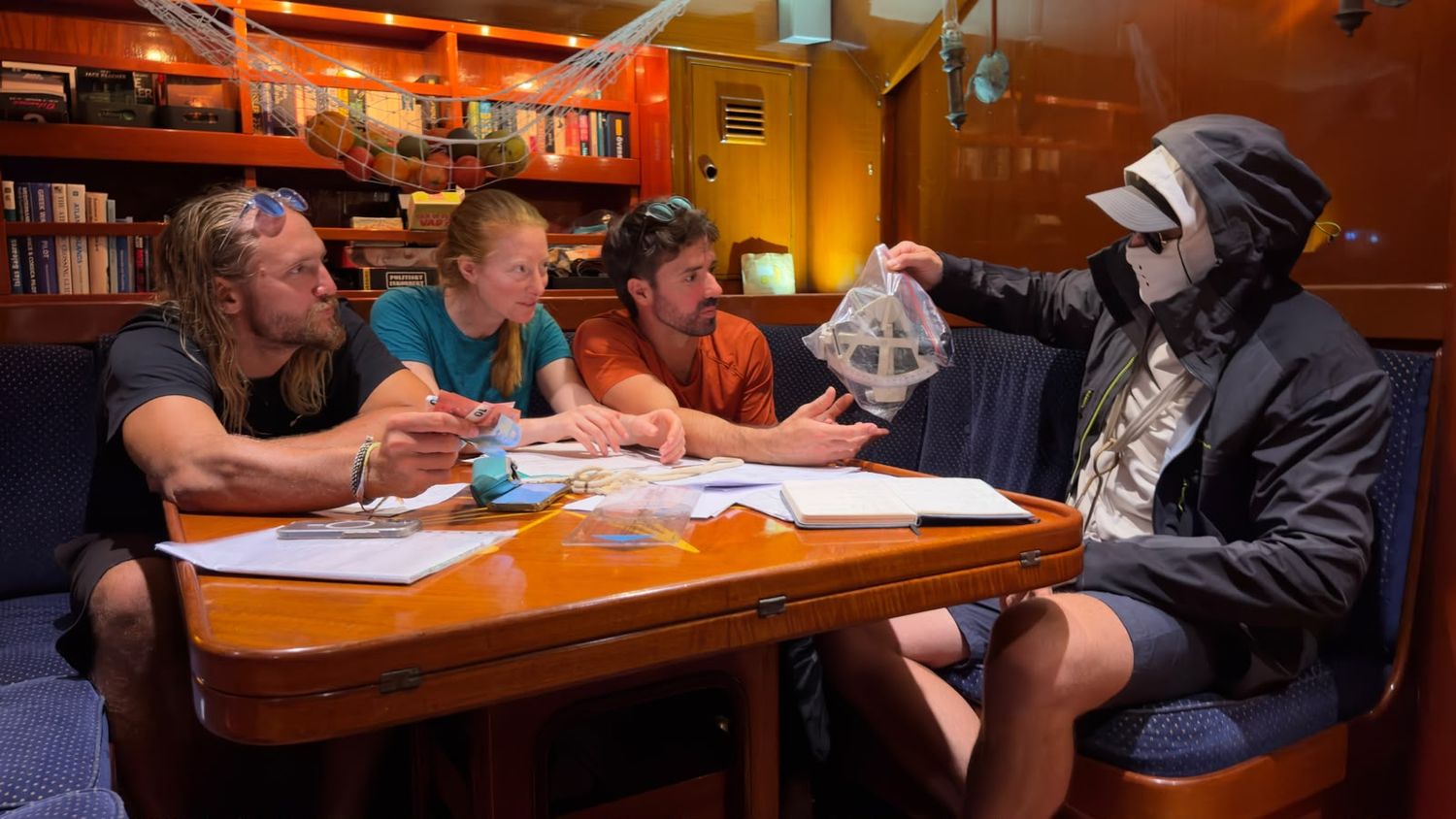
As you have probably figured out at this point, the drug of choice on board is, of course, celestial navigation- an art which has hooked offshore sailors for centuries. Once addicted, navigators will emerge from down below only to get their fixes two times per day, and spend the rest of their days and nights down below doing complex spherical mathematics. On Adrienne II, our skipper is our dealer. I must confess that I myself gave in to the strange urge which I’ve felt witnessing my crewmates practice this fine art, and yesterday felt an amazing sensation as I was able to wield the sextant for the first time and with it, bring down the tip of our starboard spreader to the top of our front sprayhood, presicely measuring the angle between the two (35deg, 38,8’ min). This afternoon, Naxo then showed me how to get my fix from the very sun itself - and I now fear there is no turning back.