March 2, 2025 | Sailing and Exploring the San Blas Islands
Sailing the San Blas: A Journey Through Waves and Culture
I am currently on the sailboat NORDIC FALKEN, or just FALKEN as everyone refers to it. My role on the boat is as crew, on a journey that started in Cartagena, Colombia, and will end in Panama City, Panama. You may already realize there is one big obstacle in our way—the American continent! And so, we will cross through the legendary Panama Canal. For now, we are meandering through the San Blas Islands, a place that feels almost untouched by time.
San Blas: A Hidden Gem in the Caribbean
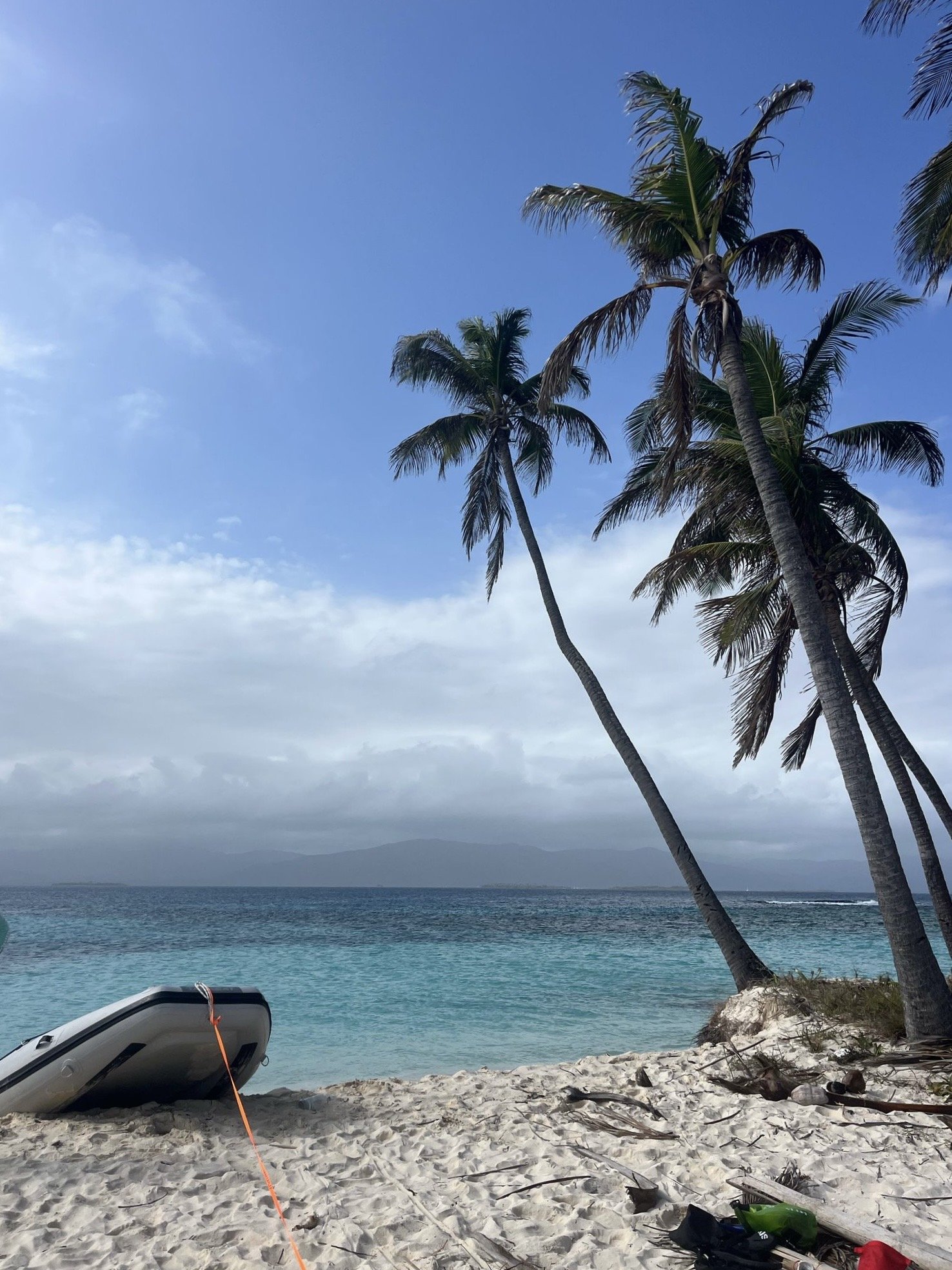
The San Blas archipelago is little known outside sailing communities, but it is a true paradise. The islands are fringed with lush palms, sugar-white sand, and some of the most vibrant coral reefs in the world. Snorkeling here is an absolute dream—the water is crystal clear, teeming with marine life, and free of strong tidal currents. The wind has plenty of room to roam, but the waves are kept in check by expansive coral reefs, making the area ideal for sailors and snorkelers alike. Yet, what makes San Blas truly special isn’t just the scenery. It’s the people.
The Cuna (Guna) People: Keepers of the San Blas
The islands are home to the Cuna (Guna) people, an Indigenous group that has preserved its traditions and autonomy for centuries. The Guna Yala comarca (a self-governing region) consists of more than 360 islands, though only about 50 are inhabited. The Guna have fiercely resisted modernization, choosing to maintain their distinct language, customs, and economy.
One of the most fascinating aspects of Guna culture is their molas—intricately hand-stitched textiles that feature bold, geometric designs. Each mola tells a story, with layers of fabric sewn together using an ancient appliqué technique. They are not just art but a vital expression of identity, history, and worldview.
Unlike many Indigenous communities that have been displaced, the Guna still govern themselves, control their land, and even restrict large-scale tourism to prevent environmental and cultural degradation. The result? A place that remains authentic and deeply connected to its roots—a rare treasure in today’s world.
Night Watch Reflections: Between Terror and Triumph
As for our journey, we set out Thursday at mid-morning from Cartagena, aiming to complete the 200-nautical-mile crossing in under 30 hours. The sail went smoothly, but my night watch from 22:00 to 02:00 was an entirely different adventure.
We are eight crew members, not counting the skipper, mate, and bosun, and we rotate watches in teams of four. My first real test came when the wind picked up to 20+ knots, and the waves towered several meters high. There I was—miles from land, surrounded by darkness, save for the faint red glow of the compass in front of me.
It was exhilarating. It was terrifying. It was both.
The boat heaved and surged, moving up, down, and sideways in unpredictable ways. Keeping our course was a mental battle. At times, the crashing waves and disorienting motion overwhelmed me—I felt the boat drifting off course, lost in the night. But this is where a great crew and experienced leaders make all the difference. Our skipper and mate took turns at the second helm station, gently guiding us back on track when needed. Their calm confidence was contagious.
Despite the chaos of the waves and the howling wind, there was an unexpected sense of peace. Sailing teaches you to trust—not only in yourself but in your crew and the boat itself. It’s a reminder that even in the toughest conditions, you can adapt, learn, and push beyond what you thought possible.
By the time my shift ended, I was exhausted, but I had also grown in ways I didn’t expect. What started as a night of uncertainty became one of the most terrific—or terrifying—experiences of my life.
Onward to Panama
As we continue towards Colon, the entrance to the Panama Canal, I find myself reflecting on how lucky I am to be on this journey. Sailing is more than just moving from one place to another—it’s about discovery, challenge, and connection. The San Blas Islands have left a deep impression on me—not just for their beauty, but for the resilient and inspiring Guna people who call them home.
And now, a new challenge awaits—the engineering marvel of the Panama Canal. But that’s a story for another day.
Fair winds and following seas!
- Håkan Söderbom, FALKEN Crew
crew@59-north.com
View more passage logs
The Penultimate Blog from Adrienne II
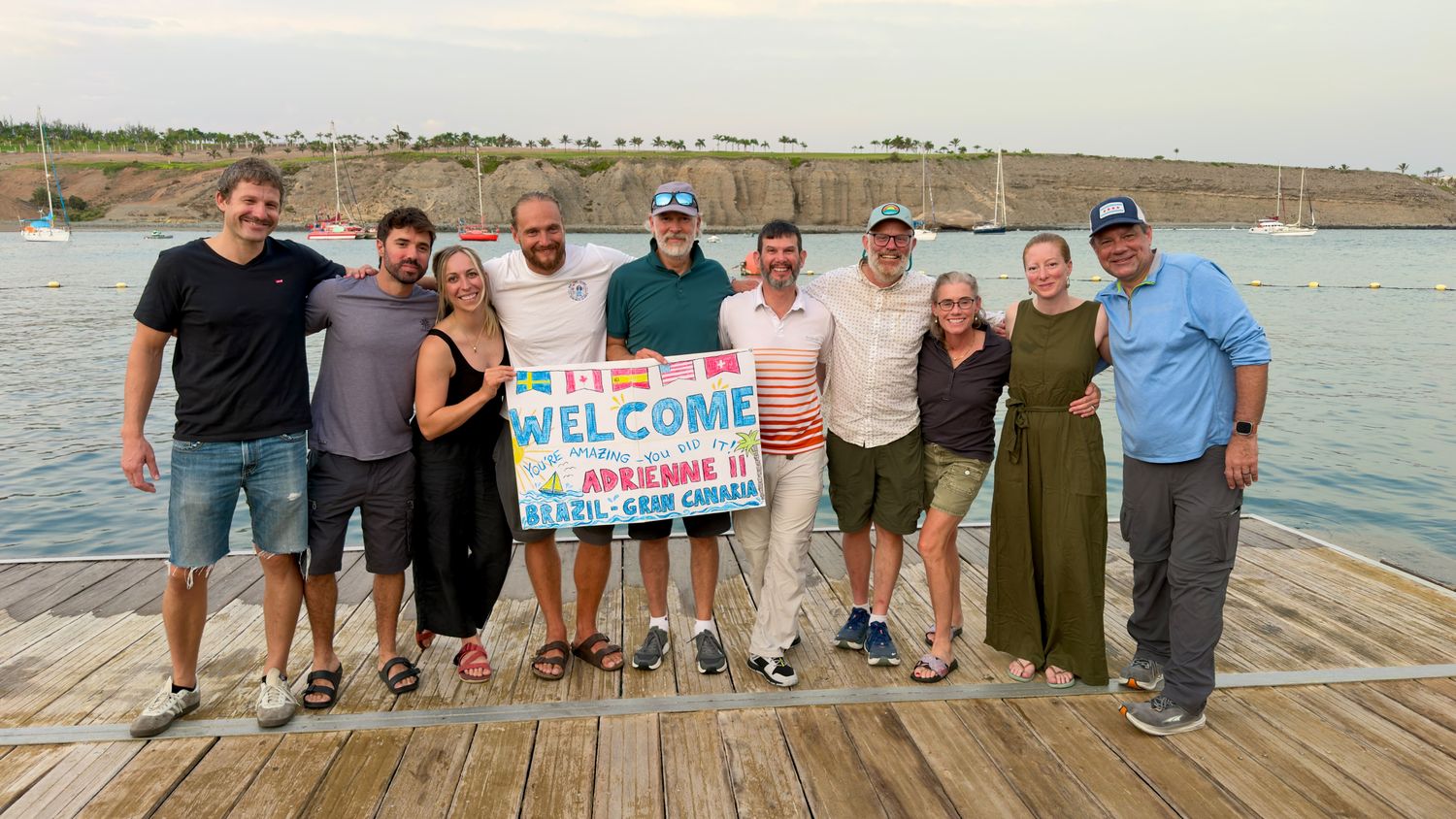
After 20 days, and 3000+ nautical miles, we're back on land. The motley crew of Adrienne II, consisting of 7 happy amateurs supported by 3 professionals, have completed an epic journey many dream of but few realize. So much of this trip has been about being present - with nature, with each other, with this boat. My biggest takeaway from this trip is the amazing crossing of the ITCZ (Inter Tropical Convergence Zone). We all hope you've enjoyed the blog as much as we've enjoyed creating it.

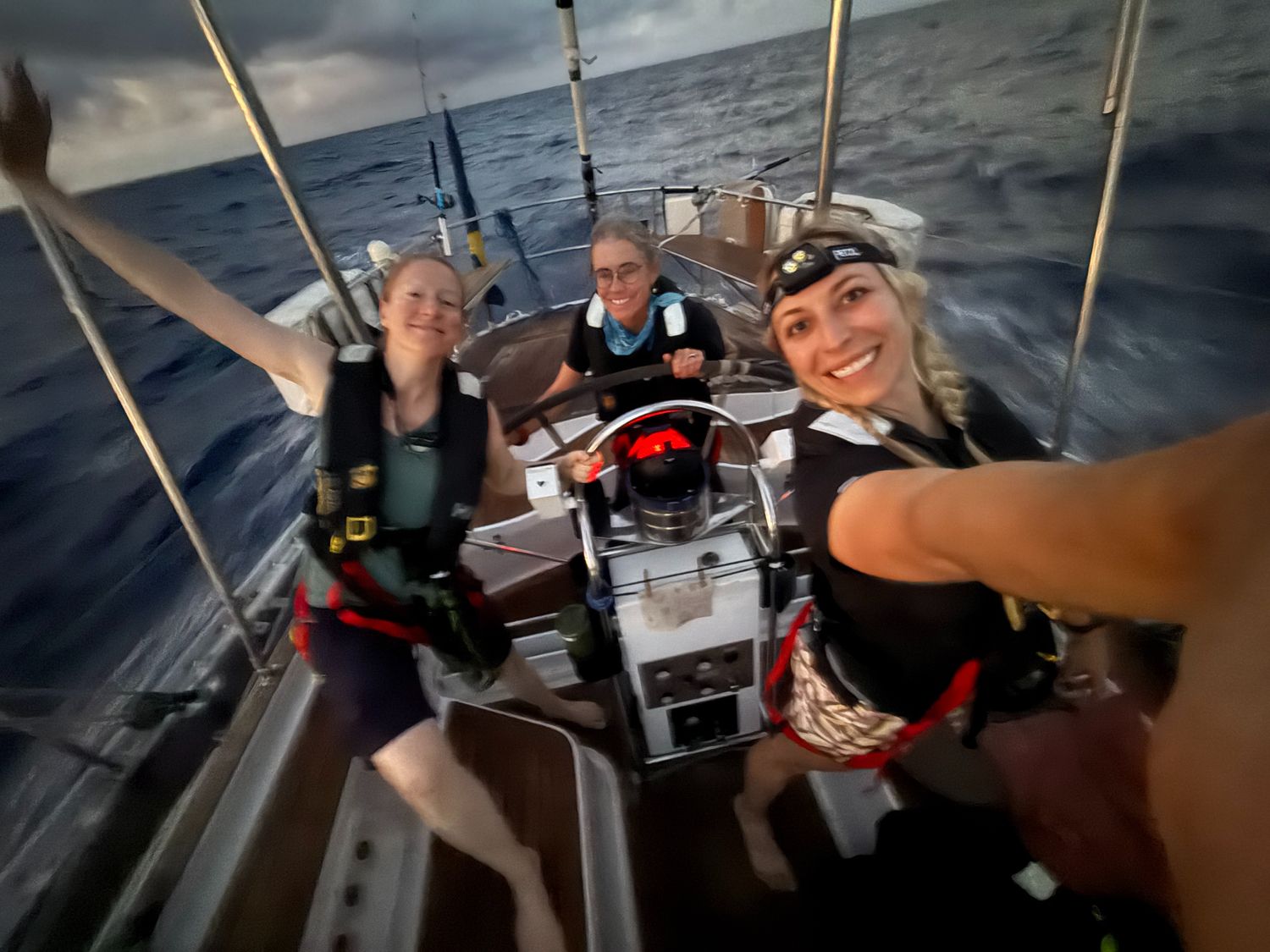
Mother Nature, you’ve outdone yourself!
It’s been a great experience to have a non-traditional trans-Atlantic, as it’s been packed with genuinely cool features. The Doldrums!! A place sailors have been talking about for centuries. The unpredictability is what made it such an exhilarating experience. While some might be frightened or alarmed by this kind of weather, I was embodied with a sense of calm and awe. There’s something wildly beautiful about being reminded how small you are, while feeling so incredibly alive.
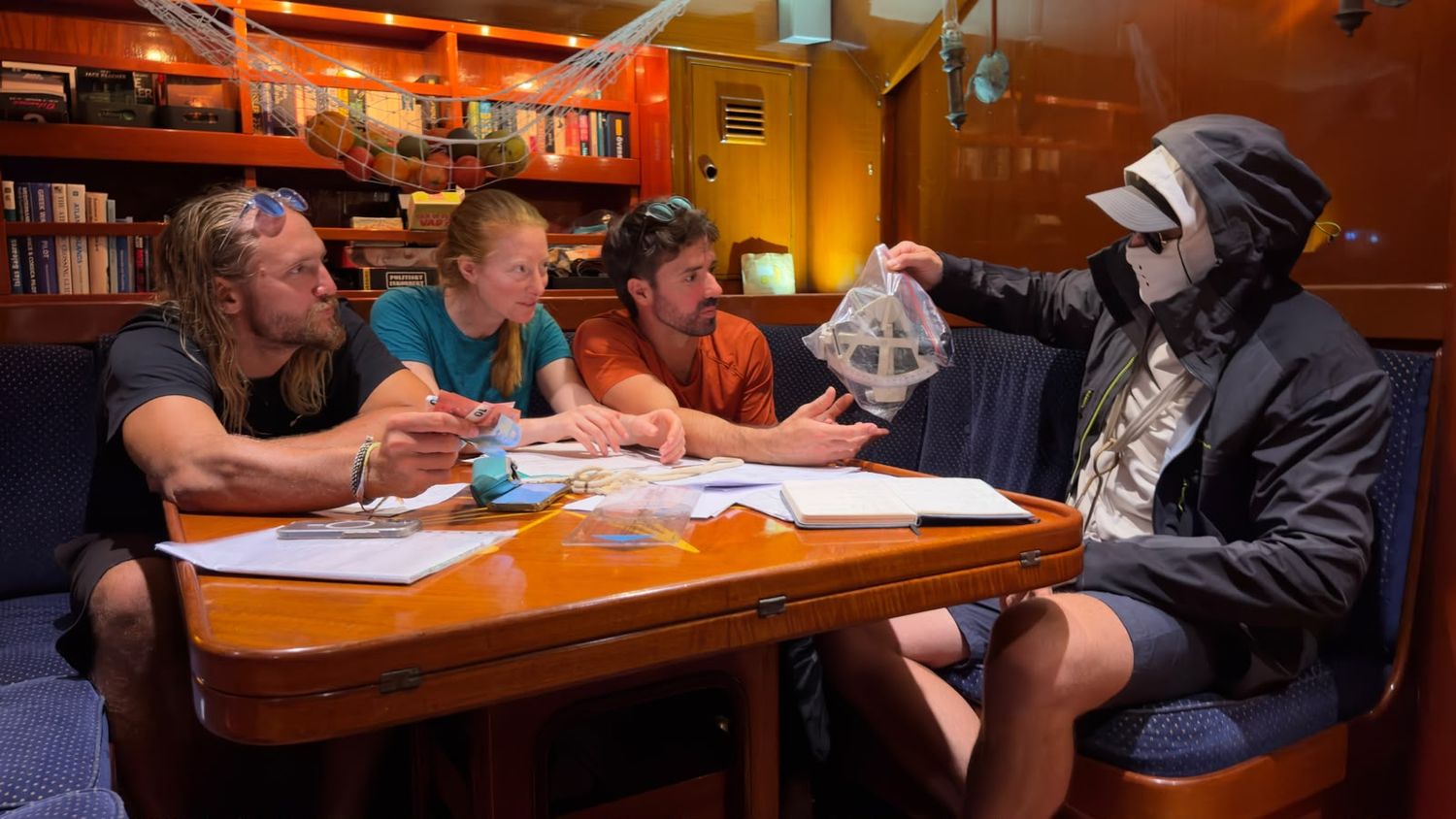
A Heavenly High
As you have probably figured out at this point, the drug of choice on board is, of course, celestial navigation- an art which has hooked offshore sailors for centuries. Once addicted, navigators will emerge from down below only to get their fixes two times per day, and spend the rest of their days and nights down below doing complex spherical mathematics. On Adrienne II, our skipper is our dealer. I must confess that I myself gave in to the strange urge which I’ve felt witnessing my crewmates practice this fine art, and yesterday felt an amazing sensation as I was able to wield the sextant for the first time and with it, bring down the tip of our starboard spreader to the top of our front sprayhood, presicely measuring the angle between the two (35deg, 38,8’ min). This afternoon, Naxo then showed me how to get my fix from the very sun itself - and I now fear there is no turning back.