Kauehi conundrum

2041UT | 15 47.98’S 145 31.77’W
Sailing
For those of you avidly following the tracker, you may have noticed we’ve failed to enter into Kauehi atoll. This is a decision I’ve been agonising over for the past couple of days, since receiving a forecast of a stubborn cold front which is creating less than idyllic conditions in the Tuamotus.
Whenever you anchor, you want to have an escape route in mind in case conditions change which makes the anchorage not viable anymore.
Anchoring in a reef atoll with large coral heads, and a tidally restricted pass is something that should be approached with caution at the best of times. With the usually consistent trade winds the anchorages in Kauehi are a dream and something we were all keen to experience.
However, unfortunately for us, the forecast of squalls and the cold front disrupting the usually predictable weather meant that the anchorage presented more of a risk than normal.
Squalls can present not only strong winds and downpours of rain, but most crucially sudden shifts in wind direction. This can mean you’re suddenly now being blown onto a lee shore (or reef in this case), and the sudden shift in direction can also mean your anchor chain can get wrapped around a coral head, or result in dragging anchor.
The coral head issue could be solved by floating the anchor chain, using fenders about every 1.5x depth anchored to help avoid wraps.
Dragging anchor is not exactly an uncommon issue but this anchorage is not one that is friendly to resetting the anchor at night (when squalls are most likely/forecast to happen).
Uncharted bommies require sun to spot, and when you set anchor you want to drop on sand rather than coral which is infinitely easier in the daylight.
I thought about the possibility of if we dragged anchor then maybe we could just lift anchor and mosey around in the lagoon until the squall passes and we had daylight to reset. However that still presented the issue of avoiding the bommies which rise up even in very deep water.
These issues presented with a tidally constrained pass meant that there isn’t an easy escape route, which with the greater risks the forecast promised, made me question the safety of anchoring in Kauehi.
The past couple of nights for us have been much more squally than forecast, with stronger winds than expected. This gave me a kernel of hope that maybe the front has started moving earlier than forecast and it would all settle for us as we arrive to the Tuamotus. Checking the weather GRIBs didn’t support this idea, but I still optimistically got in touch with WRI, our weather gurus, to see if they would confirm my hope.
Unhappily, they did not.
Allegedly we should have been in 10-15 knots at the time and squalls were set to peak in the early hours of the 11th until the afternoon of the 12th. At that moment we were actually in 30 knots with torrential rain. With this information, I have to work on the assumption that the squalls would only worsen over the next couple of days and therefore entering through a time restricted pass into a bommie minefield would not be the wise move.
Resigned to the fact that we would not be staying the night, we had a new plan - continue to the pass and anchor for a couple of hours inside Kauehi before leaving on the evening tide and avoiding the overnight anchor. Not ideal, but at least we could have a glimpse at the tropical paradise.
Yet Mother Nature clearly has a bee in her bonnet this Mother’s Day. We needed sunlight to navigate the corals in the lagoon and so far today the only colour of sky we’ve seen is grey. With the cloud cover we aren’t able to pick out the different shades to show coral heads.
We also had to consider the state of the pass; we were on track to reach there at slack water which is usually the ideal time to transit. However the strong winds could still make for a rough transit, and even change the timings of the tides as water is forced into the lagoon over the reefs.
We continued upwind along the coast of Kauehi, but with seemingly squall after squall coming down on us, 20-30 knot winds and a disgruntled sea state, the decision has been made that we bypass the Tuamotus and make way to Moorea.
This decision sucks in all honesty. I can’t justify taking the risk to go in, but it always nags at you, what-if it is okay to do? What if the forecast doesn’t actually materialise? What if we hadn’t stopped in Ua-Pou? I also would love to visit myself, and hate to ‘let the crew down’ by not delivering on the initial plan. Whilst they have all been wonderful, and recognise there is not much I can do about the weather and understand the reasoning, personally I always feel some guilt and responsibility for the change of plans. Stopping in Ua-Pou would have made little difference, maybe we could have got here a few hours earlier but then last night was also a very squally night so the risks remained the same.
Ultimately it’s a calculated risk to anchor in these places, and with the weather we have currently and predicted, that risk was not justifiable.
The silver lining in this, is that making the decision to continue on means we’ve been flying downwind! So whilst not exactly what we came for, there are still smiles and whoops on deck as we surf down waves.
Mary
View more passage logs

The gobbledygook of sailors
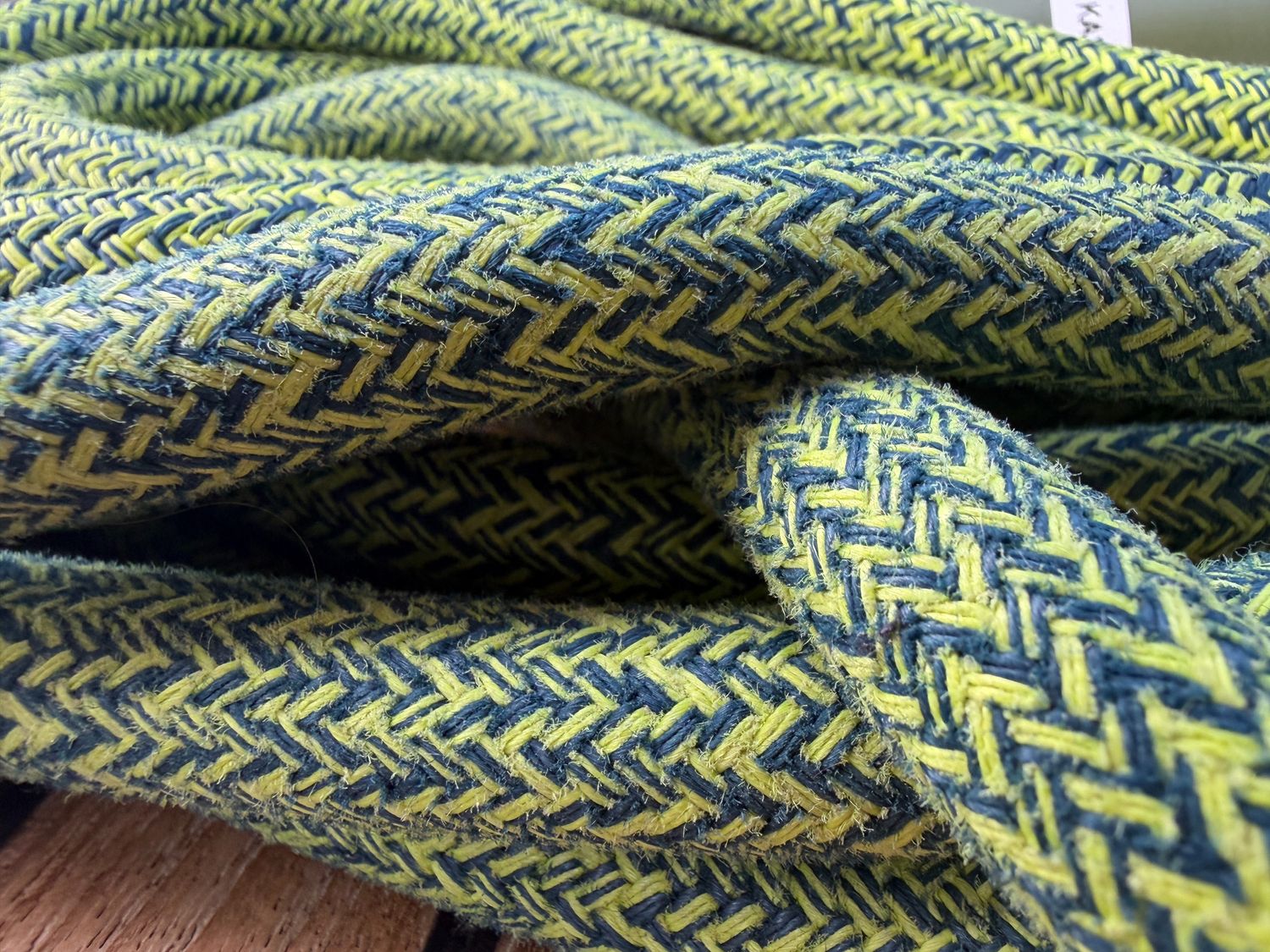
We sailors can come across as a cryptic bunch. Similar to almost all niche endeavors, it boils down to efficiency, safety and tradition. There are so many "ropes" and so much gear on a sailboat, that trying to identify them by descriptive terms just wouldn’t cut it. We’re in one of the best learning environments available to offshore sailors, and mistakes are a part of the process.


Dive on in
Life aboard Adrienne is hot and sticky. It was hilarious how fast we all started moving once we heard we might go for a swim in the ocean. With our captain’s blessing, we started jumping in, hooting and hollering, grinning like children on a carnival ride. It was simple and delightful and also mind-boggling to be bobbing and washing in the great ocean under a clear sky with nothing around but our floating home and each other. But the deeper cleaning of this ocean plunge will certainly linger for days.
Death on the high seas
I’m not going to lie - I really miss my dog. As we’re just now approaching Cap Verde (two thirds of the way) I can’t help but think of all the wonderful things that happen on a trip like this; strangers become friends, terror turns into confidence, and ignorance into knowledge. It’s not for everyone. But if you do decide to cross some of most isolated spaces on the planet in a small boat, you’re definitely in for a mighty interesting ride. And next time I’ll bring my dog with me. 😊