
Maintainance
April 23, 2025 | 0229 Ship’s Time | 160 Miles ENE of Hiva Oa
Sailing FALKEN crossed the 3,000-miles sailed threshold yesterday afternoon, and while those 3,000 miles were indeed pretty fast, the final 300 are proving frustratingly slow. We’ve sailed into a wind hole; the SE trades that kept us going at a 220+ miles-per-day clip for so long have faded into a light easterly breeze that more often than not doesn’t have enough pressure to keep the sails full in the small, annoying sea state. The boat lurches at an odd-angled wave, the mainsail backwinds and then fills again with a horrendous shudder that shakes the rig and reverberates through the whole boat. Old-time sailors cursed calms more than storms for the wear and tear they put on ship and crew. I get it!
We’ve had to motor at times when the wind really lays down, but we’re low on fuel thanks to the similarly slow start we had on departing Galapagos and getting across the equator and the doldrums of the ITCZ. So I’m hesitant to burn the last two tanks remaining until we’re sure we can refuel in Nuku Hiva. And so we sail on, ever patient in the dying breeze, and yet hopeful that it’ll hold for the home stretch.
Meanwhile, we’ve been adding to the ever-growing list of maintenance projects on FALKEN, completing some tasks as we go, and making a list for the others that will have to wait until we’re anchored. We had a scare two nights ago when the fire alarm sounded about 10 minutes after we’d furled the sails and cranked on the engine to get through a previous calm spell. The smell of heat and smoke filled the engine compartment. It was still dark, middle of the night around 0200, and for a brief moment the thought of climbing into the life rafts while FALKEN burned to the waterline indeed crossed my mind. Aidan grabbed a fire extinguisher and we carefully peered into the engine room to ascertain if it was for real or a false alarm.
It was both, kind of. The source of the heat and the smoke was the starboard alternator, the pulley of which was so hot as to be untouchable. The worst-case scenario was that the bearings had burned up and the alternator was seized—not from an electricity standpoint, as we still had the second alternator on the port side of the engine—but from the standpoint that the starboard alternator’s belt also drove the raw water pump. If it had been seized and unable even to freewheel, that would have meant no engine at all, without some crafty jury-rigging for the raw water pump.
As it turned out, thankfully, the multi-vee, serpentine belt had simply slipped out of alignment and was rubbing against the case of the alternator, creating friction and therefore smoke and heat. In the moment, I was so tired, and the wind had filled in again, that Emily took over on watch, let me go to sleep, and continued sailing through the night. After a good four hours rest, and now in daylight, we finished troubleshooting and properly fixed the problem the next morning. Back in business.
My other concern is the sails. They need constant maintenance to stop small problems like chafe before they get worse, and FALKEN does some serious miles. These sails already have 40,000 miles on them, and we’ve still got another 6,000 or so the rest of this season alone.
Back in San Cristobal, I noticed some small tears in the leech of the jib topsail. We put some tape on them, which of course didn’t last, and now the largest of the tears—along the top seam where the clew patch is sewed in—has gotten slightly worse after 3,000 miles and will need a proper repair in Marquesas. However, the closest sail loft is in Tahiti, so I’ve contacted our sailmaker in Sweden and am working on arranging some materials and glue to be sent out with a crew joining for the next leg. Hopefully we can enact some simple repairs on the lawn ashore to see us through.
The mainsail also needs some work. FALKEN has laminated UK X-Drive sails, a departure in construction from the sturdy Hydranet woven sails that ISBJORN has had for 60,000+ miles. The core of the X-Drive construction are black carbon strands that are laid out along the load paths of the sail, then sandwiched between several layers of material, the outermost ‘taffeta’ consisting of lightweight dyneema sailcloth for chafe and UV protection. This outer layer tends to chafe in hard-wearing spots—near the spreaders when the sail is fully eased downwind, and at the reef points in the leech when the sail is reefed down and crumpled onto the boom. If you look closely there are already myriad small patches where we’ve already fixed some trouble areas, and on this trip I’ve noticed a few more. They’ll be simple to repair, but it means we’ll have to de-rig the mainsail, which at 220 pounds, isn’t so simple.
Lastly, we’ve had some issues with the batten receptacles along the luff coming apart, their covers popping off. I brought some spares with me from Sweden, and it’s an easy fix, but we have to devise a way to better secure the covers for the next half of the season. I went aloft yesterday to have a look and brainstorm (right now they’re held on with duct tape on the two that had previously popped off). I think we can drill and tap a small hole for a set screw, which should solve the issue, but again that will require de-rigging the mainsail.
Last but not least, and perhaps most importantly, the watermaker has been giving us trouble all year long. We have a Spectra Cape Horn Extreme unit, same as on ISBJORN, and while it’s quite simple and has worked flawlessly, lately it’s taking a very long time for the water to get down to a drinkable PPM measurement. We’ve got spare parts on the way with another crewmember, and a lot of troubleshooting I’ve done underway indicates that we need to change the membrane out. Thankfully it’s continued to work just well enough for us to keep the tanks full on this passage, but we need a proper solution before the second half of the season.
All of this, of course, is maintenance on top of all the routine stuff we do year-round to keep the boat running: winch servicing, cleaning, running rigging servicing, etc. So Emily, Aidan, and I have some work to do in Nuku Hiva! But with ten days between passages, we should have plenty of time.
Onward we go, slowly, slowly on the home stretch to Hiva Oa.
// Andy
andy@59-north.com
View more passage logs

The Penultimate Blog from Adrienne II
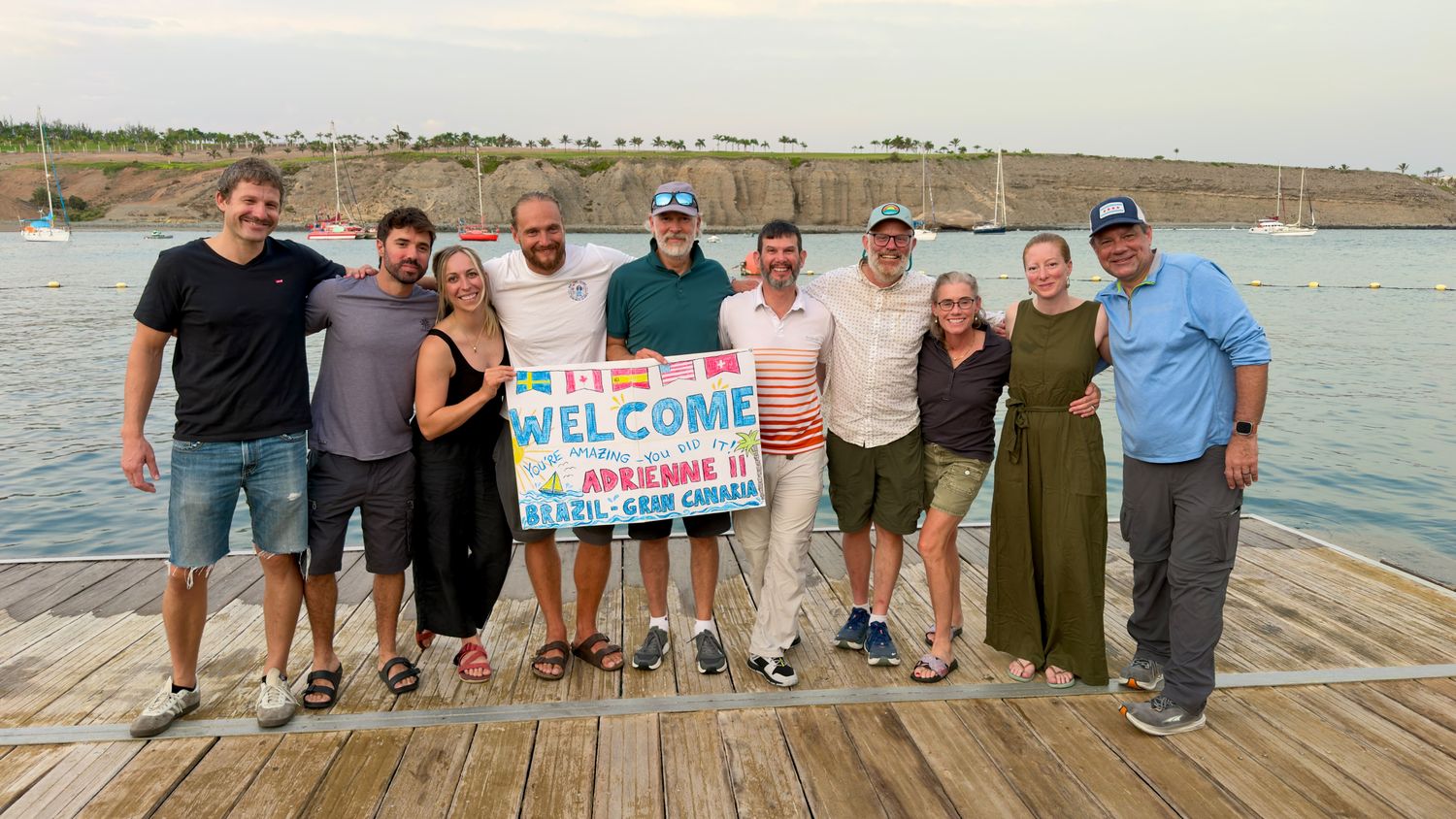
After 20 days, and 3000+ nautical miles, we're back on land. The motley crew of Adrienne II, consisting of 7 happy amateurs supported by 3 professionals, have completed an epic journey many dream of but few realize. So much of this trip has been about being present - with nature, with each other, with this boat. My biggest takeaway from this trip is the amazing crossing of the ITCZ (Inter Tropical Convergence Zone). We all hope you've enjoyed the blog as much as we've enjoyed creating it.

Mother Nature, you’ve outdone yourself!
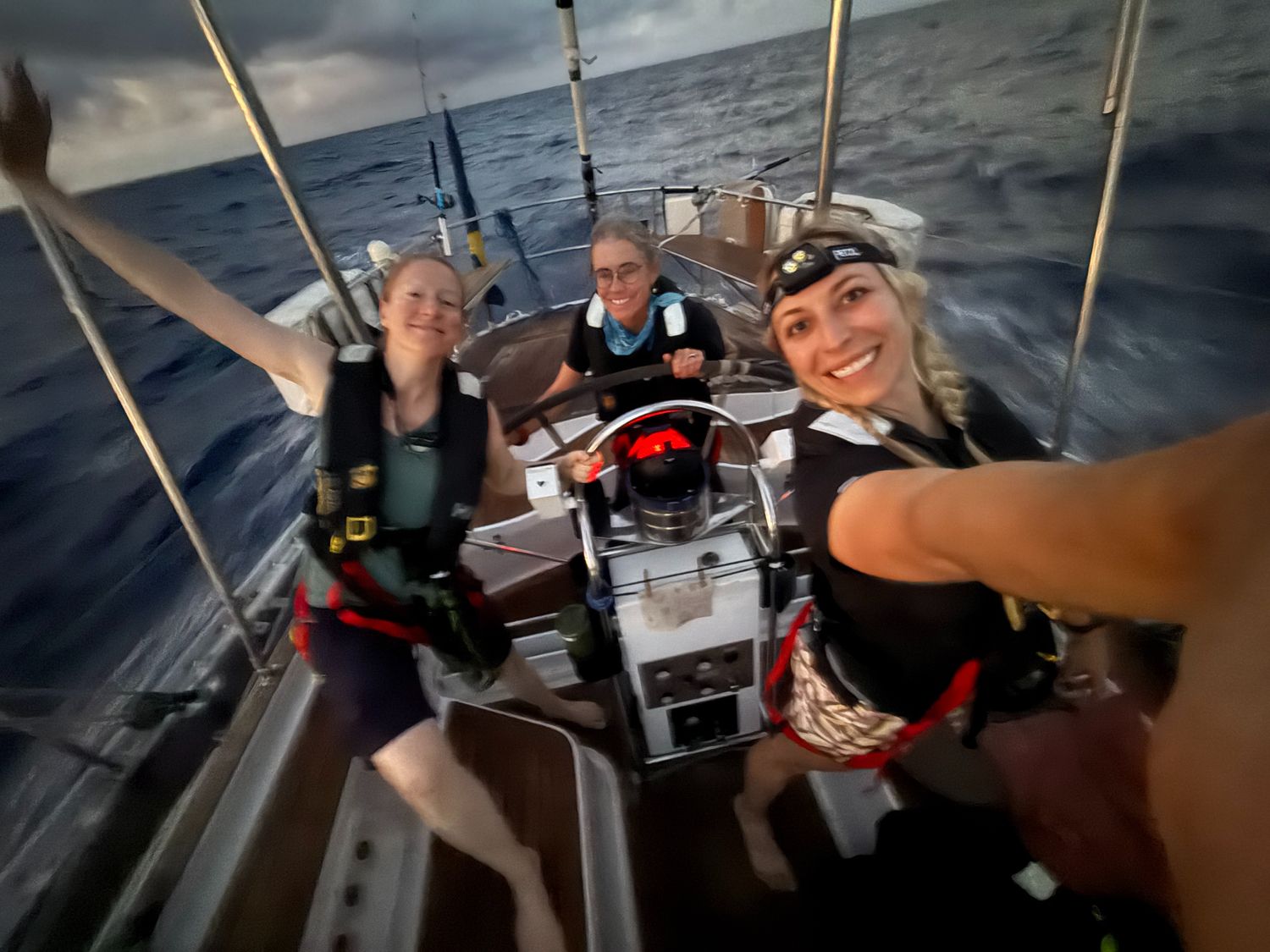
It’s been a great experience to have a non-traditional trans-Atlantic, as it’s been packed with genuinely cool features. The Doldrums!! A place sailors have been talking about for centuries. The unpredictability is what made it such an exhilarating experience. While some might be frightened or alarmed by this kind of weather, I was embodied with a sense of calm and awe. There’s something wildly beautiful about being reminded how small you are, while feeling so incredibly alive.
A Heavenly High
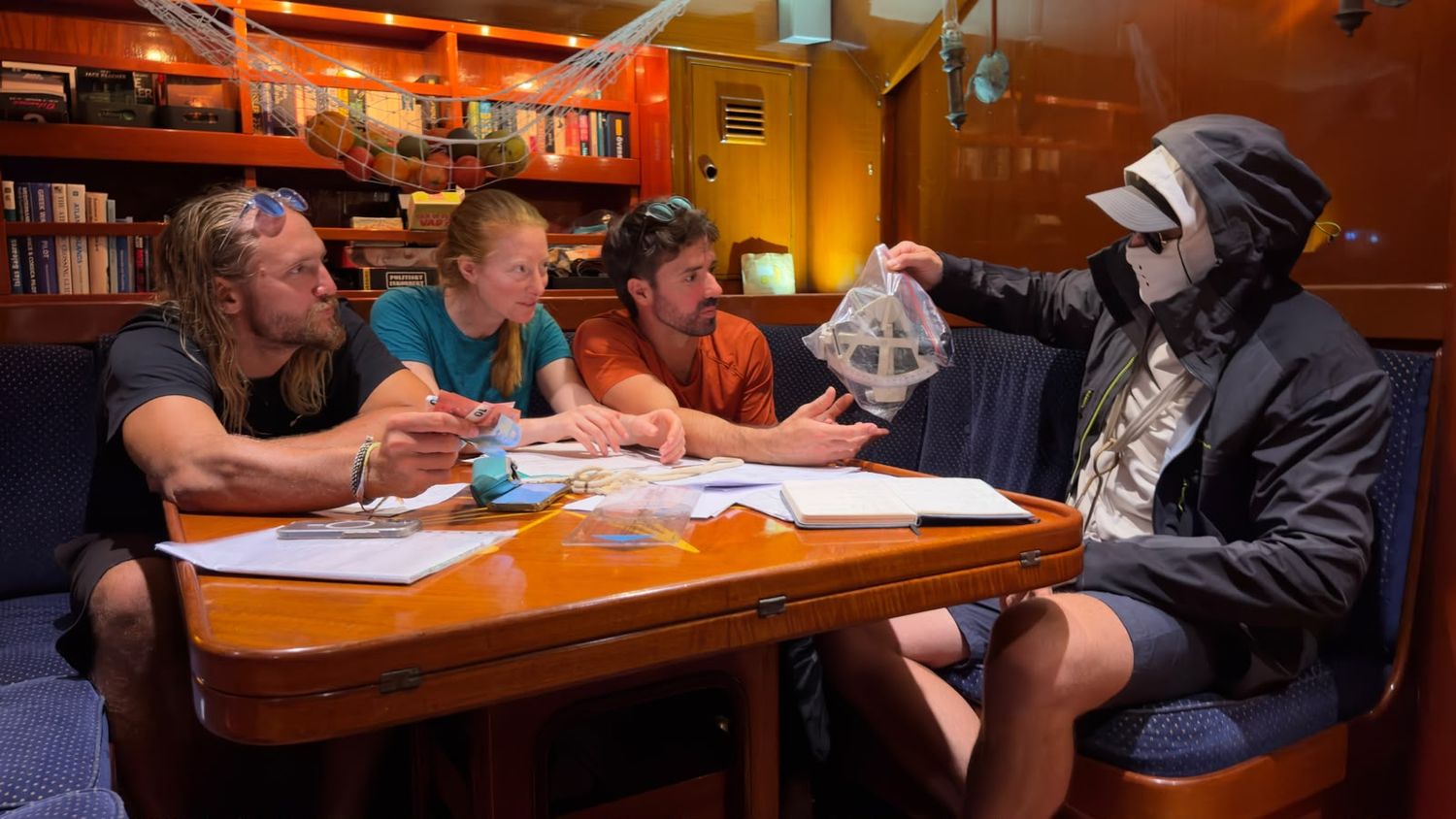
As you have probably figured out at this point, the drug of choice on board is, of course, celestial navigation- an art which has hooked offshore sailors for centuries. Once addicted, navigators will emerge from down below only to get their fixes two times per day, and spend the rest of their days and nights down below doing complex spherical mathematics. On Adrienne II, our skipper is our dealer. I must confess that I myself gave in to the strange urge which I’ve felt witnessing my crewmates practice this fine art, and yesterday felt an amazing sensation as I was able to wield the sextant for the first time and with it, bring down the tip of our starboard spreader to the top of our front sprayhood, presicely measuring the angle between the two (35deg, 38,8’ min). This afternoon, Naxo then showed me how to get my fix from the very sun itself - and I now fear there is no turning back.