2012 UTC | 07º22.23’S, 149º25.23’W
Sailing
59° North is old school — but in a good way!
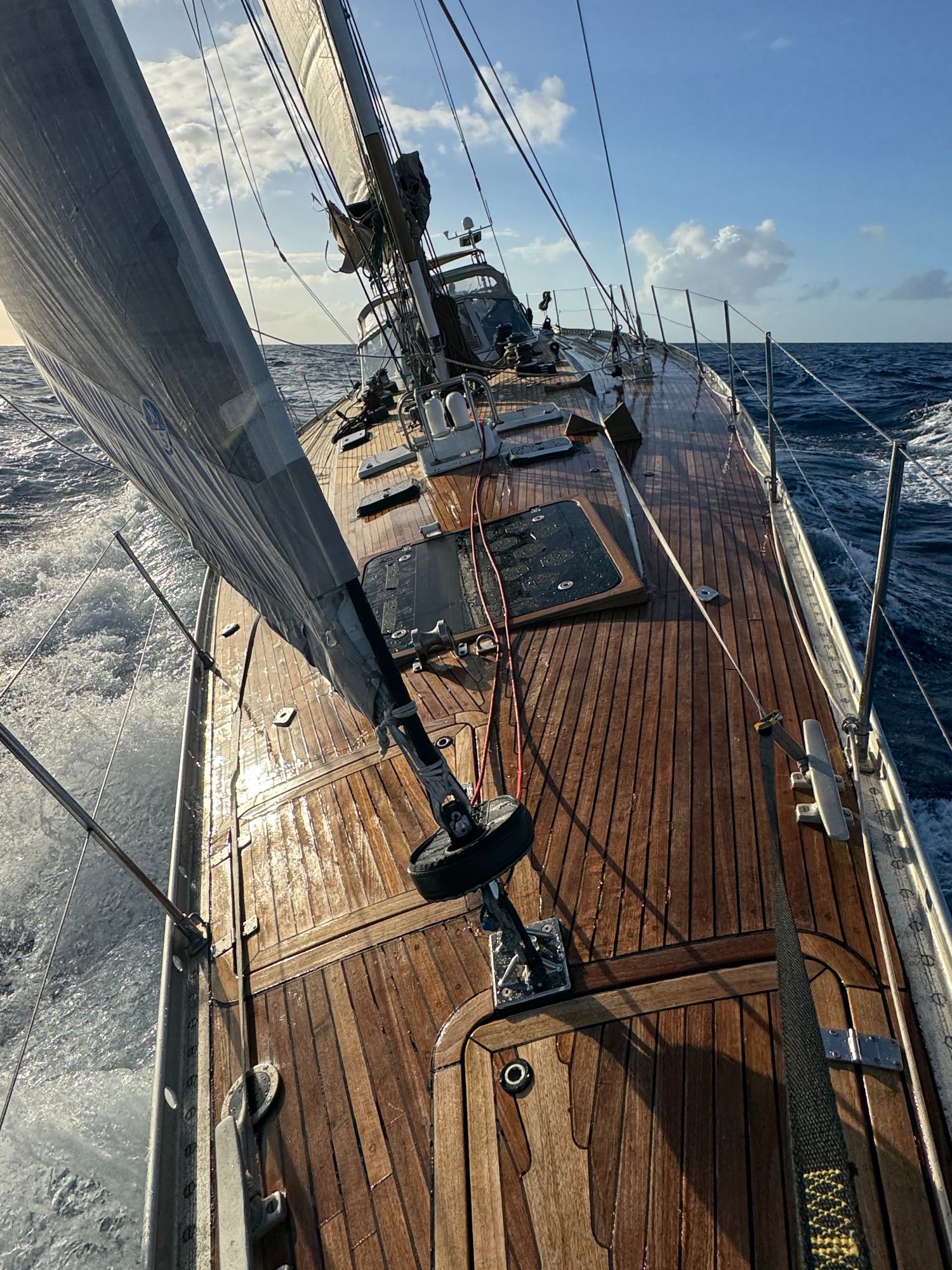
Here we are on Falken, a 65-foot rocket clocking in at 10 - 14 knots and loaded with all the latest technology.
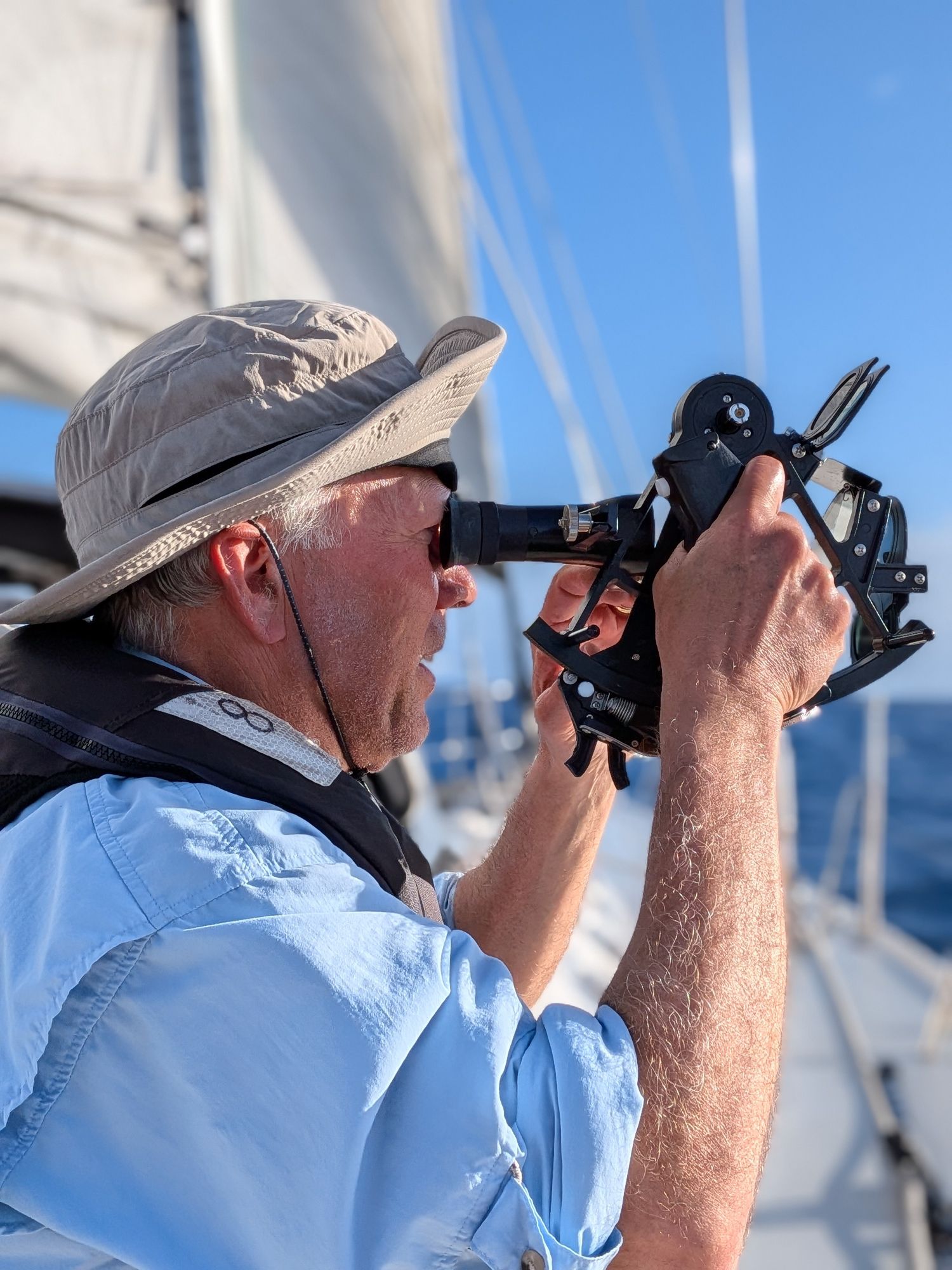
Yet, this morning, we broke out the nautical sextant (note to Andy—we did not literally break it out). Sextants are one of the oldest tools in the mariner’s navigation toolkit.
With a sextant, a couple books, an accurate clock, a few calculations, some charting paper and plotting tools, you can pinpoint your place anywhere in the ocean to within a few miles. No GPs. No satellites. No online technology needed.
It’s old school for sure and right here in the South Pacific somewhere north of Tahiti and South of Hawaii, is a place where sextant technology was paired with an even older form of navigation called Polynesian wayfinding.
In 1769, Captain James Cook landed in Tahiti to take measurements for a Venus transit. He was armed with the latest nautical instruments the western world could offer.
While there, Cook met a Ra’iatean master navigator name Tupaia.
Cook took Tupaia aboard the Endeavour as a key crew member to help him navigate the Pacific Ocean.
Tupaia was a master at Plolynesian wayfinding. He carried a map of the Central Pacific in his head. He knew where he was by remembering where he came from and then using stars, wind shifts, speed changes, swells, bird flights, and cloud formations and colors to tell him his approximate location.
I love the juxtaposition of Captain Cook, the most advanced European sailor of his time using sextants, chronometers, telescopes, and math, with Tupaia, who carried it all in his head and read the signs of nature around him.
Two completely different systems to answer the same question: Where am I and how do I get home?
Nainoa Thompson, a modern Polynesian navigator, said you can find Hawaii by sailing north from Tahiti and watching the Southern Cross constellation sink lower in the sky each night. You’ll know you’ve reached the latitude of Hawaii when the distance between the top and bottom stars of the cross is equal to the gap between the bottom star down to the horizon.
We measure our progress north as the Southern Cross drops South and the sky tells us when we arrive. So cool!
So Tahiti to Hawaii is not just a trip.
It’s a reawakening of the way navigation used to be done. It’s about reading, interpreting, and embracing what Mother Nature has to offer.
Sure, we can turn on the GPS or fire up Starlink and know where we are in an instant in the South Pacific to within a few feet.
But where’s the romance in that?
Celestial navigation and Polynesian wayfinding are navigational systems effectively made obsolete by modern technology.
Yet for romantics like me who love being connected to nature and history, there’s no better place than Tahiti to Hawaii and 2,500 nautical miles to put them into practice.
Steve Sanduski
View more passage logs
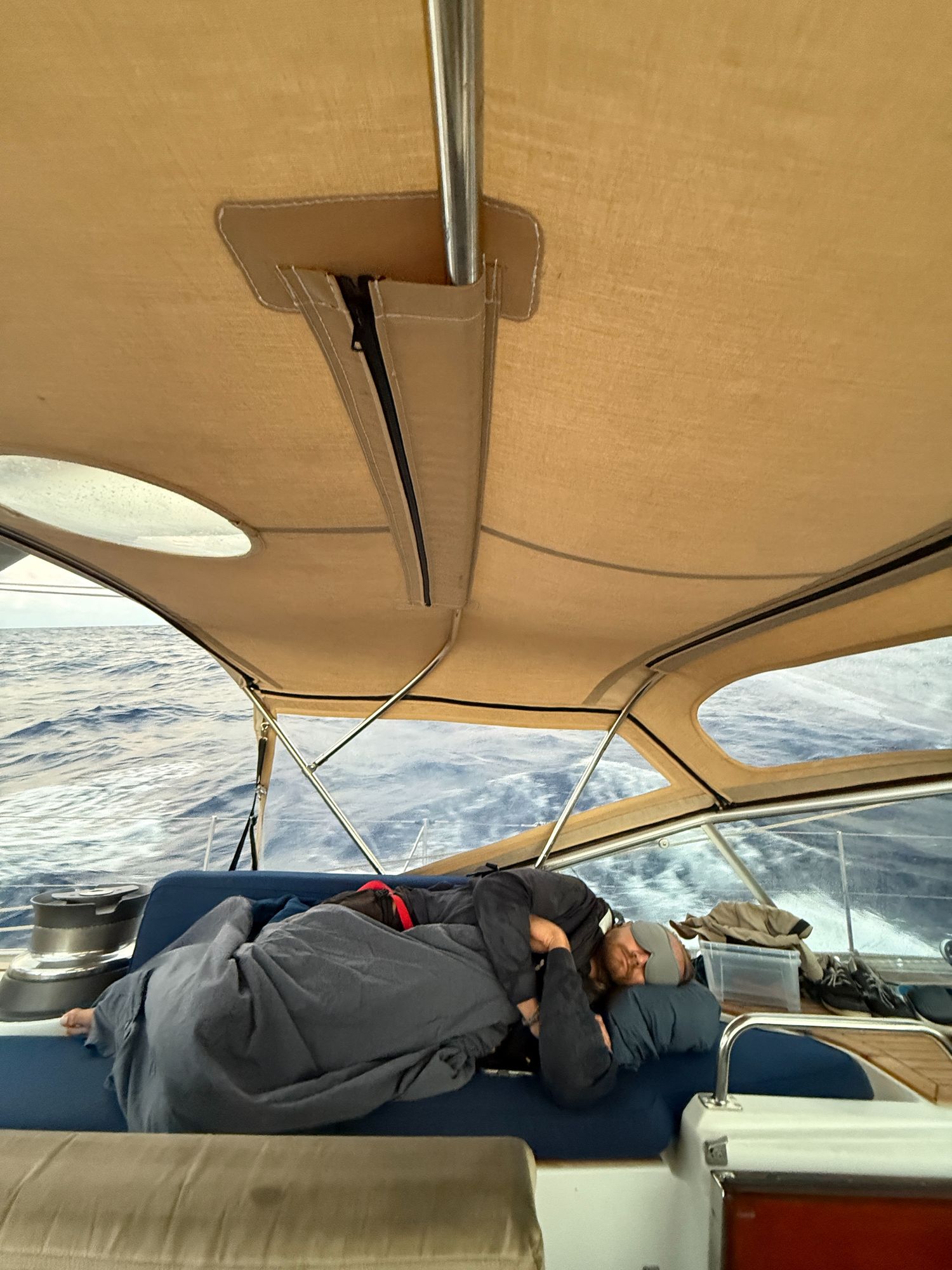
Snag it or sweat it! Rolls Royce bunks, watches and fans
Today marks day 6 of one of the most epic passages I've decided to take on. There is something wildly exciting and equally calming about being surrounded by nothing but ocean. I get to watch the entire rhythm of the world shrink down to wind, weather, watches, and 10 humans trying to get a sailboat to another continent. I'm not sure if former bloggers have noted, but this passage is HOT as balls. We continue to laugh, learn, and sweat.


She’s a big ship on a much bigger ocean2335
We also have faced the fact that although Adrienne is a very big ship, she sails over a much, much bigger sea. We all recommitted to being more attentive - treating our watch as a verb not a noun. We might feel comfortable handling Adrienne, but we're not on cruise control and this is no highway. I had not realized to what degree sailing the open ocean requires a daily commitment to awareness, intention, and vigilance. I'm glad for all of us my tutorial was clear but relatively mild.
Day Four: The boat has figured us out
By day 4, things start to get into a rhythm that starts to look like a small community onboard. It’s when personalities start to flourish, when people start losing themselves and start to realize that they don’t really care about a lot of things! I’m pretty sure the disconnection from the internet starts aligning our inner selves. Clearly everyone has gotten their sea legs by now, and even the boat seems to have understood the type of crew she has now. I love to see how people start fitting into different roles with their peers and the boat itself.