2027-18 | FALKEN | Canaries Sail Training
PLACEHOLDER

The Passage
Rough itinerary
All 59º North passages are very much subject to weather. We pick our routes based on the "correct" time of year to be sailing in the different regions we visit, and we always build-in enough time to give us some margin for weather windows. The skipper has final say on departure dates and weather windows, but generally speaking, the intinerary for this passage will look like this:
November 29, 2027
Crew arrive to FALKEN at 1300 in Lagos, Portugal. FALKEN orientation followed by crew dinner. All crew stay onboard FALKEN.
Prep Days
Between the joining and departure dates, all pre-passage preparation, provisioning, and safety briefings will be completed. The specific pre-departure schedule will be outlined and posted onboard FALKEN by the skipper.
December 1, 2027
Scheduled departure, weather dependent.
December 6, 2027
Latest date (12:00 noon) for crew to depart FALKEN from Lagos, Portugal.
TRAVEL LOGISTICS
Lagos
Lagos has been a frequent stop for us, and a place we really enjoy coming back to! Lagos is located on the southern coast of Portugal, the Algarve Coast. It’s a historic town with lots of great cafés and restaurants, and beaches within walking distance from the marina. And don’t miss the great Farmers Market on Saturdays! Read more about Lagos on lagosportugalguide.com
Airport Info
Faro Airport (FAO) is the closest airport, about an hour drive to Marina Lagos. You can also fly to Lisbon (LIS), with more international connections (most crew fly in to Lisbon). There are train & bus connections between Lagos & Lisbon, and between Faro & Lagos. (the bus and train stations in Lagos are only a few minutes walk from the marina).
Weather conditions
Late November sailing out of Lagos tends to feel cool but pleasant, with settled spells broken by the odd lively blow rolling in off the Atlantic—expect a mix of easy, mellow days and some brisk, spirited stretches to keep you honest.
In-depth analysis, by WRI
The main gale track over the N'rn Atlantic during November tends to start from NE'rn Canada to track NE'ward to Greenland or continue farther to Iceland and the British Isles, while remaining north of 45N. Gales typically become stronger and more expansive as winter approaches. On occasion, cut-off lows form over the Azores region and track NE'ward over the Bay of Biscay and across the Iberian Peninsula. Farther south, a semi-permanent high generally centers near 36N-40N, with ridging extending as far south as 18N-20N and across much of the Atlantic along/east of 60W-65W. Thermal troughing also tends to situate over the Iberian Peninsula during November though often weakens throughout the month, allow for broad ridging along the coast of Portugal to be the main feature, aside from the occasional gale or cold front that would yield enhanced winds/seas. The Atlantic Hurricane Season ends November 30th and the focus for tropical development shifts towards the W'rn Caribbean. Winds across the Lagos region largely vary from the NW-NE typically within 20kts. Swell largely prevails from the WNW-NW, being most prominent offshore around 1-2mtrs (3-6ft). CLC

WHY 59º NORTH?
The best boats
We take pride in the maintenance of all of our boats, and hold ourselves to extremely high standards. We buy sails that will last for tens of thousands of miles, while holding their shape (unlike standard dacron); we carry lithium battery banks with high-output alternators so there's less time running the engine to charge at sea and killing the vibe; we carry enough sails to sail the boat to the conditons, whether that's heavy weather or light weather, to give you the full experience.
Professional, well-paid staff
Adventure sailing is the highest calling for most aspiring skippers who truly want to sail. Unlike superyachts, who spend most of their time in port, we spend most of our time at sea, and the reasl sailors who want to work in that envrionment are attracted to it.
Sadly, the industry-standard pay is extremely low, and offers little in the way of a safety net, or provisions for having family back home. We want to change that.
All of our professional staff are paid well above industry rates, and we sail on rotations of usually 6-week stints, so those of us with families and small kids ashore can be present as parents and partners while still living our dreams.
The truth is, most of us would do this job for free, and that's part of the "supply & demand" that sets the salary rates in our industry.
But at 59º North we value people above all else, and that starts with our staff, many of whom have been with us for years and will be familiar faces to those who return to sail with us again and again.
knowledge & community
When you sign-on to sail with us, your journey to ocean sailing starts the minute you click "Submit" on your signup form when we start the preparation process with you to go to sea. That includes:
- Extended FREE trial in our Quarterdeck seam'nship community & knowledge-base.
- Series of 3 newsletters leading up to your passage, including specific packing lists, gear discounts with our partners (including 25% off everything at Helly Hansen).
- 1-1 comms with Andy, Mia & August and our skippers if you have any questions before your trip.
Once you join the boat, you'll see why people sail with us again and again. But your experience doesn't end when the passage is over. You'll get:
- Exclusive earned patches for different milestones you've earned with us at sea.
- Sea-service letter/signed logbook if you're looking to earn miles towards a license.
- A final newseletter with photos and other useful information, including a copy of the handwritten logbook you kept while on the boat.
Why it costs what it costs...
We know there are less expensive ways to cross an ocean.
We choose to invest in full-time, properly paid professional skippers, small crews, meticulous maintenance, and extensive preparation because we believe those things create a better offshore experience.
If you’re looking for the cheapest miles, we’re probably not the right fit.
If you’re looking for an unforgettable experience, we're confident you’ll notice the difference.
THE BOAT


Farr 65
'
FALKEN
'
🇬🇧
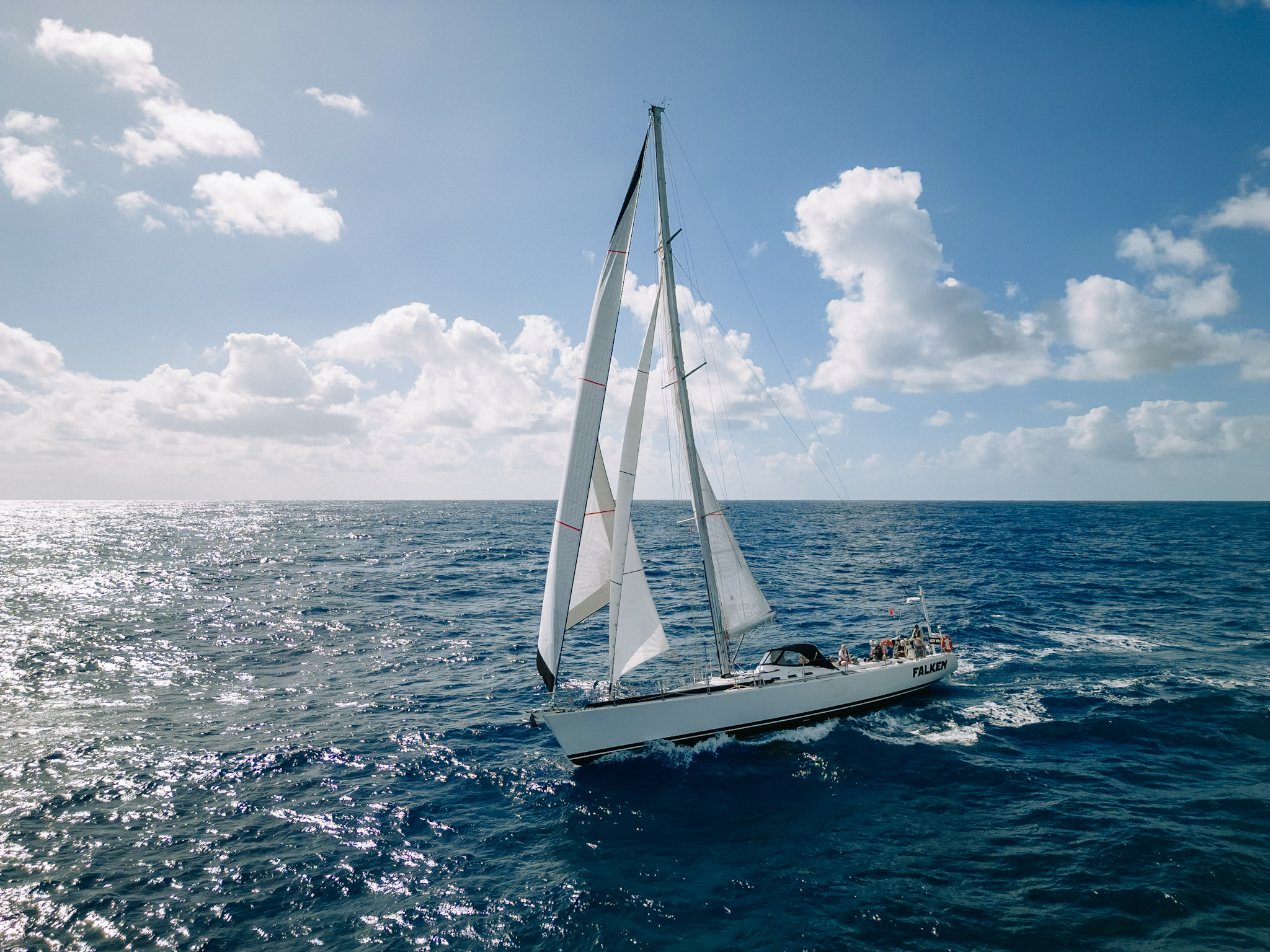
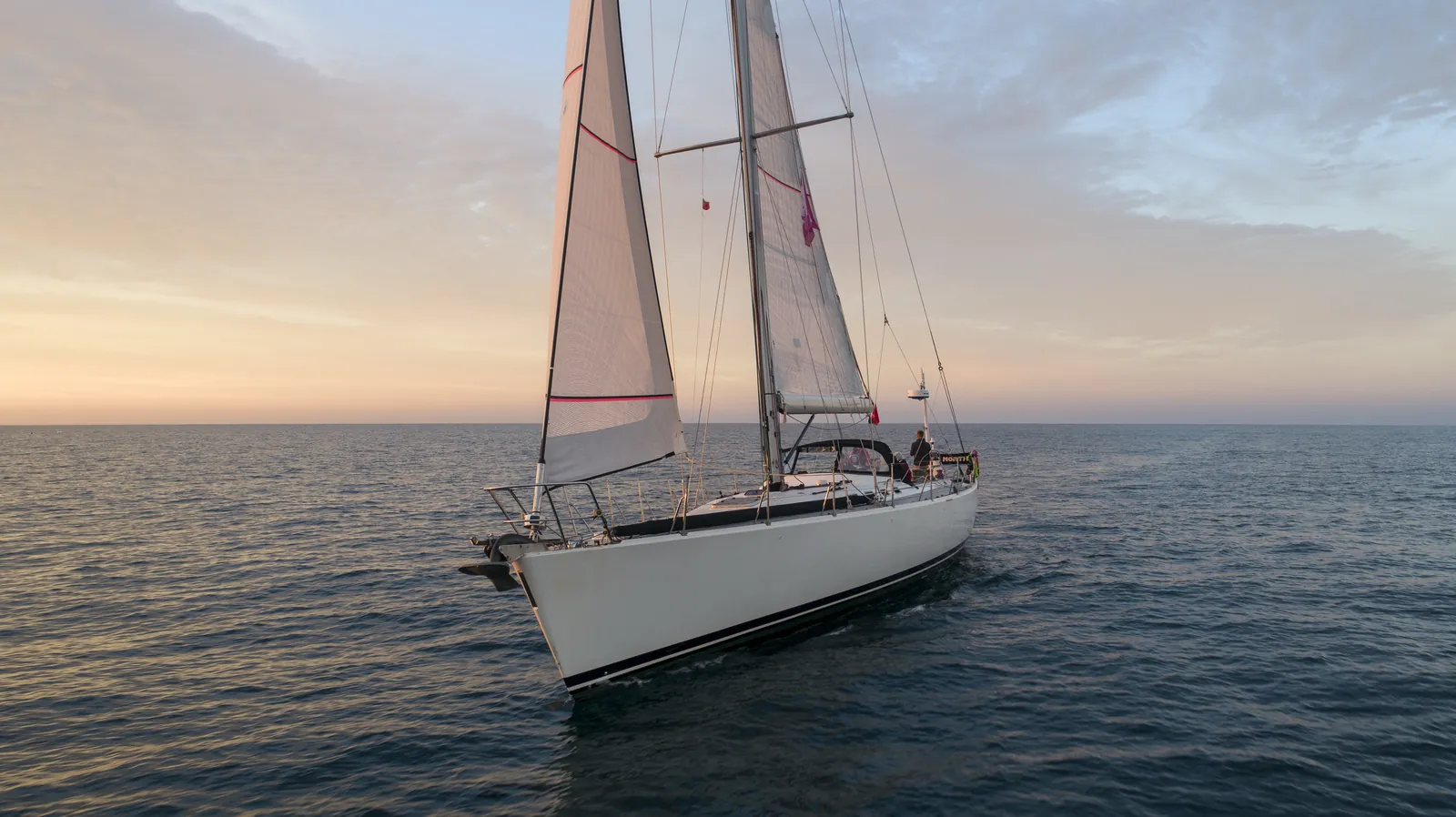
FALKEN is ideally set up for long-distance offshore sailing. We fully rebuilt the boat in 2022 to our exacting specifications and with the help of legendary yacht designer Bob Perry. She's comfortable belowdecks and each crew has their own dedicated sea berth & gear locker. On deck she has a huge cockpit which easily seats 10 people for our daily meals offshore, and allows for plenty of room to move about when handling lines and trimming sails. She's also easy to maintain, fast and fun to sail! FALKEN sails with 8 crew plus a Skipper & Mate and the occasional apprentice.

packing lists & notes
FAQS
What’s included in the crew fee?
The crew fee for the passage includes everything you need on the boat, plus use of the following:
- Helly Hansen 'Inflatable' PFD with integrated harness to use while aboard.
- Spinlock Double-tether for moving around on deck to use while aboard.
- All meals, snacks and drinks while on the boat.
- Sheets, quick-dry towel & a pillow.
- Large collection of books onboard, including novels, sailing classics and sailing reference books, in hard copy.
What the price DOESN'T include:
- Transportation to and from the boat.
- Meals and drinks ashore.
- Personal toiletries & clothing.
- Foul-weather gear (see packing list for details).
What happens after I signup to sail with 59º North?
After you submit your initial signup form, we'll send you a link to a longer application that will ask all sorts of questions about your history and why you want to go ocean sailing. The more detail you can provide, the better.
Once your application is approved, and provided we have space available on your chosen passage, you'll receive an invoice for 50% of the total crew fee. Once this invoice is paid, your crew space will be fully confirmed. We'll hold the space in the interim between application approval and invoice payment.
Next, you'll get a series of newsletters from us with increasingly specific details about your chosen passage as we lead up to departure date. Three newsletters in total will be sent prior to you joining the boat, and will include things like packing list advice, travel insurance recommendations, introductions to your shipmates and sailing staff and more. You'll also receive another link to fill-out even more information we need from you like medical forms, food preferences and visa information.
Once you've completed the passage, we'll send a 4th and final newsletter wrapping up your trip, which will include links to submit photos to share with the crew, a PDF scan of the handwritten logbook we kept during the trip and a request for a testimonial from the crew!
What can I expect to learn on a 59º North trip? Do I get a certificate?
59º North is not a sailing school, and we don’t issue any official certificates (but will gladly sign your logbook), but crew often say they have learned more in one day with us than a full week of formal class. That’s because we teach the real thing, with real stakes, having to get the boat from one port to another in varied weather and on a timeline.
Focusing on fundamental seamanship, we’ll teach you how to anticipate the weather & make routing decisions, how to optimize the sail plan for different points of sail in different conditions, how to helm, how to use the radar and on and on. You will become a better sailor — and a better thinker — sailing with 59º North.
We’ve created an environment onboard that fosters hands-on learning and teamwork. Our skippers and mates are almost always co-ed, and we sail with a diverse crew of mixed genders, nationalities, ages, sailing & life experiences. Everyone gets an equal opportunity to participate in running all aspects of the boat, from navigation, helming, sail trim etc., and yet nothing onboard happens by accident. Skippers & mates manage the crew’s varied fitness and skill levels to make sure everyone stays safe while being able to fully participate.
How much experience is required to sign on for a passage?
The short answer? NONE! We have had several crew who have never even set foot on a sailboat before, but they have the dream, and that’s what’s important. Our crew, John M., always dreamed of seeing the ‘stars down to the horizon,’ yet he’d never been sailing. He changed that with us, and has since been as far as South Africa to complete a coastal nav. course and sails regularly on Lake Ontario in his free time. You’ll of course understand more of what’s going on the more experience you have, but it’s not in fact required.
That said, we DO require a certain level of physical fitness to join us offshore. Regardless of how much we emphasize it, most people still underestimate how difficult it is simply to LIVE on the boat offshore, even on a nice day.
How long are the watches?
Our watch schedule is flexible and ultimately up to the skipper. Traditionally, watches were divided into periods of 4 hours, with two different watches standing a 4-on / 4-off schedule, often with a small adjustment at dinnertime, and onboard ISBJØRN we normally follow this type of schedule. On FALKEN, we typically run a two-watch system, standing 6 hours on in the daytime, then 4 hours on at night. On tropical routes, when it’s hot in the daytime, we sometimes flip this to limit sun exposure. Regardless of which watch system we use, crew are always gathered together for dinnertime, allowing us to eat together and reflect on the day.
The skipper and mate stand a different watch schedule than the crew, so that one of them is always awake and supporting the crew. Their schedule allows them to spend time sailing with all the crew.
On an ocean race, where all crew is given specific roles, a ‘watch captain’ would ultimately be in charge of decisions on their watch. However, given the range of experience of the crew, we do not assign watch captains — rather, if there is discussion among the crew as to what to do, then the captain is woken up to settle the debate!
Will I be able to communicate with friends or family during the passage?
Not by default. We have emergency comms onboard and the ability for your family to contact the boat via Mission Control, but if you'd like to be able to connect directly to send/receive text messages, you'd need to bring along your own Garmin InReach or similar device. If you would need to make an emergency call home, we can arrange use of the ship's satellite phone.
Note that we do not, and will not, provide Starlink access to crew for broadband Internet offshore. While FALKEN now has Starlink installed, it's for weather, emails and emergency comms only and not for crew or staff use otherwise. We believe that the limited connectivity during an ocean passage is a feature not a bug. This allows us and the crew to stay in the moment in a way that is impossible ashore, and the experience is that much richer for it.
Do you have Starlink?
We've installed Starlink for the 2026 season aboard FALKEN, but not for the reasons you might think. Mainly it's to allow staff to have broadband internet while in port in between passages. We realized we were spending a fortune on eSIM cards and phone data, so opted for Starlink to use in port.
Offshore, we use it to send blogs from the boat, the occasional social media post and for downloading high-resolution weather forecasts. And of course for emergency comms, particularly for medical emergencies where a Facetime call with a doctor ashore could save someone's life.
Crew & staff do NOT have access to Starlink offshore. It's a feature of our passages to be disconnected when at-sea, and we expect that the crew who sign up to sail with us will enjoy that aspect of the trips.
If you'd like to communicate to friends and family while on the boat, most people in the past have brought along Garmin InReach devices, which allow for two-way text messaging on the Iridium satellite network. These have global coverage and work well, it's "just enough" comms to stay in touch but avoid the doom-scrolling on your phone :)
How do we make travel plans given the uncertain nature of ocean sailing?
Our passages are scheduled based on the average speed of each boat. For example, we use 5.5 kts VMG (that’s ‘velocity made good.’) when planning ISBJØRN’s trips. This is a very conservative estimate for ISBJØRN, as we are usually averaging over 6.5 knots VMG (it's faster for FALKEN, as she's much bigger. In fact, on the About pages for each boat, you can see the historic passage states, including Miles per Day and VMG!) The conservative estimate ensures that we’ll get to our destination with time to spare before the last day of the trip. We still encourage crew not to book return air travel until we know for sure when we’re departing (some passages are easier to predict weather-wise than others, in the Trades in the Caribbean for example). Normally, if you book ahead, booking a ticket out on the final scheduled day of the passage will ensure you make your flight. Crew normally book a few days later and spend some time ashore before they depart.
Celestial Nav: Do you have the tools and books so I can practice offshore?
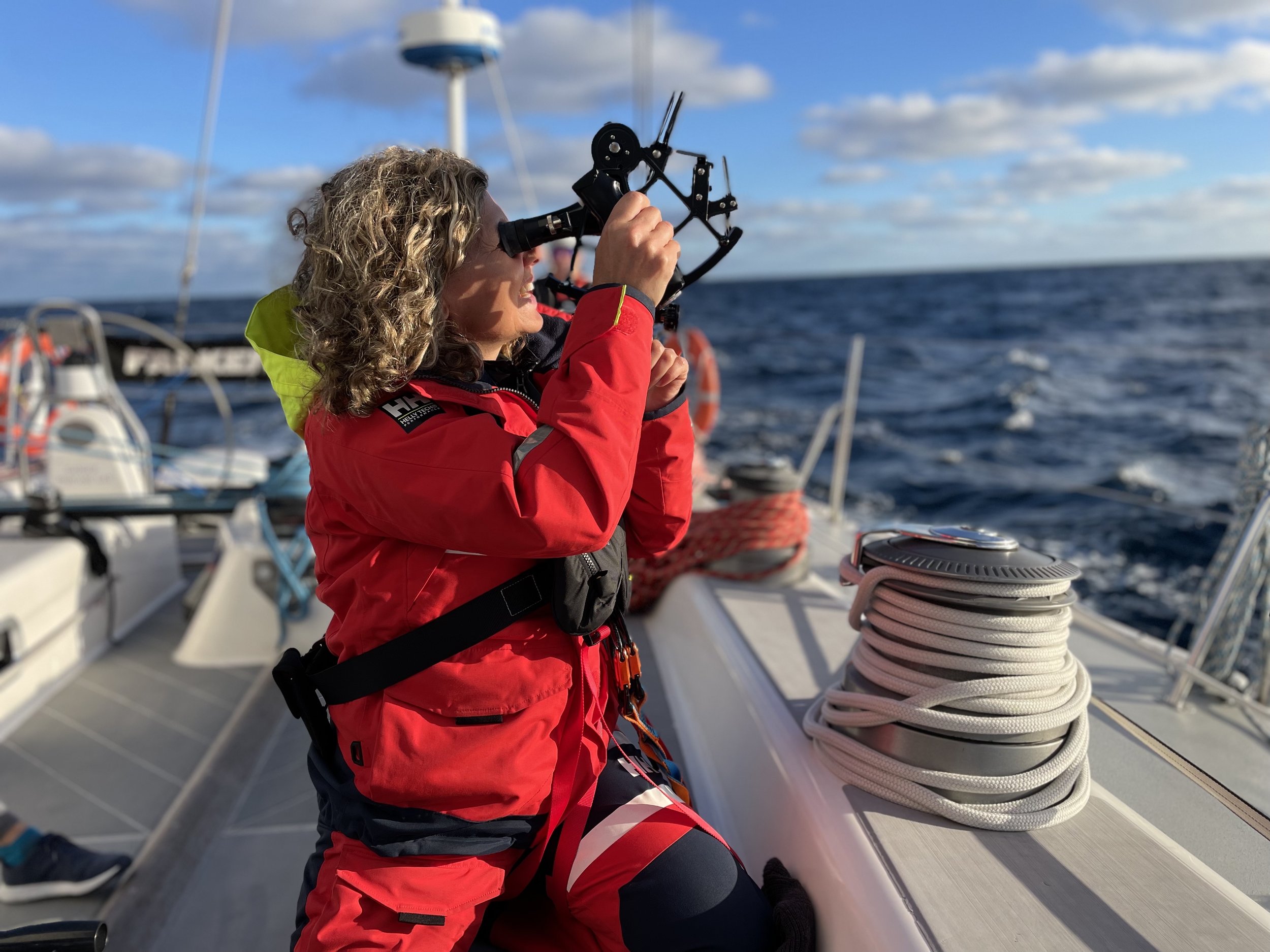
Both boats are set up with all the books, tools, worksheets and sextants you need to do REAL celestial navigation offshore, and our skippers and mates are trained in the lost art.
On ISBJØRN we have a Tamaya sextant that Andy & Mia bought used at the famous Sailorman chandlery in Ft. Lauderdale for ARCTURUS back in the day and had onboard for their first trans-Atlantic in 2011. It's sailed everywhere that ISBJØRN has for over 70,000 miles, and Andy even has a tattoo of it on his left forearm!
FALKEN also carries a newer Tamaya sextant, given to us by Weems & Plath in Annapolis.
On most passages, we bring out the sextant for a quick celestial primer and if you are extra keen, you are welcome to use the sentant and run sights on your own.