Celestial

8º48’S, 128º33’W
April 19, 2025, 2230 Ship’s Time | 8º48’S, 128º33’W | Full Mainsail & Poled Jib Top
“At certain times in the life of a navigator, it can be more useful for them to know not where they are, but where they are not.” — John Mellor, SAIL Magazine, November 1975
With Falken having happily found her stride and on the last 600-mile stretch to land, I found myself with some downtime to actually practice the one thing I set out to conquer on this passage—celestial navigation. I’ve really done my best to learn this dark art, but despite the hours of YouTube videos, online classes, and books, it’s maintained its ADHD-fueled mystery. I remember the first time Andy sat me down to explain the basics in Sweden last year using his signature “whatever fruit is available” presentation, and ever since it’s been my white whale. A geocentric model of the universe perplexes me, and I couldn’t get past the idea that celestial objects could be “above” something.
Well, with much patience and an open mind, we’re finally taking, reducing, and plotting sights—it’s starting to click. The last three days, the whole crew has taken turns getting in on the action, with Ted acting as a bit of a mentor for me. His approach is purely mathematical, using spherical trigonometry and a ream of graph paper to boot. I’ve opted for the more classic Pub 249 and Nautical Almanac route (cosine who?), made a bit easier with some of the celnav worksheets Andy made available from the Quarterdeck.
The other thing that has been made abundantly clear is the need for a good structure of planned sights! This means making a plan and researching what stars might be easily available come twilight because there’s not much time to dilly-dally. Being right near the equator, it would look something like:
- AM Nautical Twilight Three-Body Fix (zenith and approx. altitudes pre-calculated)
- Running Solar Fixes around Local Apparent Noon—with one sight shortly before LAN, one near LAN, and one shortly after to account for the almost 180º azimuth change in this part of the world.
- PM Nautical Twilight Three-Body Fix (zenith and approx. altitudes pre-calculated)
Are we actually able to pull this off? Well… not yet. If you read Andy’s previous blog, it should come as no surprise that we’ve had some successful star sights. Alas, tonight I’ve been stumped for the past hour trying to figure out why Aldebaran was giving me a terrible intercept—after some heavy cheating, I’ve determined it was actually Jupiter. My white whale swims off into the starlit swell of the Pacific. Here’s to hoping in these last few days, we can finally figure out where we are… or aren’t.
—Aidan Gray
59ºNorthApprentice
View more passage logs
HMS Night Watch Party
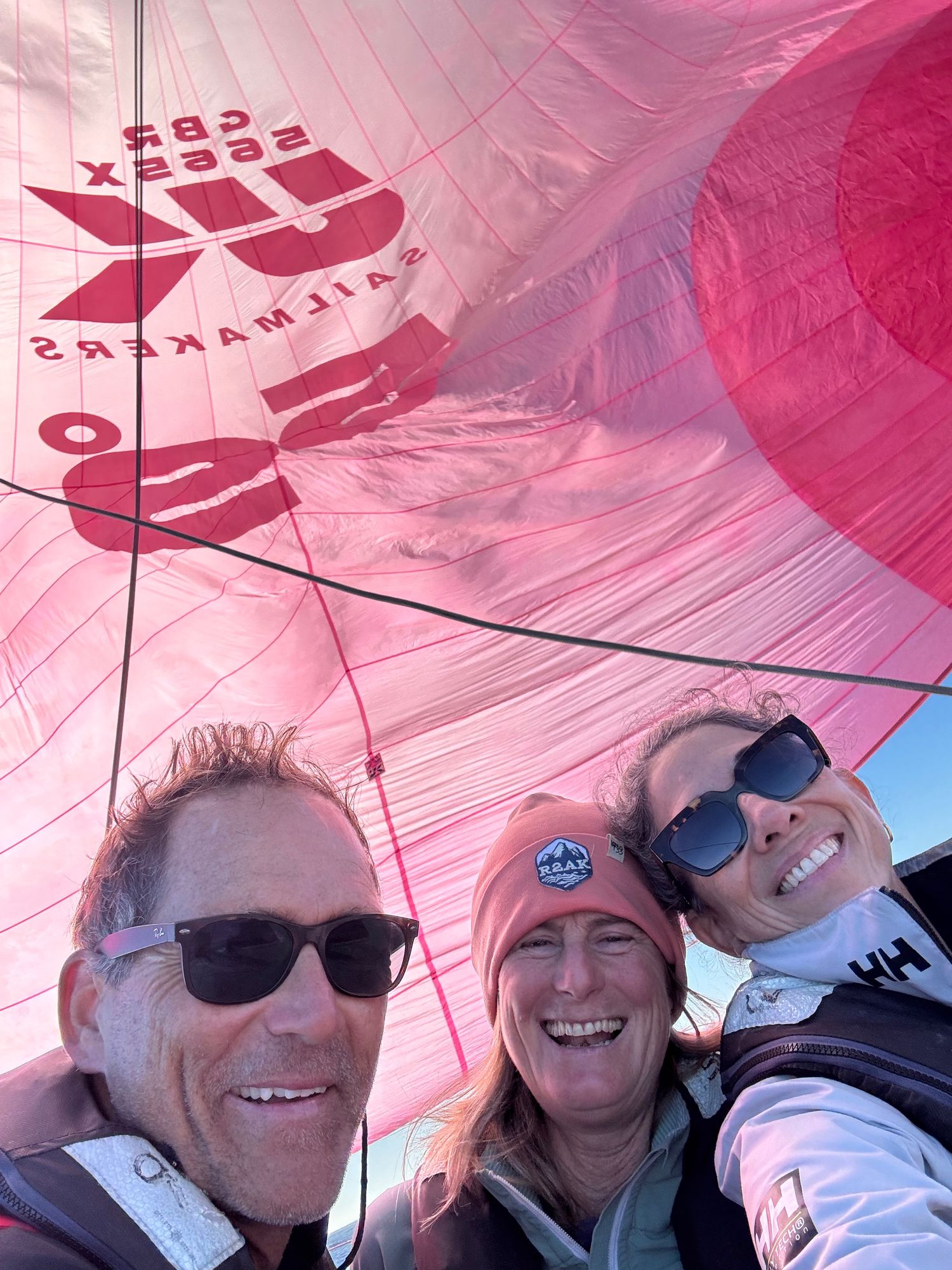
Wing on wing worked well until the wind shifted then the helm became the cone of despair for our night watch crew of three (H, M and S) Alex made the decision to drop the pole, shifting wing on wing to a close reach. Wind increased to low teens and speed picked up to a flying pace. Day spent wandering toward Ensenada. Alex, Adam and David got us into port under another starry night.

No Kitemares Today
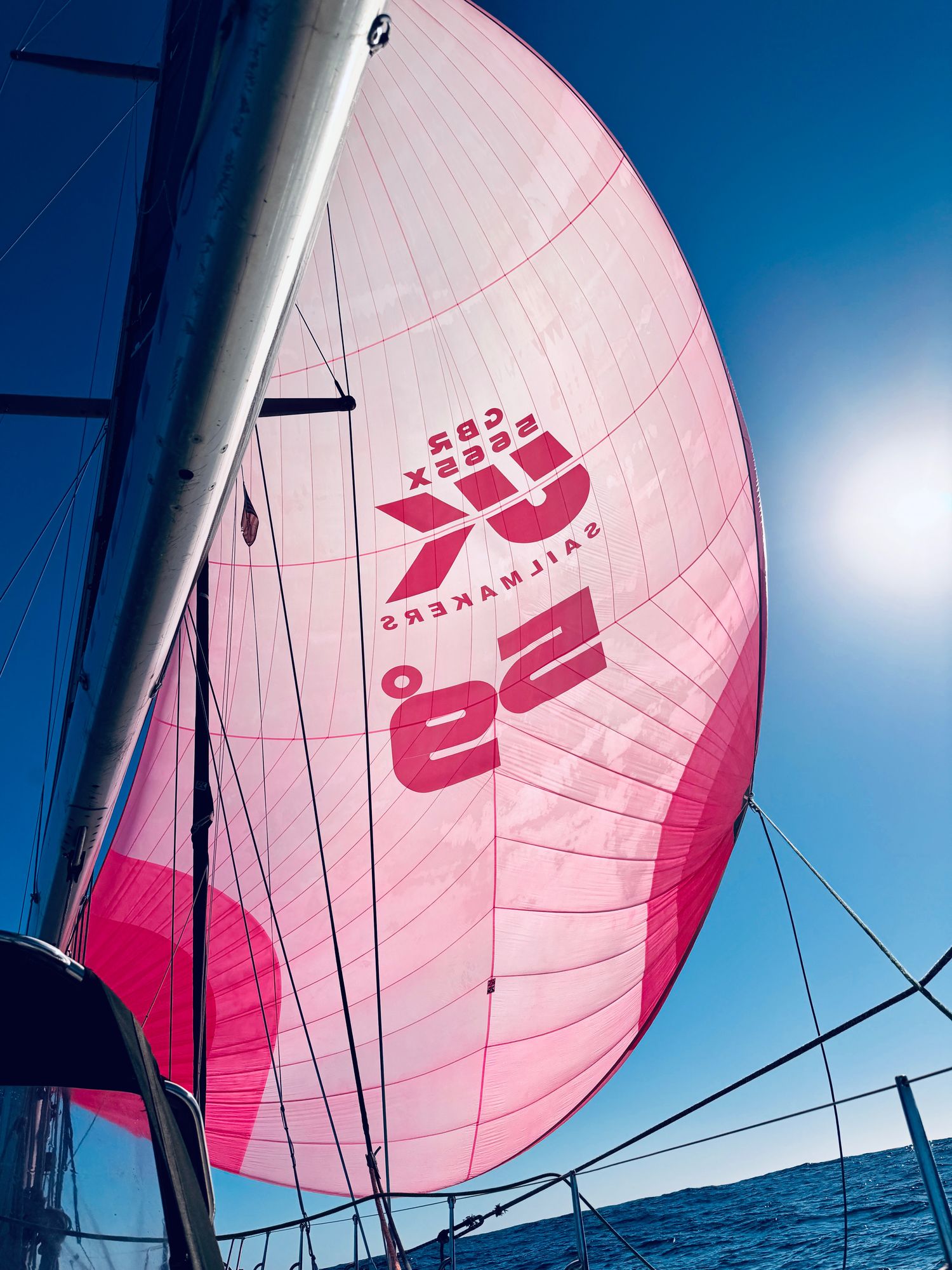
After a night marked by sudden wind accelerations peeling off Point Conception, and a vibrant, pulsating sky blistered with shooting stars, the off-watch woke to commotion on the foredeck. The wind had gone light and the swell had tapered just enough to raise the spinnaker. The sail filled with an urgent pop, the sheet strained and Falken charged down the face of the next wave. By mid-day, we doused the spinnaker and set our minds to the more precise task of safely punching through a gap in the notorious Cortez Bank. The border to Mexico looms ahead.
The California coast
We had a very lively first day of sailing with steady winds between 25 and 30 kn gusting to mid 30s. All of the crew got experience at difficult downwind helming as we covered 200 nautical miles in the first 24 hours. This morning brings winds in the teens and calmer seas. The sun is still shining, and the green monster has been slayed by those afflicted!