2026-11 | FALKEN | San Francisco-Ensenada
(Note that we offer a % discount if you pay by cash/bank transfer.)
After a brief stop in San Francisco, FALKEN is headed south to Mexico, and will make landfall just across the border in Ensenada. Sea lions rule the roost here, and in 2025 we actually had to switch pontoons in the marina because of the noisy sea lions! After briefly considering sailing back north to British Columbia, we thought better of it and decided to follow the weather south and return to one of our favorite stops from 2025.
The Passage
Rough itinerary
All 59º North passages are very much subject to weather. We pick our routes based on the "correct" time of year to be sailing in the different regions we visit, and we always build-in enough time to give us some margin for weather windows. The skipper has final say on departure dates and weather windows, but generally speaking, the intinerary for this passage will look like this:
September 7, 2026
Crew arrive to FALKEN at 1300 in San Francisco, United States. FALKEN orientation followed by crew dinner. All crew stay onboard FALKEN.
Prep Days
Between the joining and departure dates, all pre-passage preparation, provisioning, and safety briefings will be completed. The specific pre-departure schedule will be outlined and posted onboard FALKEN by the skipper.
September 9, 2026
Scheduled departure, weather dependent.
September 14, 2026
Latest date (12:00 noon) for crew to depart FALKEN from Ensenada, Mexico.
PASSAGE DETAILS
You join FALKEN in San Francisco; we’ll confirm the exact location closer to departure. If she’s north of town, or in the Richmond area, you can easily reach downtown by ferry, train, or taxi. We’re planning a non-stop passage to Ensenada, Mexico, just across the border from San Diego.
TRAVEL LOGISTICS
San Francisco
Ensenada
Weather conditions
Expect a brisk, breezy passage with the prevailing northwesterlies mostly at your back—cool and damp up north near the fog, gradually warming as you reach south, with lively seas that'll keep the boat moving and the crew on their toes.
In-depth analysis, by WRI

WHY 59º NORTH?
ambitious sailing schedule
The best boats
WOMEN BUNKS GUARANTEED
Professional, well-paid staff
knowledge & community
Why it costs what it costs...
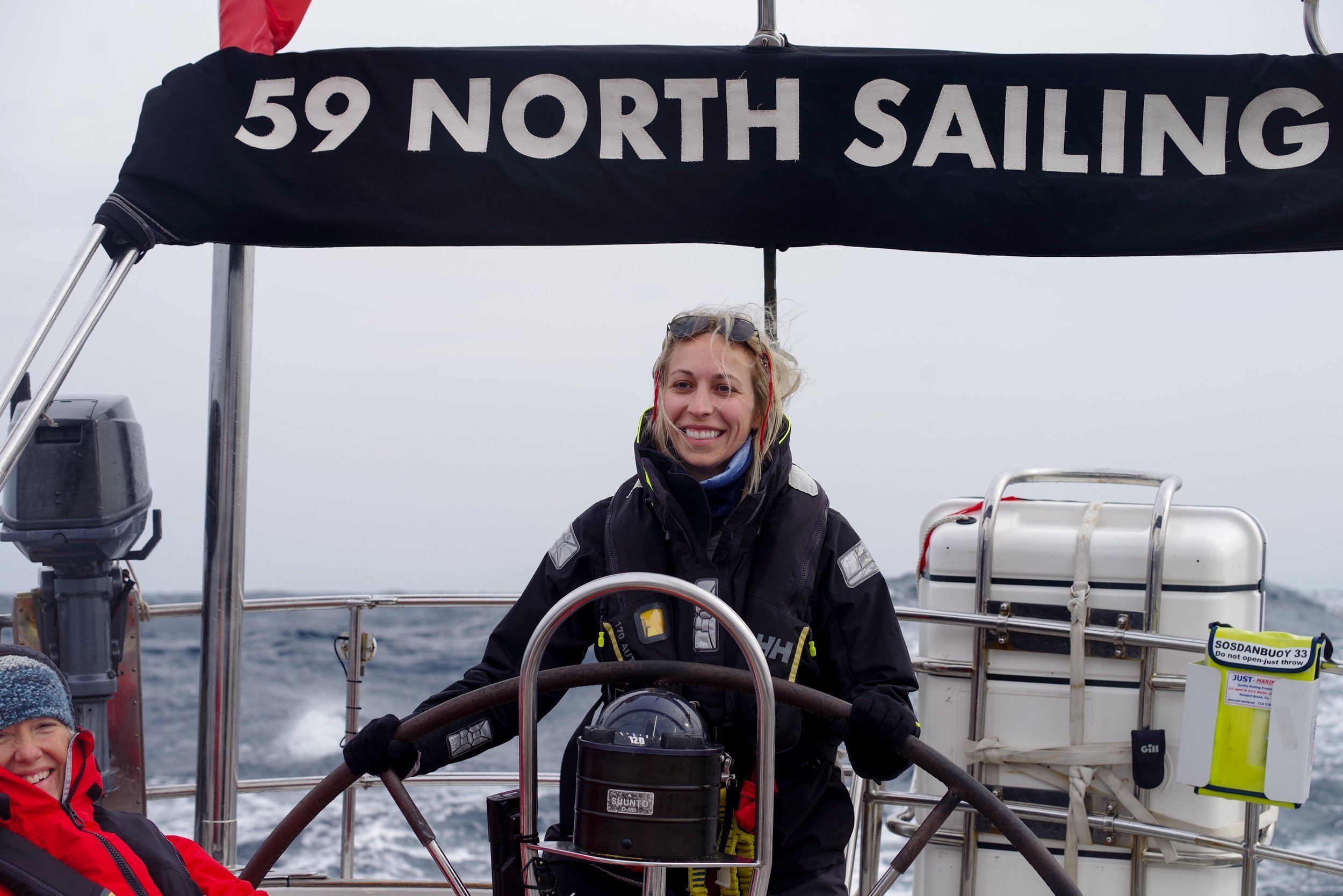
"When I think back to my trip across the North Sea on ICEBEAR, the memories uplift me and fill me with warmth and gratitude. Unplugging from the corporate world and embracing the beauty the ocean has to offer with 59º North molded me into a slightly different version of myself, in the most magical ways. I went home after 11 days with a more courageous yet humbled energy, realizing how capable and excited I am to take on new challenges."

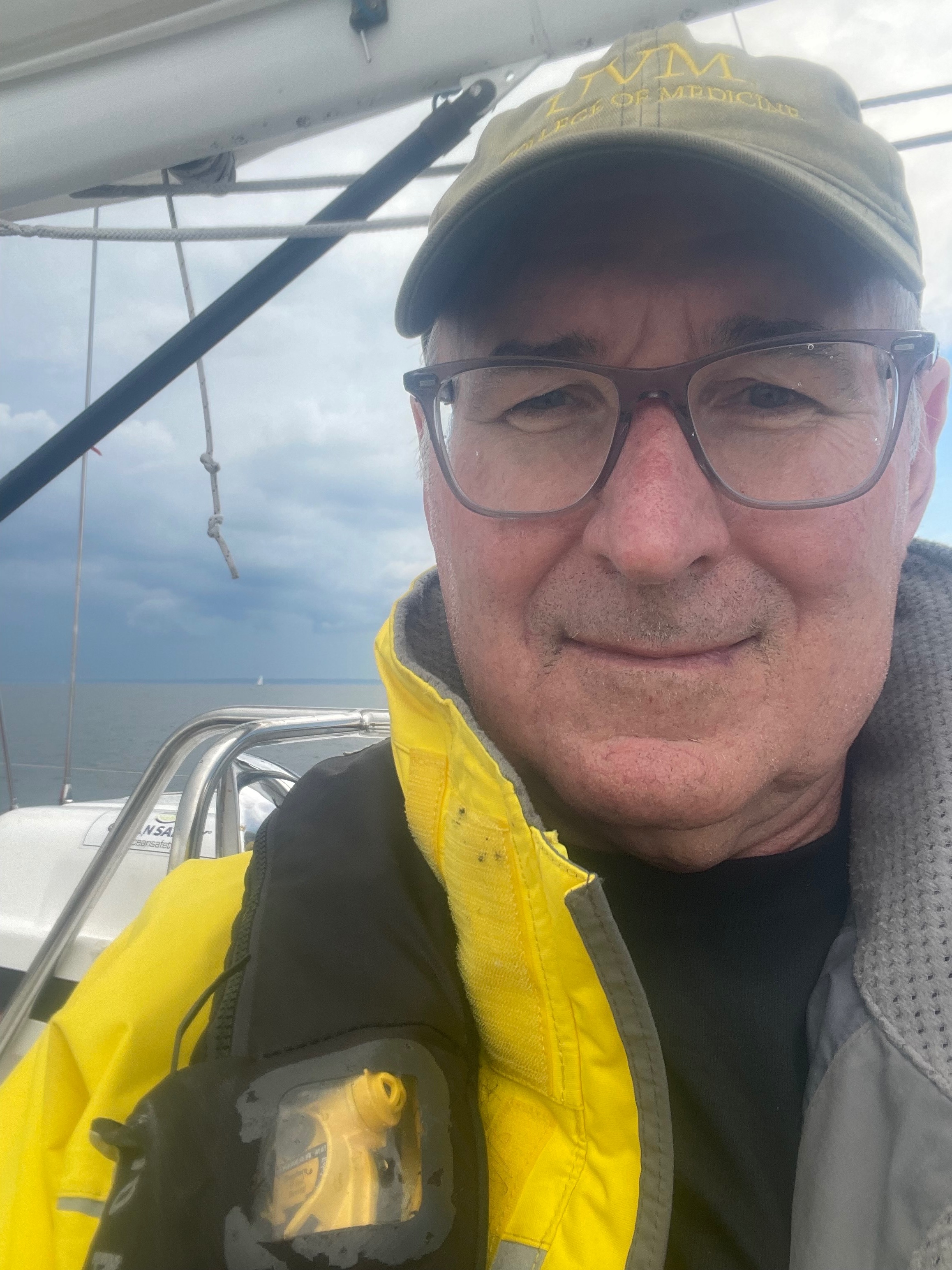
"I have been sailing for 60 years, mostly as an inshore one-design racer, and had never had the right boat, expertise, or opportunity to go far offshore. The Annapolis to Bermuda passage on ICEBEAR far exceeded my expectations—the skipper and mate were very knowledgeable, and ICEBEAR is a solid, sea-kindly vessel that is surprisingly fast in light air. Our crew of seven strangers became a cohesive, friendly, and competent group, and I’m grateful I got to put into practice the celestial navigation knowledge I gained from Andy and Mia’s 2020 seminar. I hope to make another passage with 59º North in the future."
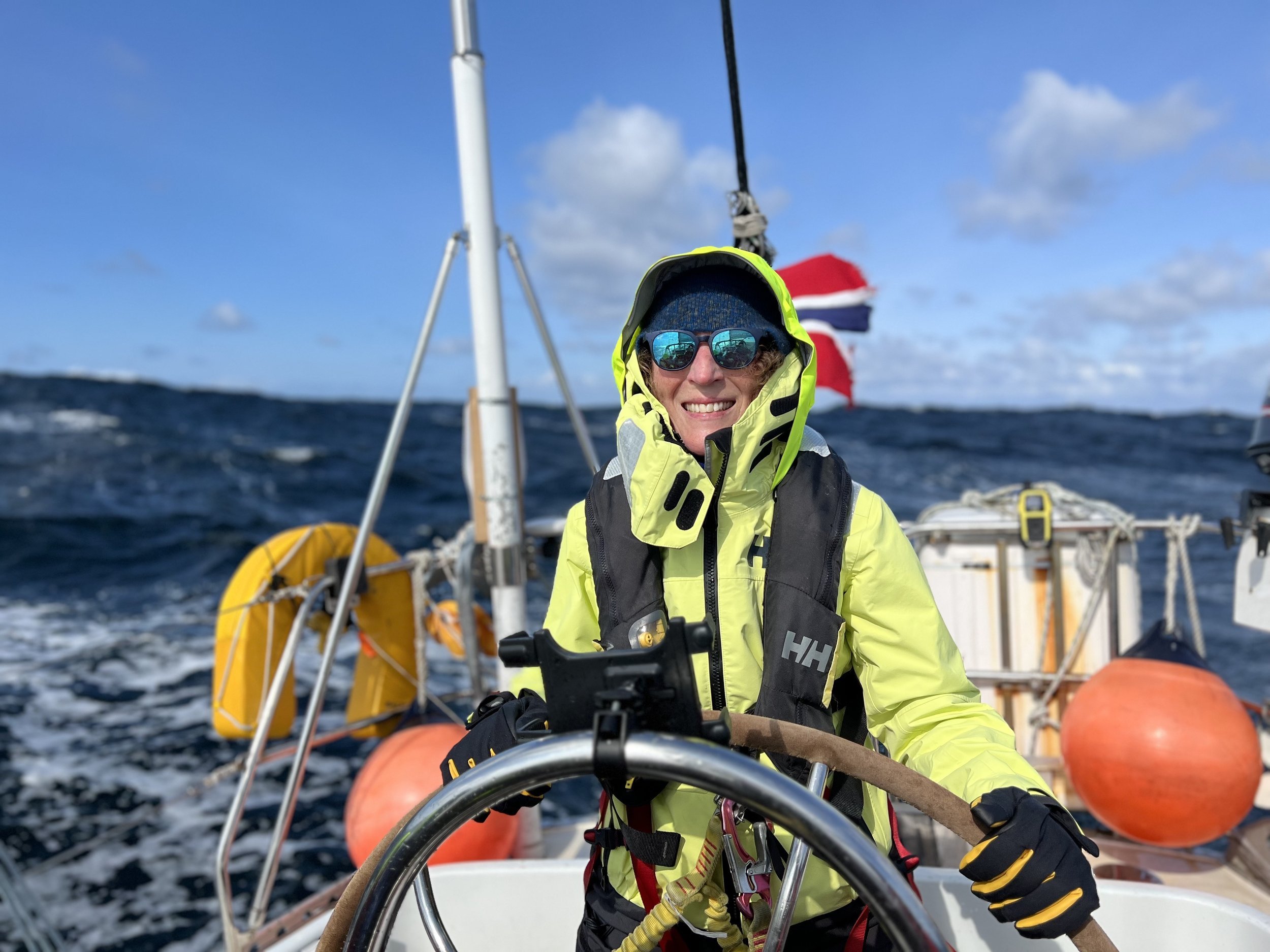
"I can’t say enough good things about the camp, August, and ISBJØRN. The format is perfect for someone like me—I’ve done some sailing, but not enough to feel comfortable on a passage. August is an amazing teacher and so patient! I learned an incredible amount and feel ready to take on a passage with 59º North."
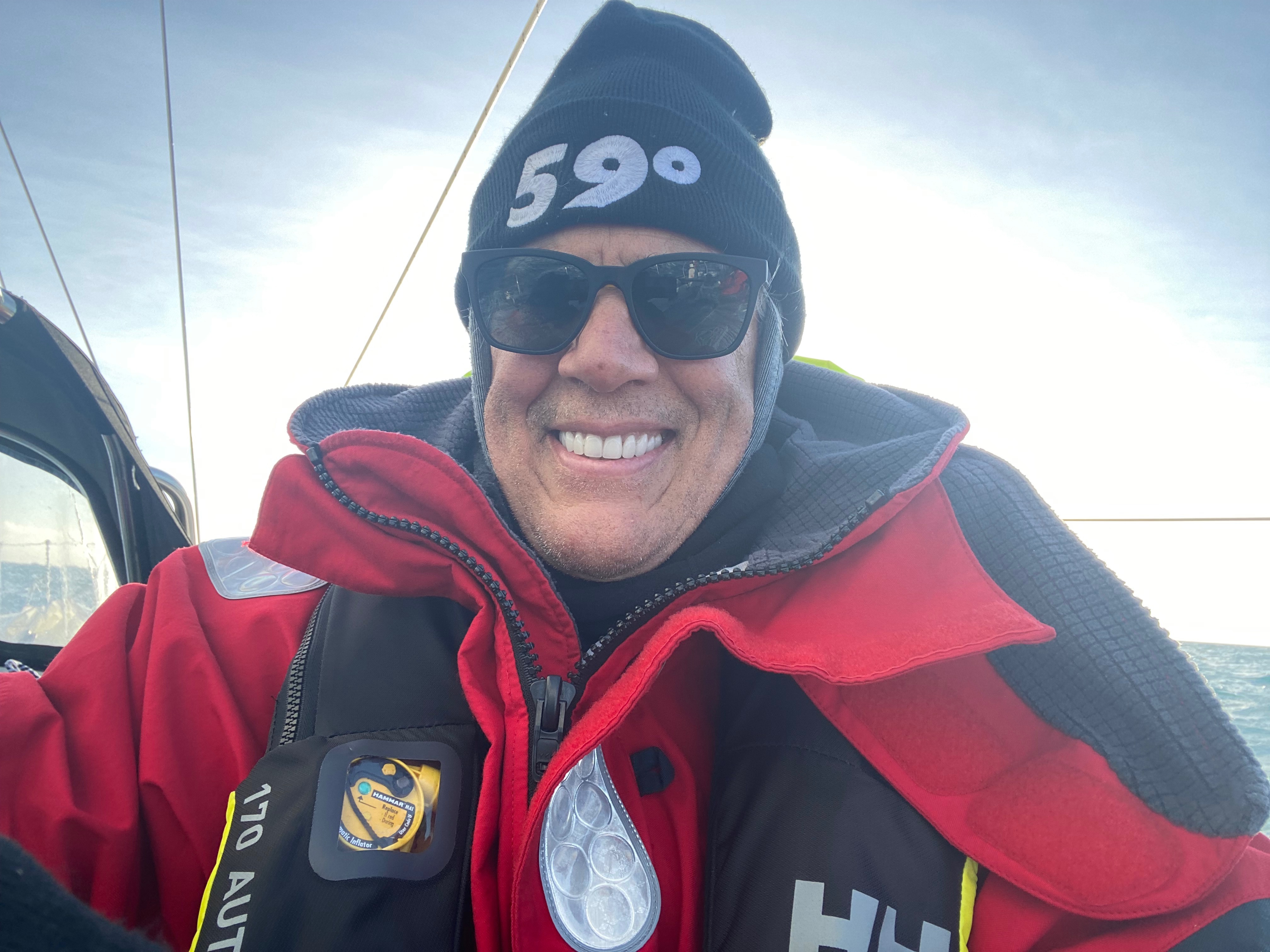
"I’ve sailed with 59º North four times—each has been a unique and gratifying experience. Sailing with like-minded folks, captained by the best in the biz, in well-maintained vessels has been the highlight of my 40-year sailing career. I’ve learned so much about sailing and myself on my 59º North adventures."
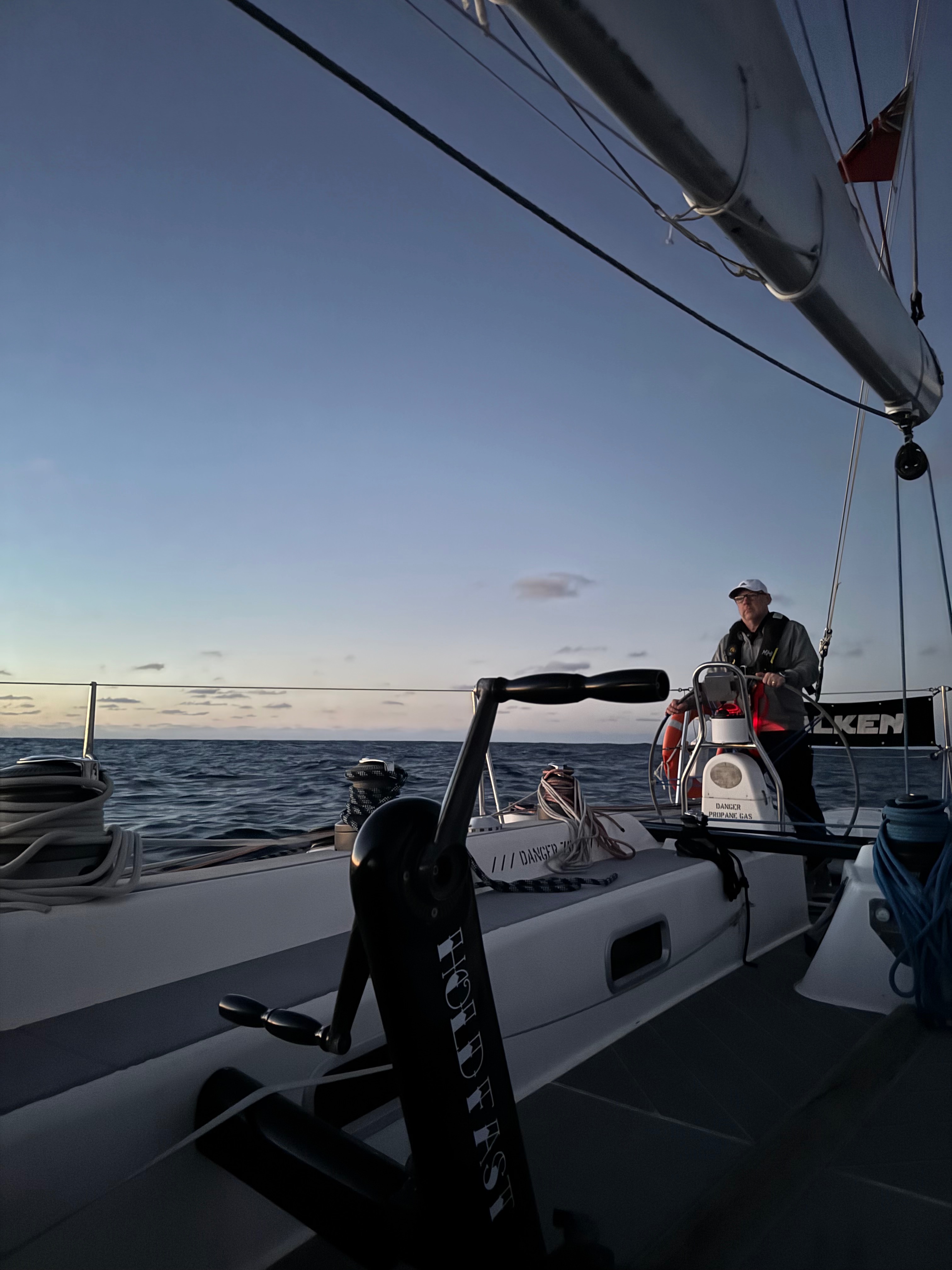
"Having sailed on ISBJØRN in 2019, I was excited to join another 59º North passage and finally sailed on FALKEN for the trans-Atlantic in January 2025. The 17-day passage was an incredible experience, sharing sailing knowledge and cultural perspectives with a diverse crew. FALKEN felt extremely safe and comfortable, and the care 59º North puts into both the voyage and post-trip details is outstanding. I came away with new friends, unforgettable memories, and a whole new level of sailing experience."

"I'm still processing everything I saw, felt, learned, and experienced over those 17 days, but there are a few things I wanted to express before the land sickness wears off and I return to my landlubber life. Your Skippers and Mates created an environment of calm, comfort, and confidence that washed away any apprehension I had about joining seven strangers on a 1600-mile round trip. I am blown away by their depth of knowledge, not only of sailing but also in teaching a crew of widely different experience levels without a hint of condescension. I would not hesitate to sail with them again, and we're already scoping out future dates on the cal."

"I sailed on ISBJØRN in March 2024 from Bergen to Tromsø and it was fantastic. 59º North truly lived up to expectations—Mia and August were always helpful, and our skipper Jon Amtrup did a fantastic job, balancing safety with giving everyone the right tasks and space. We had incredible anchorages, great sailing, fun dinners, and unforgettable experiences under the stars on the North Sea. ISBJØRN is a wonderful boat with character, and I highly recommend the trip."
THE BOAT
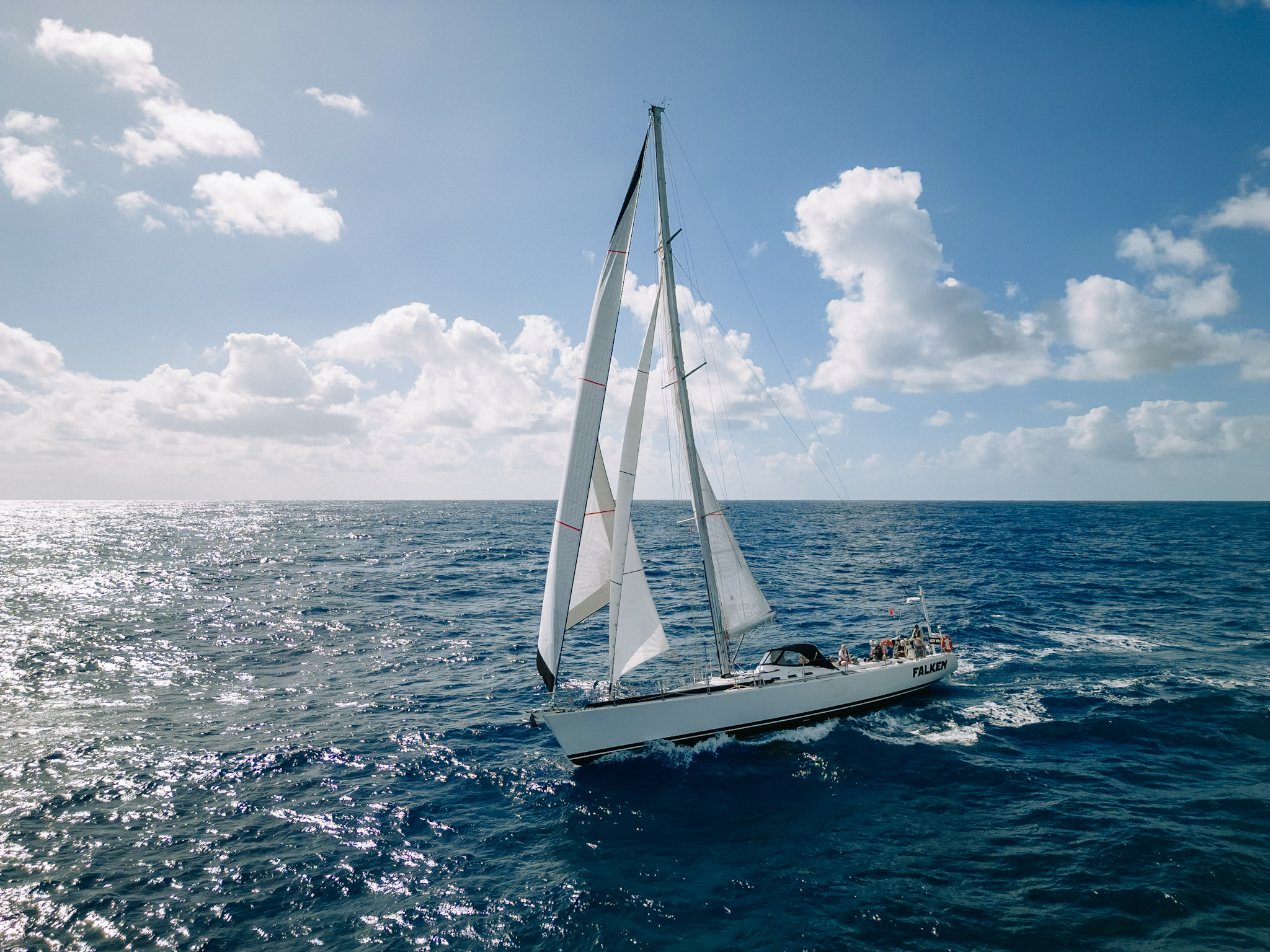
Farr 65
'
FALKEN
'
🇬🇧
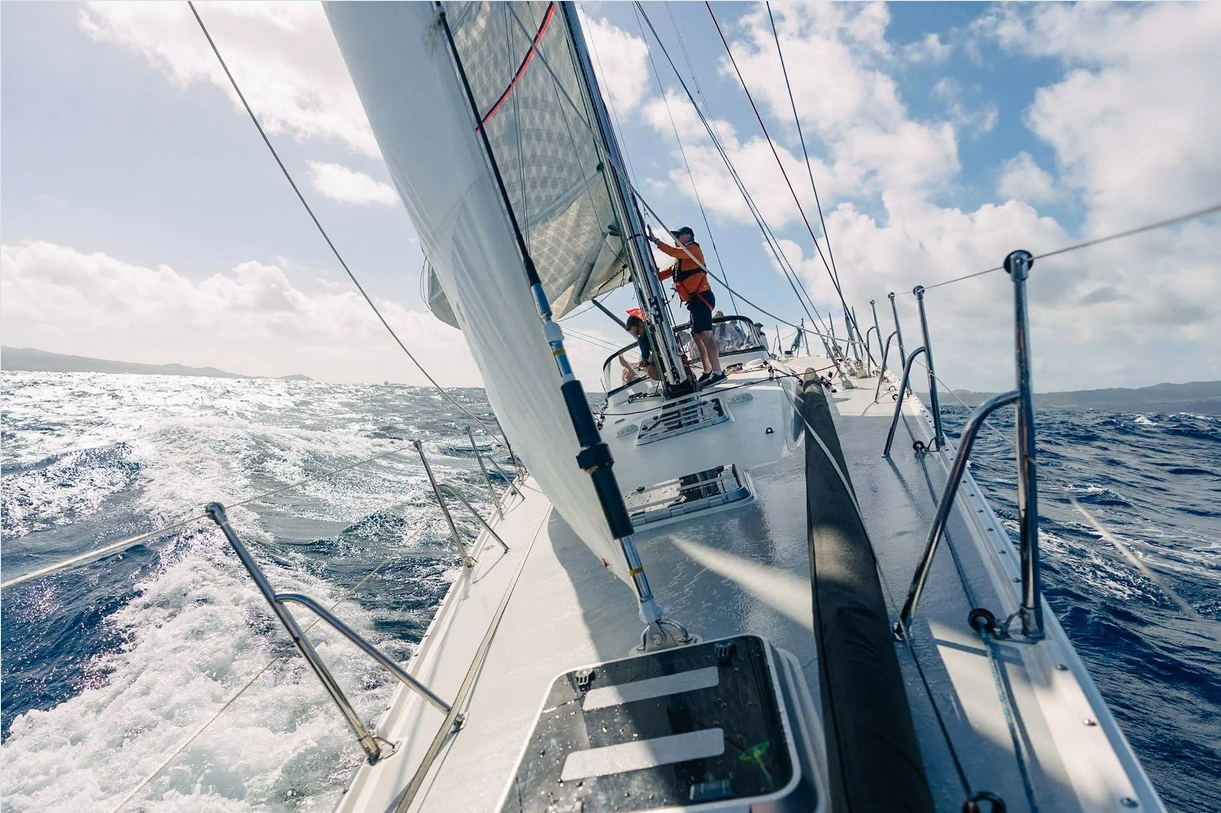
FALKEN is ideally set up for long-distance offshore sailing. We fully rebuilt the boat in 2022 to our exacting specifications and with the help of legendary yacht designer Bob Perry. She's comfortable belowdecks and each crew has their own dedicated sea berth & gear locker. On deck she has a huge cockpit which easily seats 10 people for our daily meals offshore, and allows for plenty of room to move about when handling lines and trimming sails. She's also easy to maintain, fast and fun to sail! FALKEN sails with 8 crew plus a Skipper & Mate and the occasional apprentice.
packing lists & notes
Cold | Warm Packing List
This will be a "transitional" passage, either starting in warmer climes and increasing in latitude until it's significantly cooler, or vice versa. Another one of those trips where you'll need to pack one of everything for changing conditions. See the packing list for specifics.
Packing Notes
Start here when planning your packing for sailing with 59º North. This list includes the general basics for all of our passages. The passage-specific packing lists offer more details.
Golden Day
The Pacific is giving us “the shimmer” - with a still flat sea seven hours out of San Francisco Bay, we’re motoring south along the shipping channel, with an hour to go to what teases now as a stunning sunset against wispy clouds. Throughout this first day of Falken 11 the sails have unfurled and been furled again as skipper Alex tries to fill them a meager breeze indeed. We’ve seen a few whales traveling along the route, and an otter that was sadly just a buoy. It’s the first open ocean sail for many of us and it’s a thrill to anticipate all the new experiences we’ll have.
Birds and glows
The sun brought new wind and we were soon putting up the Yankee (jib) and turning off the motor. During the evening tradition of sharing “glums and glows” that follows the crew dinner, our Mate Ryan proclaimed it a “champagne sailing” kind of day. As Alex noted this evening, life goes by so fast that one of the very best things about his line of work is enjoying the passage of time in the slow lane of an ocean passage. But by tomorrow, the green blobs in the weather sailing app indicate we’re going to pick up some significant northwesterly winds and we’ll take them ever further south to the Channel Islands latitude. We’re all super excited for the knots to climb and to see Falken really run.
One little bird!
Falken has almost rounded the Channel Islands and is cruising along splendidly about 100 miles offshore. Though several models predicted some slightly fresher winds today, we were met with a consistent 18-20 kts of pure bliss. It seems that from the moment we left the dock in San Francisco, there has been much laughter and conversation amongst everyone. The plan is to gybe in a few hours and begin our approach to Ensenada. As much as I do appreciate the jokes and intellectual musings, I equally appreciate the natural, silent moments we share at night, all of us on watch gazing up above to the shooting stars, constellations, and planets putting on their quiet show.
A last hurrah
Under the dome of stars in a moon-less sky, each of us during our time at the helm used the most rudimentary celestial navigation, keeping a star or two lined up with the mast as a helper to following the heading range. It was a whole crew event to set the spinnaker, reef the mainsail and practice the heave-to in case of man overboard. Alex stressed that the key to success in all of these crucial activities is preparation. It was hugely satisfying to accomplish these tasks through teamwork. We share a constant good hearted back and forth full of stories, one-liners and comebacks that also means constant laughter.